Key Takeaways
The economics of recombinant AAV manufacturing vary with production platform, productivity, scale, dose, and indication, and continued process improvement could substantially reduce current costs.
LNPs replace biological vector production with nucleic acid synthesis, lipid manufacturing, controlled particle formation, purification, and particle-specific analytics, shifting complexity rather than eliminating it.
Nonviral platforms may offer larger payload capacity, greater potential for repeat administration, and opportunities to reuse manufacturing, analytical, and regulatory knowledge across related products.
Targeting and functional intracellular delivery remain central economic constraints because inefficient delivery increases the amount of material needed to achieve a therapeutic effect.
The relevant comparison is product- and indication-specific: viral vectors may retain an advantage when they provide efficient tissue access and durable expression at a low dose.
Delivery Is an Economic Design Choice
Delivery technology shapes more than the movement of genetic material into a cell. It determines how a therapy is produced, how much material must be administered, which impurities must be removed, which analytical tests are required, whether the payload fits within the delivery vehicle, and whether a patient could receive another dose. For gene therapies, the delivery system is part of both the therapeutic mechanism and the economic model.
Adeno-associated virus (AAV) and other viral vectors have supplied the delivery efficiency and tissue access needed to bring gene therapy into clinical practice. Lipid nanoparticles (LNPs), polymeric carriers, electroporation, and other nonviral approaches offer alternative delivery architectures.
That shift does not guarantee a cheaper product. Nonviral platforms introduce their own burdens in formulation, purification, analytics, stability, targeting, and scale-up. Their economic potential will depend on whether those burdens are outweighed by gains in manufacturing flexibility, payload capacity, repeat dosing, and reuse of platform knowledge.
The Vector Is Part of the Economic Model
Manufacturing cost represents only one component of gene therapy economics. Discovery, clinical development, regulatory work, treatment administration, and long-term follow-up also require significant resources. Even within manufacturing, the cost of producing the delivery vehicle cannot be separated from the dose needed to achieve a therapeutic effect. The relevant measure is not simply cost per vector genome, milligram of RNA, or batch of nanoparticles, but the cost of producing enough functional product to treat a patient.
The delivery platform also determines the relevant critical quality attributes, process-related impurities, safety tests, comparability strategy, and release specifications. Changing the delivery system can therefore alter the facilities, equipment, assays, expertise, and regulatory knowledge required throughout the product life cycle.
A platform that produces material efficiently may still have poor economics if weak targeting or intracellular delivery requires a large dose. Conversely, a comparatively demanding manufacturing process could remain competitive if the delivery system reaches the intended cells efficiently at a low dose and provides durable expression. Comparisons between viral and nonviral delivery must therefore account for both production efficiency and biological performance.
Why Viral Vector Economics Remain Difficult
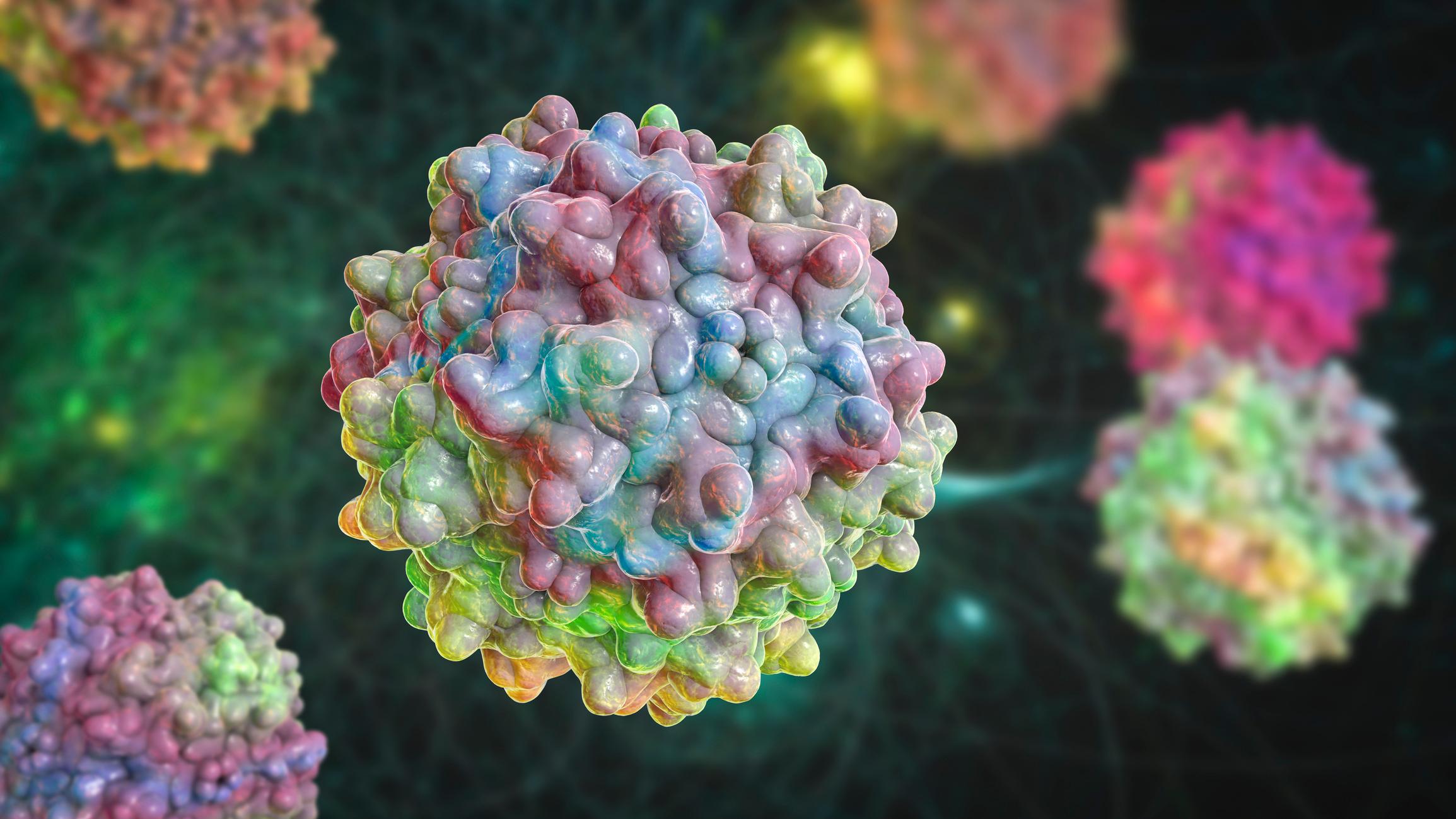
Recombinant AAV (rAAV) manufacturing typically depends on one of three major production models: transient transfection of mammalian cells, baculovirus infection of insect cells, or stable producer cell lines. Each involves a different combination of flexibility, productivity, development time, raw-material requirements, and downstream challenges.1,2
Transient transfection can be adapted to different serotypes relatively quickly, but it requires substantial quantities of plasmids and transfection reagents. Baculovirus-based production may reduce some upstream material costs and simplify large-scale operations, but it requires the generation and control of recombinant baculovirus stocks and management of viral and host-cell impurities. Producer cell lines can eliminate repeated plasmid delivery, although they require cell line development, serotype-specific optimization, and, in some configurations, media- and consumable-intensive perfusion processes.2
The downstream process must recover the vector while removing host-cell material, process reagents, viral contaminants, and product variants. Large-scale clinical production generally relies on affinity and ion-exchange chromatography rather than the ultracentrifugation methods commonly used at smaller scales. Separating genome-containing capsids from empty capsids remains a central process and analytical challenge
Viral vector products also carry safety-testing requirements connected to their biological production systems. U.S. Food and Drug Administration (FDA) guidance recommends testing nonreplicating viral vector products for replication-competent or parental viruses that could arise through recombination during manufacturing.3 The specific requirements vary among retroviral, adenoviral, and AAV products, but they add assays and controls that do not apply in the same form to a nonviral nanoparticle.
These constraints do not make viral vector costs fixed. A 2026 bottom-up analysis of rAAV manufacturing found substantial differences among transient transfection, baculovirus, and producer cell line platforms.2 It also identified opportunities to reduce cost through scale-up, higher productivity, optimized transfection, and process intensification. Under the modeled assumptions, these measures reduced cost per dose by as much as two orders of magnitude in some scenarios.
Nonviral platforms will therefore compete with viral vector processes that are becoming more standardized, intensified, and productive. Any cost comparison must account for continued improvement on both sides.
Economics Begin With Dose
Dose can overwhelm an otherwise efficient manufacturing process. The 2026 rAAV analysis found that the economic burden was especially pronounced for systemic neuromuscular and neurological indications, in which requirements can reach 1015 vector genomes per patient.2 Even under efficient operating assumptions, modeled manufacturing costs could reach tens of thousands of dollars per dose.
The same analysis illustrates why broad statements about viral vector cost are unreliable. Cost per batch, cost per vector genome, and cost per patient did not always favor the same production platform. A process with comparatively low batch costs could perform less favorably after normalization for productivity, while scale-up affected products differently depending on dose and annual demand. Plasmids, transfection reagents, media, perfusion consumables, chromatography, drug product operations, buffer preparation, and quality control contributed differently across the modeled platforms.
The implications extend beyond AAV. Any delivery platform must produce sufficient functional material to reach the target cells and generate the intended effect. Improving potency or tissue specificity could therefore affect cost per patient more substantially than an incremental reduction in the cost of producing each vector or nanoparticle.
What Nonviral Delivery Changes
LNPs offer a different production model. Rather than growing cells to generate and package a viral vector, manufacturers can produce the nucleic acid payload, combine it with defined lipid components under controlled mixing conditions, remove solvents and unencapsulated material, and formulate the resulting particles as the drug product.
Reviews of LNP-enabled gene therapy identify several potential advantages relative to viral delivery, including manufacturing flexibility, larger payloads, reduced immune responses, multidose potential, and adaptable formulation processes.4,5 These characteristics could alter both product development and commercial manufacturing.
Greater payload capacity may allow an LNP to carry editing machinery that exceeds the approximately 4.7-kilobase packaging capacity of conventional rAAV. Larger genes and editing systems delivered by AAV may require truncated constructs or split-vector strategies in which separate vectors deliver different portions of the payload. Reconstituting the complete product inside the same cell adds biological and development complexity, as well as additional manufacturing and analytical considerations.
Repeat administration represents another potential distinction. Pre-existing neutralizing antibodies can reduce AAV transduction or exclude patients from treatment, while antibodies induced by an initial systemic dose can inhibit subsequent administration. This becomes important when expression declines or target cells turn over. Nonviral formulations may be more amenable to repeat dosing, although tolerability and immune responses to the payload and nanoparticle components still require product-specific evaluation.
LNPs also support different approaches to scale. One study developed a parallelized microfluidic device with arrays of as many as 128 mixing channels operating simultaneously.6 The system increased production throughput while maintaining the physical properties and potency evaluated in the study, demonstrating one route toward larger-scale RNA-LNP production. This study demonstrates the feasibility of scaling LNP production through parallelized particle formation. However, it did not establish that the resulting products will invariably cost less than viral vectors.
The Opportunity for Modular Manufacturing
The most consequential economic feature of LNPs may be their potential to support a modular platform model. A gene-editing product can combine a delivery formulation, an editor-encoding messenger RNA (mRNA), one or more guide RNAs, and a controlled encapsulation process. If several products use sufficiently similar components and processes, knowledge generated for one program may inform the next.
The FDA's June 2026 draft guidance on genome-editing products explicitly identifies the delivery method, including an LNP, as a possible element of a platform.7 The guidance describes circumstances in which developers may leverage prior knowledge involving analytical methods, method validation, release specifications, stability, comparability, process development, and process validation across related programs.
A platform analytical method might require targeted verification for a new guide RNA rather than complete redevelopment and validation. Prior stability information could support early clinical development of a related product, while established process knowledge could inform critical process parameters and qualification strategies. The FDA also notes that contract development and manufacturing organizations, raw-material suppliers, and technology providers may make relevant platform knowledge available through master files.
Reuse is not automatic. The FDA conditions it on the similarity of the components, formulation, manufacturing process, equipment, route of administration, dose, and therapeutic mechanism. Identity and potency testing generally remain product-specific, and long-term, real-time stability data are still needed to support commercial shelf life. Changes to a payload may also affect encapsulation, particle structure, potency, or analytical performance.
Early products in a platform must establish much of the process and knowledge base from which later programs may benefit. The economic benefit would accumulate across a portfolio rather than appearing solely in the manufacturing cost of the first product.
Scalable Does Not Mean Simple
A typical good manufacturing practice (GMP) workflow for an mRNA–LNP product includes lipid synthesis and qualification, in vitro transcription and purification of mRNA, control of RNA- and process-related impurities, particle formation through controlled mixing, solvent removal, buffer exchange, sterile filtration, fill-finish, and frozen or lyophilized storage. Tangential flow filtration commonly supports concentration and buffer exchange.
Each stage can affect product performance. Lipid chemistry and purity influence particle formation, stability, tolerability, and delivery. RNA integrity and process impurities can affect translation and biological activity. Mixing conditions influence particle size, encapsulation, composition, and payload distribution. The final formulation and storage conditions must preserve both the nucleic acid and the nanoparticle.8
Downstream processing presents an important qualification to the assumption that LNPs are easy to manufacture. Membrane-based buffer exchange and sterile filtration can reshape particle size, morphology, internal structure, payload distribution, and stability. These operations cannot be treated as neutral finishing steps after particle formation. Upstream formulation and downstream processing must be designed as a connected process.9
Scale transfer creates further challenges. Methods suitable for small-scale formulation development may not transfer directly to GMP clinical or commercial production. Developers must maintain critical quality attributes while changing equipment, throughput, flow conditions, or batch configuration.
LNPs replace cell-based vector production with nucleic acid synthesis, lipid manufacturing, controlled self-assembly, and particle-specific purification and analytics. That change may improve flexibility and throughput, but it still requires a mature process and control strategy.
A Transient Vehicle Can Support a Durable Effect
The duration of the delivery vehicle does not necessarily determine the duration of the therapeutic outcome. An mRNA payload produces temporary expression because the RNA is degraded over time. When that mRNA encodes genome-editing machinery, transient exposure may be sufficient to create a permanent genetic change in an edited cell. The durability of the resulting effect will depend in part on the persistence and turnover of those cells.10
Human studies have established that LNP delivery of genome-editing components is clinically feasible. In a phase I trial, CTX310 used an LNP to encapsulate CRISPR-Cas9 mRNA and a guide RNA targeting angiopoietin-like protein 3 (ANGPTL3) in the liver.11 Participants received a single intravenous dose intended to create a loss-of-function mutation in the target gene.
A separate report described a customized LNP-delivered base-editing therapy developed for an infant with severe carbamoyl-phosphate synthetase 1 (CPS1) deficiency.12 The patient received two infusions at approximately seven and eight months of age. The report documented no serious adverse events during the limited observation period but emphasized the need for longer follow-up to assess safety and efficacy.
These examples connect two potential platform advantages. The nucleic acid sequence can be programmed for a particular target, while the delivery technology and parts of the manufacturing and analytical framework may remain similar enough to support prior-knowledge arguments. The CPS1 case also demonstrates that an LNP-delivered editor can be administered more than once, although a single case with limited follow-up cannot establish the safety or practicality of repeated dosing across other products.
Clinical feasibility does not establish commercial durability or cost. Long-term outcomes will depend on the proportion of cells successfully edited, the persistence of those cells, the consequences of cell turnover, and the safety of both intended and unintended edits. These programs nevertheless show how a transient delivery system can support a therapeutic strategy that does not require permanent expression of the editor.
Targeting Remains the Economic Bottleneck
Gene-editing delivery reviews identify efficiency, capacity, cell specificity, and access to difficult organs as continuing barriers to clinical translation. Performance can vary substantially between in vivo and ex vivo use and among different cell types and tissues.
Delivery requires more than particle uptake. The product must reach the intended tissue, enter the correct cells, escape intracellular compartments, release functional cargo, and allow the editing machinery to access its genomic target. Losses at any stage reduce the proportion of administered material that contributes to the therapeutic effect.13
Those losses propagate through the manufacturing process. Poor tissue selectivity can increase the required dose, expanding demand for RNA, lipids, purification capacity, fill-finish capacity, and storage. If the higher material requirement increases the number of batches or lots, it may also increase the associated testing burden. Dose escalation may not provide a practical solution to inefficient delivery because tolerability must be evaluated for the complete formulation and payload.
A high-throughput particle-production process offers limited economic value if the product cannot achieve sufficient functional delivery at an acceptable dose. Improvements in targeting or intracellular release could reduce material requirements throughout the manufacturing chain. For many nonviral programs, the most important economic advances may therefore arise from better delivery biology rather than faster particle production.
Beyond Lipid Nanoparticles
Nonviral delivery encompasses multiple chemical and physical approaches, including polymeric nanoparticles, conjugate-based systems, and electroporation. Their manufacturing implications differ substantially, so LNP performance should not be treated as representative of every nonviral platform.
Electroporation can introduce editing components into cells outside the body without a viral vector, but its economics remain embedded in the broader ex vivo cell-processing model. Polymeric nanoparticles and other emerging carriers may offer different combinations of cargo capacity, targeting, and manufacturability, but delivery efficiency and safety remain important translational constraints.
Nonviral therefore describes the absence of a viral vector rather than a single manufacturing architecture. Each technology must be evaluated according to its payload, target cells, route of administration, process maturity, and required dose.
Where Nonviral Delivery Could Matter Most
The economic case for nonviral delivery will be strongest when its specific attributes solve a constraint that materially affects the viral vector product. A large editing payload may benefit from avoiding AAV packaging limits. A therapy that requires repeat administration may benefit from avoiding an anti-capsid response. A portfolio of related genome-editing programs may benefit from shared formulation, manufacturing, analytical, and regulatory knowledge. An indication with substantial dose requirements may benefit from a process that scales through modular equipment or parallelized production.
Viral vectors may retain an advantage when a validated capsid reaches the intended tissue efficiently, a low dose is sufficient, the therapeutic cassette fits within the vector, and durable transgene expression is required. Established clinical and manufacturing experience may outweigh the theoretical flexibility of a less mature alternative.
The most useful comparison will occur at the product and indication level. It must account for functional delivery efficiency, dose, batch yield, failure risk, number of administrations, process maturity, development reuse, product stability, and clinical durability.
Nonviral delivery will change gene therapy economics only when gains in manufacturability and platform reuse reduce the product-specific work and material required to achieve a durable clinical result. Its promise lies in creating a different architecture for genetic medicines, but the value of that architecture will ultimately be measured by the cost of effective delivery to the patient.
References
1. Wang, Jiang-Hui, et al. “Adeno-Associated Virus as a Delivery Vector for Gene Therapy of Human Diseases.” Signal Transduction and Targeted Therapy. 9: 78 (2024).
2. Park, Min Tae, et al. “rAAV Production Cost Analysis: Indication-Specific Cost per Dose and Reduction Strategies.” Gene Therapy. 33: 559–570 (2026).
3. Chemistry, Manufacturing, and Control (CMC) Information for Human Gene Therapy Investigational New Drug Applications (INDs): Guidance for Industry. U.S. Food and Drug Administration. Jan. 2020.
4. Cullis, Pieter R, and Michael J Hope. “Lipid Nanoparticle Systems for Enabling Gene Therapies.” Molecular Therapy. 25: 1467–1475 (2017).
5. Kulkarni, Jayesh A, Pieter R Cullis, and Roy van der Meel. “Lipid Nanoparticles Enabling Gene Therapies: From Concepts to Clinical Utility.” Nucleic Acid Therapeutics. 28: 146–157 (2018).
6. Shepherd, Sarah J, et al. “Scalable mRNA and siRNA Lipid Nanoparticle Production Using a Parallelized Microfluidic Device.” Nano Letters. 21: 5671–5680 (2021).
7. Leveraging Prior Knowledge in the Development of Human Gene Therapy Products Incorporating Genome Editing: Draft Guidance for Industry. U.S. Food and Drug Administration. June 2026.
8. Liu, Lanbo, et al. “Critical Chemistry Manufacturing and Controls Considerations for mRNA Lipid Nanoparticle Translation.” Discover Nano. 21: 395 (2026).
9. Sagmeister, Peter, et al. “The Hidden Half of Lipid Nanoparticle Manufacturing: Downstream Processing.” Journal of Controlled Release. 397: 115189 (2026).
10. Cavazza, Alessia, et al. “Advanced Delivery Systems for Gene Editing: A Comprehensive Review from the GenE-HumDi COST Action Working Group.” Molecular Therapy – Nucleic Acids. 36: 102457 (2025).
11. Laffin, Luke J, et al. “Phase 1 Trial of CRISPR-Cas9 Gene Editing Targeting ANGPTL3.” The New England Journal of Medicine. 393: 2119–2130 (2025).
12. Musunuru, Kiran, et al. “Patient-Specific In Vivo Gene Editing to Treat a Rare Genetic Disease.” The New England Journal of Medicine. 392: 2235–2243 (2025).
13. Madigan, Victoria, Feng Zhang, and James E Dahlman. “Drug Delivery Systems for CRISPR-Based Genome Editors.” Nature Reviews Drug Discovery. 22: 875–894 (2023).