Key Takeaways
Device development should begin early in drug–device combination product programs because the delivery system directly affects product usability, dose accuracy, patient safety, manufacturability, regulatory strategy, and commercial readiness.
When device development is delayed, earlier formulation, primary packaging, storage, analytical, stability, human factors, supplier, and assembly-process decisions may need to be revisited, expanded, or repeated before the program can move forward.
Many combination product delays occur at the interfaces between workstreams: a formulation may be technically sound but difficult to deliver through the intended device, or a device platform may be available but not yet aligned with the product’s viscosity, dose volume, storage conditions, patient population, or commercial presentation.
Established device platforms can help shorten development timelines, but no platform is a universal shortcut; each product still requires specific evaluation of formulation fit, primary packaging, route of administration, injection force, usability, performance, assembly, and regulatory requirements.
OneSource supports sponsors by engaging device development earlier, helping evaluate selected or potential device platforms, identifying missing technical data, working with device suppliers, assessing assembly-process needs, and connecting drug substance, drug product, fill-finish, packaging, testing, and regulatory support within an integrated CDMO model.
As Injectables Move Home, Devices Move to the Center
Historically, injectable therapies were primarily administered in clinical settings, whether in a physician’s office, outpatient clinic, or hospital, depending on the nature of the drug product and the needs of the patient. In that model, trained healthcare professionals handled preparation and administration. As more therapies move into the hands of patients and caregivers, however, the delivery system has become a far more important part of the overall product strategy.
In this environment, a better combination product is not simply a drug paired with a functioning delivery system. It is a product in which the formulation, primary container, device, user interface, manufacturing process, and regulatory strategy work together to support safe, accurate, and reliable administration in the intended setting of care. That level of alignment is difficult to add late in development. It has to be built into the program from the beginning.
Several forces are accelerating this shift. Sponsors are increasingly focused on patient-centric therapies that can simplify treatment regimens, support adherence, and reduce the time and cost associated with clinic-based administration. For patients receiving chronic therapies, oncology treatments, rare disease therapies, or other injectable medicines, reducing the need for frequent site-of-care visits can improve convenience and comfort while also lowering the broader burden of care. At the same time, self-administration creates new responsibilities for product developers, because the device must be intuitive, reliable, and capable of minimizing use error outside of a controlled clinical environment.
Those pressures have contributed to rising demand for drug–device combination products, particularly self-injectable formats. The trend has become even more visible in recent years with the rapid growth of GLP-1 therapies, which have normalized the use of injectable products for large patient populations and reinforced the importance of convenient, scalable, patient-friendly delivery systems.
Designing the Drug and Device as One Product
Drug–device combination products pair a formulated drug product with a delivery system that plays a direct role in administration. As a result, development teams must demonstrate the safety, efficacy, quality, and performance of both the drug product and the device, as well as the suitability of the combination. For self-injected products, this becomes especially important because the device is often being used by patients or caregivers rather than trained healthcare professionals. The design must minimize opportunities for use error, support correct administration, and account for human factors from the beginning of development.
The strongest approach is to begin considering device needs as early as possible, ideally as part of the initial development plan. Regulatory expectations increasingly reflect this principle, with guidance recommending that design inputs, including performance characteristics, safety and reliability requirements, and user and patient needs, be considered early in product development so that development efforts remain aligned with the product’s intended use.1 In practice, however, many small and emerging biotechs hesitate to invest additional money in device development when the formulated drug product may not be paired with a device for many months. That hesitation often reflects a mistaken assumption that the drug is the only truly critical part of the product and that the device can be added later as an external casing or convenience feature.
That assumption creates risk because many characteristics of the drug substance, formulation, primary packaging, and intended use have a direct bearing on device performance. The data generated for the chemistry, manufacturing, and controls package, analytical development, release specifications, stability studies, extractables and leachables assessments for plastic components, and other regulatory documentation all help define what the delivery system must be able to do. Device strategy therefore cannot be separated from the broader development strategy.
The interdependence is especially clear with biologics and other complex injectable products. Some biologics require frozen or very low-temperature storage, which means the primary packaging and delivery system must withstand the required conditions without compromising product quality or device function. High-concentration formulations may be prone to aggregation, and that risk can be influenced by the materials the product contacts. Highly viscous formulations may require greater plunger force, which affects both device design and patient usability. A device that can physically deliver the product may still be unsuitable if an elderly patient, a patient with limited dexterity, or a caregiver cannot use it reliably.
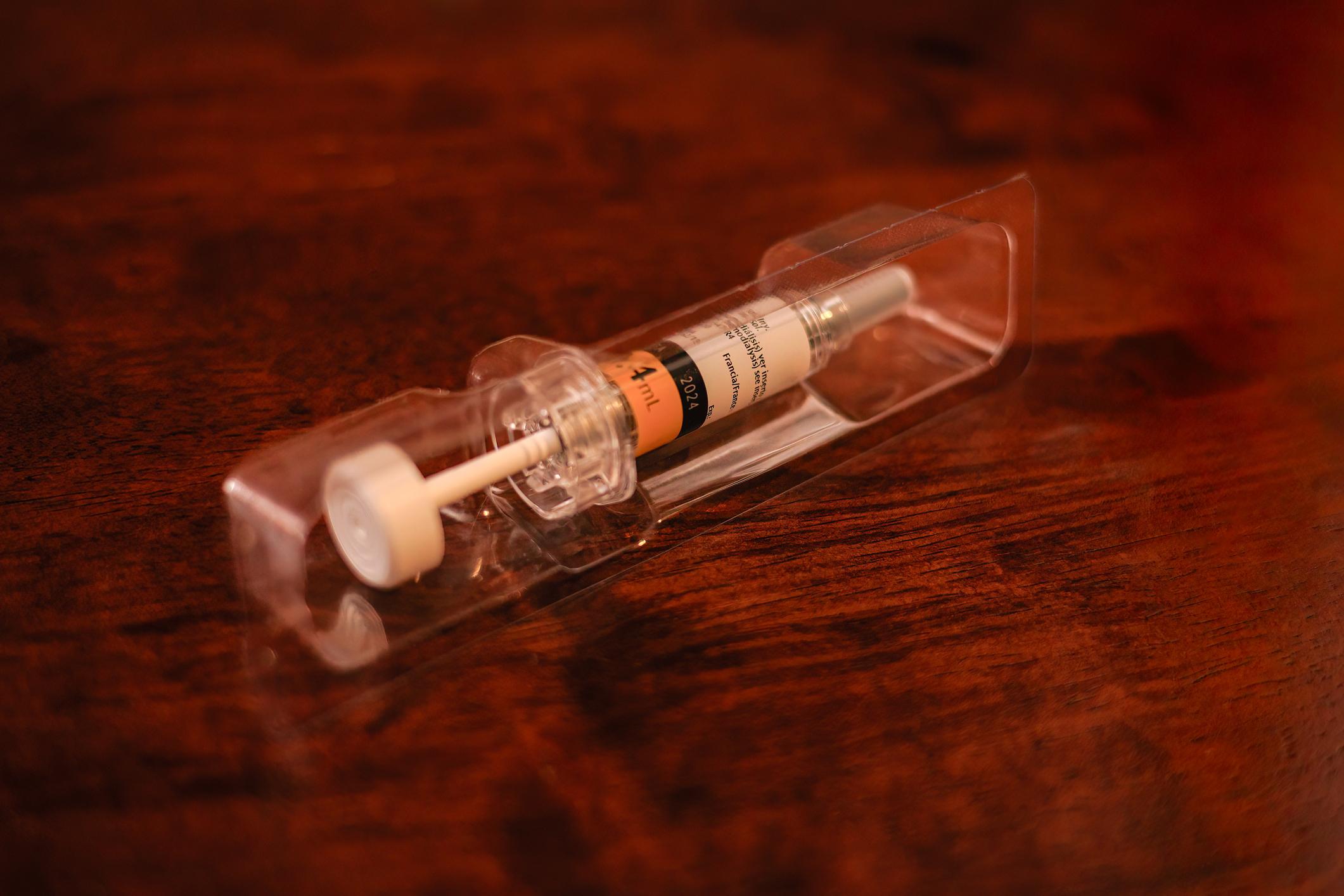
Dose accuracy and ease of administration are also central. A product could theoretically be supplied in a vial and administered with a syringe, but that approach places more responsibility on the user to draw the correct dose, read the meniscus properly, remove air bubbles, and perform multiple steps correctly. A delivery system that allows the user to dial the dose and inject can reduce the number of steps and limit opportunities for error. That kind of design consideration is not secondary to the product; it directly affects whether the therapy can be used safely and consistently in the real world.
The same principle applies across self-administered products, especially those used under stress, urgency, or physical limitation. In some cases, users may need training tools, simplified steps, or design features that help create confidence and reduce hesitation. The device must therefore be designed around how patients and caregivers will actually behave, not only around how a product performs under controlled development conditions.
When device development begins late, the impact is felt across the broader development program. Formulation work may need to be revisited to address viscosity, concentration, dose volume or compatibility with the selected delivery system. Primary packaging decisions may need to be reassessed to ensure fit with the device platform and the required storage conditions. Analytical, stability, extractables and leachables, performance and human factors work may need to be expanded or repeated. In some cases, the program may also need additional supplier evaluation, design verification or assembly-process development before it can move forward. What appears to be a deferred device decision can therefore become a development bottleneck.
Despite these considerations, device development is often not initiated until a program is approaching preclinical studies or phase I. By that stage, however, the device manufacturer or CDMO may require its own development timeline, technical data, compatibility assessments, and design inputs before it can commit to a solution. If key decisions about formulation, primary packaging, storage, fill volume, or administration route have already been made without device input, the program may need to revisit earlier work.
Devices are delivery systems, not packaging materials. An injectable drug product has limited value if the delivery system cannot administer it safely, accurately, and reliably. For that reason, device development requires the same commitment to compliance, quality, and development discipline as formulation development.
A structured process that addresses formulation and device development in parallel requires more upfront coordination and investment, but it helps protect the program later. The cost of early device planning is often more visible than the cost of deferring it, yet late device strategy can be far more expensive when it leads to repeat testing, redesign, additional supplier evaluation, delayed milestones, constrained device options, or commercial manufacturing challenges. By aligning the drug product, dose, delivery route, primary packaging, device platform, target patient population and regulatory strategy early, sponsors can reduce the likelihood of late-stage incompatibilities and avoidable cost.
How Late Device Development Forces a Program Backward
When device development is delayed until after formulation development is largely complete, drug developers may discover that decisions made earlier in the program have narrowed or compromised their delivery options. The materials used in a device selected late in development may not be compatible with the drug substance or the excipients in the formulation. The primary packaging or device components may not be able to withstand the required storage conditions. The selected format may be poorly suited to the formulation because of its viscosity, fill volume, dose size, injection force requirements, or intended route of administration.
Those issues do not always require a program to start over completely, but they can force teams to move backward in the development cycle. If a problem is identified during design verification or compatibility assessment, the program may need to return to the device design team, reassess specific design inputs, repeat testing, revisit the primary packaging strategy, or evaluate alternative device platforms. Even a targeted correction can consume time, add cost, and create pressure at precisely the point when the developer is trying to move toward clinical or commercial milestones.
The development slowdown often occurs at the interfaces between workstreams. A formulation may be technically acceptable but difficult to deliver through the intended device. A primary container may protect the product but not fit the preferred platform. A device may be available but require additional data, modification or supplier development time. An assembly process may be feasible at small scale but not yet qualified for the intended commercial presentation. These interface issues are precisely why device development should begin while formulation, packaging and manufacturing decisions are still flexible.
The challenge can be particularly acute for biosimilars, where the development path is shaped not only by technical requirements but also by intellectual property, device availability, exclusivity, regulatory expectations, and aggressive timelines. In these programs, biopharma companies may focus heavily on developing the biosimilar molecule and demonstrating similarity to the reference product while underestimating the complexity of the delivery system. Yet the delivery presentation may be a critical part of the reference product’s performance, usability, and commercial identity.
Ranibizumab provides a useful example. For a retinal injection like Lucentis (ranibizumab), the delivery system must support accurate administration of a viscous product into a highly sensitive site of care while minimizing risks, such as particulate matter from the delivery system itself. Developers must consider not only the molecule and formulation but also primary packaging, lubrication, injection force, sterilization strategy, and any applicable IP constraints associated with the reference product’s presentation. Focusing solely on producing a biosimilar ranibizumab molecule addresses only part of the development challenge. A viable program must also establish a delivery system and sterility assurance strategy that can meet technical, regulatory, and patient-safety expectations.
This is where late planning often creates avoidable difficulty. Many sponsors understandably look for an established device platform that can shorten the path to market. That can work when the product’s requirements fit the platform, but no device is a universal shortcut. Viscosity, fill volume, patient population, storage conditions, route of administration, primary packaging, and assembly strategy still need to be evaluated for the specific product. In reality, device manufacturers and CDMO partners need time to evaluate requirements, assess the formulation and primary packaging, review available platforms, and determine whether a selected device can meet the program’s needs. If those questions are asked too late, the sponsor may find that the apparent shortcut has created the need for additional development work.
Why Combination Development Depends on Cross-Functional Discipline
The best way to support successful development of a drug–device combination product is to bring the drug and device development teams together from the outset of the program. Those teams may sit within the same organization, or they may include an external device manufacturer, a CDMO, analytical partners, packaging specialists, regulatory experts, and the sponsor’s internal development team. Regardless of the structure, the critical point is the same: drug and device requirements should be discussed early, openly, and in sufficient technical detail to guide development decisions.
This level of coordination is especially important because drug–device combination products rarely move forward in a perfectly linear way. At the earliest stages, formulation information may still be limited. The team may not yet have final data on concentration, viscosity, stability, storage conditions, dose volume, injection force, or primary packaging requirements. Initial device concepts or platform choices will therefore be preliminary. As more information becomes available, the device strategy may need to be refined, tested, challenged, and adjusted.
That process should be expected rather than treated as a failure. Effective development depends on a cycle of design input, feasibility assessment, performance testing, review, and modification. The device team must understand the evolving characteristics of the drug product, while the formulation and drug product teams must understand how their choices affect device options and patient use. In some cases, testing may confirm that a selected platform is appropriate. In others, it may indicate that the team needs to adjust the formulation, revisit the primary container, modify the device approach, or evaluate a different platform.
This structured approach also reflects a more mature development culture. Combination product development cannot rely on trial and error or on the assumption that a pathway used for one product will automatically apply to another. Different molecules, formulations, devices, patient populations, and regulatory contexts can lead to different requirements. A disciplined process helps sponsors identify those differences early, test assumptions, and reduce the chance that unresolved questions will surface at a more costly stage.
The complexity increases when multiple partners are involved. A sponsor may be working with a formulation team, a device supplier, a packaging group, a CDMO, and regulatory advisors, each with its own systems, assumptions, and timelines. Without a structured process, that fragmentation can create gaps in communication and unclear ownership of key decisions. A successful program requires a clear understanding of what data are available, what data are still needed, which requirements are fixed, which assumptions must be tested, and when each partner needs to contribute.
In practice, that means building the right questions into the program early. What primary packaging will the device need to accommodate? What storage conditions must the system withstand? What injection force is acceptable for the target patient population? What human factors risks must be addressed? What compatibility, extractables and leachables, stability, release, and performance data will be needed? What documentation will support the regulatory pathway? Answering those questions progressively, as the product becomes better understood, helps the team move toward a delivery system that is safe, reliable, manufacturable, and appropriate for the patient population.
Drug–device combination development is therefore not simply a matter of selecting a device and attaching it to a finished drug product. It is an iterative, cross-functional process in which the drug product, delivery system, manufacturing strategy, quality expectations, regulatory pathway, and patient-use scenario must be developed in alignment.
From Specialty Batches to Blockbuster Demand
Manufacturing requirements for drug–device combination products can vary widely depending on the molecule, indication, patient population, and commercial opportunity. Many biologic drug–device combination products are developed for oncology, rare diseases, and other specialty indications where production volumes may be relatively modest. In those cases, the manufacturing challenge is not necessarily how to scale to extremely high output but how to support small-volume production efficiently while maintaining the same level of quality, device performance, and regulatory control expected for any commercial product.
That distinction is especially important for CDMOs. A biosimilar or specialty biologic program may involve a small drug substance batch that yields a limited number of cartridges, prefilled syringes, or assembled devices. Such volumes may be entirely manageable from an assembly standpoint, but they still require appropriate equipment, qualified processes, trained teams, release testing, documentation, scheduling, and quality oversight. Low-volume production can therefore create a different kind of complexity: the need to manage cost, capacity utilization, and operational flexibility without compromising the rigor of the development or commercial manufacturing process.
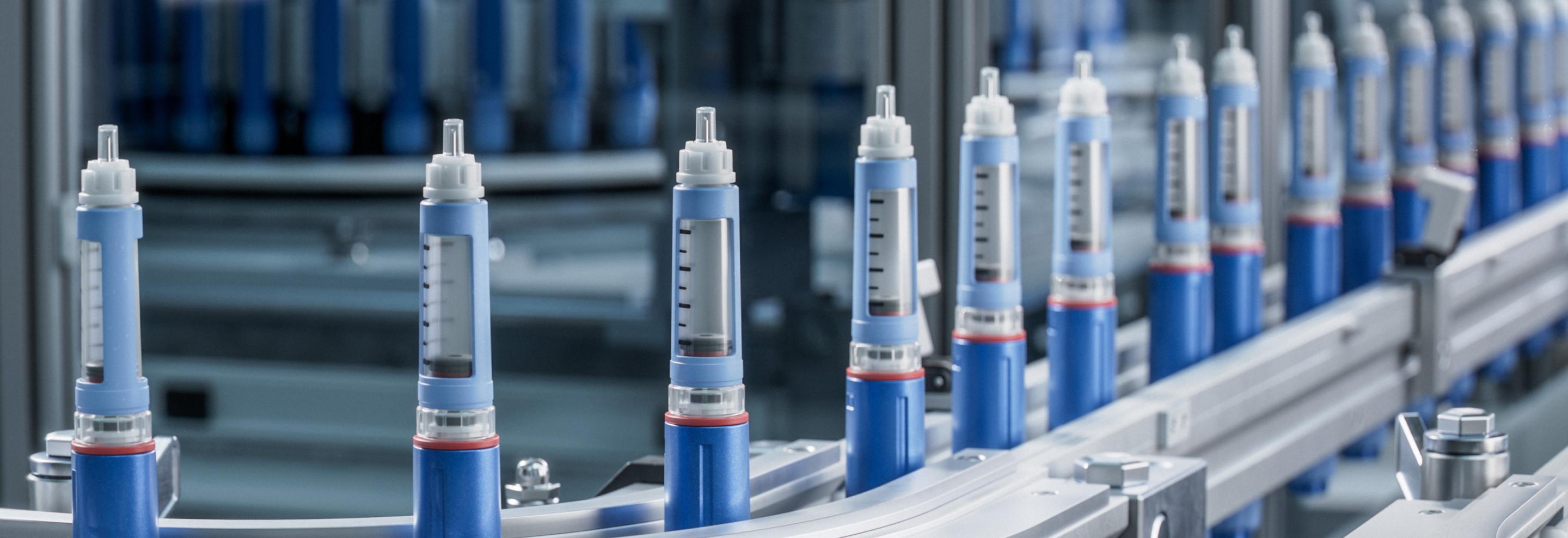
At the same time, manufacturers must be prepared for the opposite end of the market. GLP-1 therapies and other high-demand injectable products require much larger production campaigns, robust fill-finish capacity, dependable device assembly, and scalable supply chains. A semaglutide-type product may involve substantially larger batch sizes than a niche biologic or rare disease therapy, and commercial success can depend on the ability to support high-throughput production reliably.
For biopharma companies, the key is to work with partners that can manage that full range rather than optimize only for one production model. The same CDMO may need to support a small-volume biosimilar program, a mid-scale specialty injectable, and a high-volume chronic disease therapy, each with different requirements for batch size, device format, scheduling, cost structure, and supply reliability. Flexibility across that spectrum is becoming an important part of drug–device combination product strategy because the delivery system must be manufacturable not only at the next clinical milestone but also at the scale the product will ultimately require.
OneSource: Connecting the Molecule, Product, and Delivery System
OneSource provides end-to-end support for the development and manufacture of injectable drug–device combination products, with capabilities spanning early development, drug substance, drug product, fill-finish, device strategy, device assembly, packaging, testing, and regulatory support. The goal is to help sponsors avoid treating formulation, manufacturing, and delivery as separate workstreams that only meet late in development. Instead, OneSource encourages collaborative planning from the outset, with formulation, process development, packaging, device, analytical, quality, and regulatory teams working in close communication as the product evolves.
That integrated structure is particularly valuable because clients approach OneSource at different stages. Some engage early, when device development can still inform formulation, primary container selection, storage conditions, fill volume, and target delivery format. Others come later, sometimes with a device platform already selected, a technical challenge to resolve, or a tech transfer package that needs to be evaluated quickly. Earlier engagement generally gives the teams more flexibility to identify risks, preserve options, and align the drug product and delivery system before costly decisions are locked in, but OneSource can also help assess programs that are already under timeline, cost, or technical pressure.
OneSource’s broader platform helps reduce the complexity of managing multiple external handoffs. When drug substance, drug product, fill-finish, and device-related expertise are distributed across different vendors, sponsors must coordinate separate timelines, data packages, technical expectations, and quality systems. OneSource’s model is designed to provide a more connected path from development through manufacture and delivery-system integration, helping reduce rework, streamline tech transfer, and support a more organized progression toward clinical or commercial readiness.
A key part of that support is knowing which questions to ask at each stage. A sponsor may arrive with a concept, a partially developed formulation, a selected device, or a late-stage tech transfer package. In each case, OneSource can help determine what information is available, what is missing, what assumptions need to be challenged, and what development work is required before the program can move forward. That may include reviewing formulation and primary packaging, assessing viscosity, dose volume, storage and route-of-administration requirements, engaging with device suppliers, evaluating assembly-process needs, or determining whether the challenge can be addressed within the selected platform or requires a different device approach.
OneSource’s value also comes from its exposure to a wide range of drug substances, formulations, delivery systems, and device suppliers. The company has worked with multiple device platforms and maintains relationships across the device supply ecosystem, allowing its teams to understand where specific platforms stand in development, what timelines may be required, what data suppliers will need, and what challenges a client should anticipate. That experience does not eliminate the need for program-specific development, but it can shorten the learning curve and help clients avoid surprises.
Supporting drug–device combination products as a CDMO also requires operational discipline across a wide range of client programs and device platforms. Each platform can bring different SKU requirements, equipment needs, assembly-process considerations, engineering inputs, supplier timelines, and technical documentation expectations. As multiple clients advance products through different delivery formats, the CDMO must manage that complexity without treating every program as a one-off exercise. OneSource’s experience across multiple device platforms allows its teams to apply learnings from prior programs while still protecting client confidentiality and addressing the specific technical requirements of each product. That accumulated experience can help reduce the learning curve, anticipate equipment and engineering needs earlier, and support more efficient movement from device selection through assembly, packaging, testing, and commercial readiness.
Current capabilities include manufacturing and filling into vials, cartridges, and prefilled syringes, with device assembly and packaging support for injectable delivery formats. OneSource also continues to monitor advances in injection technologies and invest where there is clear alignment with client needs and market demand, including areas such as dual-chamber systems and other emerging delivery approaches. That vigilance is important because the drug–device field continues to evolve, and sponsors increasingly need partners that understand both established platforms and the next generation of patient-administered therapies.
Ultimately, OneSource’s role is not limited to providing equipment or assembly capacity. Its contribution lies in helping sponsors structure drug–device combination programs so that the formulation, primary packaging, delivery system, manufacturing process, quality strategy, and regulatory pathway develop together. For sponsors navigating complex injectable programs, that integrated support can make the difference between adding a device late and building a complete product from the beginning.
The Expanding Opportunity for Patient-Ready Injectable Products
Demand for drug–device combination products is expected to remain strong in the coming years, with market growth projected at a compound annual growth rate above 11%.2 Several forces are contributing to that outlook, including the aging global population, rising demand for weight-loss treatments, increasing incidence of diabetes and other chronic diseases, and broader interest in therapies that can be administered safely outside of traditional clinical settings.
Those drivers all point in the same direction: more injectable products are likely to be developed not merely as drugs but as integrated therapeutic systems. For chronic diseases in particular, the delivery format can shape adherence, convenience, patient confidence, and the overall cost of care. Products that once may have been administered in clinics, hospitals, or daycare settings are increasingly being evaluated for self-administration or caregiver administration at home. That shift expands the role of delivery systems in human medicine and may also create opportunities in veterinary applications, where in-home administration of injectable therapies can similarly reduce treatment burden.
The market is also being influenced by changing expectations around access, affordability and long-term value. In chronic disease categories, sponsors are under pressure to simplify administration, reduce avoidable healthcare utilization and support treatment models that are more sustainable for patients, providers and payers. In that environment, delivery systems may become increasingly important to product differentiation, patient experience and life cycle strategy.
These trends suggest that the future of injectable therapy will rely less on conventional administration from vials and ampoules and more on delivery formats designed around the needs of the product, the patient, the caregiver, and the market. Pens, autoinjectors, prefilled syringes, cartridges, dual-chamber systems, and other emerging platforms will continue to evolve as sponsors look for safer, more intuitive, and more scalable ways to deliver complex therapies.
Building better combination products requires more than selecting a device that can deliver a dose. It requires early alignment among the drug product, formulation, primary packaging, delivery system, patient-use scenario, manufacturing process, quality expectations, and regulatory pathway. As more therapies move toward self-administration and patient-ready formats, sponsors that treat device strategy as part of product design from the beginning will be better positioned to create combination products that are safe, usable, manufacturable, scalable, and commercially resilient.
Reference
1. Current Good Manufacturing Practice Requirements for Combination Products: Guidance for Industry and FDA Staff. U.S. Food and Drug Administration. Jan. 2017.
2. Drug Device Combination Products Market. Roots Analysis. Apr. 2026.