

Key Takeaways
Traditional site-based trials remain the standard for many complex studies requiring intensive clinical monitoring.
Decentralized clinical trials (DCTs) use digital tools, remote monitoring, and home-based services to reduce the need for physical study site visits.
Hybrid trials combine centralized oversight with decentralized elements such as telemedicine and remote data collection.
Decentralized models can improve patient recruitment and retention, particularly for geographically dispersed populations.
Hybrid designs are increasingly viewed as the most practical approach for balancing data quality, regulatory compliance, and patient convenience.
Why This Comparison Matters Now
Clinical trial design has evolved significantly in recent years as sponsors and research organizations seek to improve patient participation and operational efficiency. Traditional clinical trials typically rely on centralized study sites where patients travel for screening, treatment, and follow-up visits. While this model provides strong control over data collection and patient monitoring, it can also create barriers to participation for many patients.
Patients may face logistical challenges such as travel distance, scheduling conflicts, or caregiving responsibilities that make frequent site visits difficult. These barriers can slow recruitment, reduce participant diversity, and increase the risk of trial dropout.
In response, decentralized clinical trials have emerged as an alternative model that leverages digital technologies and remote healthcare services to conduct portions of clinical studies outside traditional research sites. Telemedicine visits, wearable devices, mobile health applications, and home nursing services can allow many trial activities to occur in participants’ homes.
However, fully decentralized trials may not be appropriate for every study. Certain procedures—such as complex imaging, surgical interventions, or specialized laboratory testing—still require dedicated clinical facilities. As a result, many sponsors are increasingly adopting hybrid trial models that combine site-based and decentralized elements.
Understanding the advantages and limitations of each model has become critical as sponsors seek to design clinical trials that are both scientifically rigorous and patient-centered.
 Mechanistic Differences
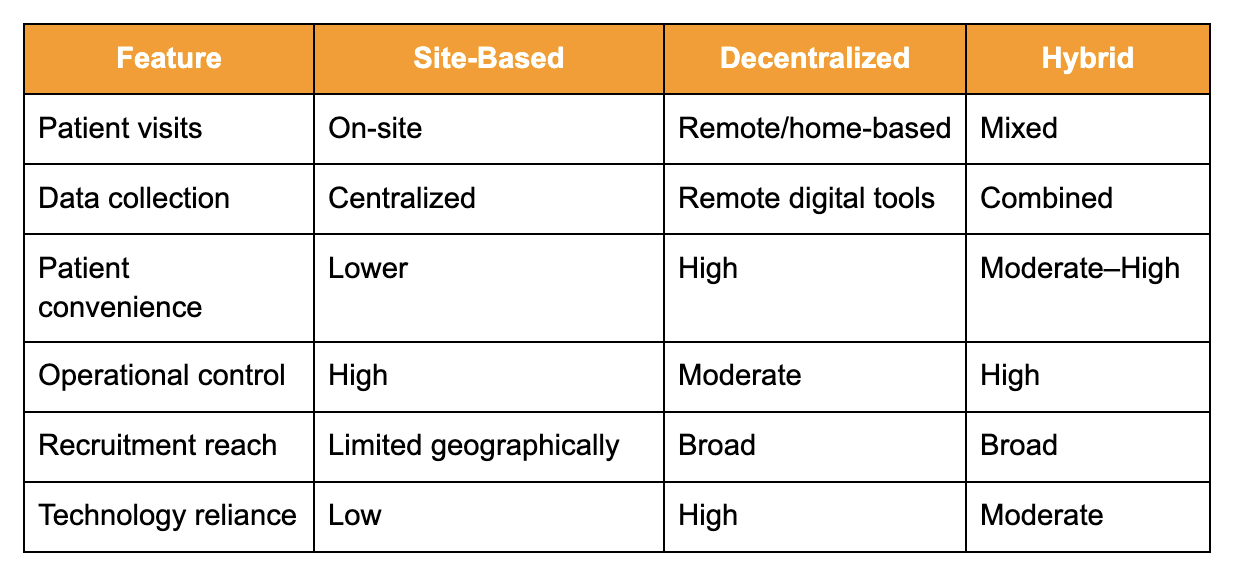
Site-based clinical trials rely on centralized clinical research centers where investigators conduct study procedures, collect data, and monitor patient safety. This model allows investigators to maintain tight control over study protocols and ensures that data collection occurs in standardized environments.
Decentralized clinical trials shift many of these activities away from physical study sites. Digital technologies enable remote monitoring of patient health metrics, while telemedicine platforms allow investigators to conduct virtual study visits. Mobile healthcare professionals may also perform certain procedures, such as blood draws or drug administration, in patients’ homes.
Hybrid trials incorporate elements of both models. Patients may complete some study visits remotely while attending site visits for procedures that require specialized equipment or direct medical supervision. This flexible approach allows sponsors to tailor trial design to the needs of the specific therapy and patient population.
Operational Considerations
Operational considerations play a major role in determining which trial model is appropriate. Site-based trials rely on established clinical research infrastructure and well-defined regulatory frameworks, which can simplify trial management for sponsors and investigators.
Decentralized trials introduce new logistical challenges, including digital data integration, remote monitoring infrastructure, and coordination of home healthcare services. Sponsors must ensure that remote data collection tools are reliable and compliant with regulatory standards.
Hybrid trial designs aim to capture the advantages of both models while mitigating their respective limitations. By selectively decentralizing certain trial activities, sponsors can improve patient accessibility without sacrificing the quality and consistency of clinical data.
Best Fit by Use Case
Site-based trials are typically preferred when:
complex clinical procedures are required
intensive patient monitoring is necessary
specialized equipment or facilities are needed
Decentralized trials are typically preferred when:
participants are geographically dispersed
the study relies heavily on digital health monitoring tools
patient convenience and access are primary concerns
Hybrid trials are typically preferred when:
some study procedures require site visits
patient recruitment and retention are critical
digital technologies can support remote data collection
Verdict
Site-based, decentralized, and hybrid clinical trials each offer distinct advantages depending on the scientific and operational requirements of the study. Traditional site-based trials remain essential for studies requiring specialized procedures and intensive monitoring.
However, decentralized and hybrid models are increasingly reshaping clinical research by improving patient accessibility and enabling more flexible study designs. Hybrid approaches, in particular, are emerging as a practical compromise that combines the strengths of centralized oversight with the patient-friendly advantages of decentralized participation.
As clinical research continues to evolve, sponsors will likely adopt increasingly flexible trial designs that integrate digital technologies while preserving the scientific rigor required for regulatory approval.