Introduction
In recent years, oligonucleotide-based therapy has gained attention as an emerging class of target therapeutic agents by inhibiting specific genes involved in various diseases, including cancers, viral infections, and genetic disorders. These oligonucleotides include single-stranded DNA (antisense oligonucleotide (ASO)) or RNA (miRNA), and double-stranded RNA, known as small interfering RNA (siRNA). ASO can activate RNA degradation through the induction of endogenous RNases or modulate gene splicing by exon skipping or inclusion. In contrast, siRNAs and miRNAs utilize the intrinsic RNA interference pathway to degrade RNAs or inhibit translation. Because of the target specificity, siRNAs have been used more as therapeutic tools. The therapeutic effect of siRNAs has been shown to be better than that of peptides or inhibitors.1 However, siRNAs need to overcome two major obstacles before they can be employed therapeutically. First, unmodified siRNAs have low stability in serum and non-specific accumulation in cells. Second, siRNAs have poor cell membrane permeability due to their high negative charge and large sizes.2 Recently, the stability of siRNAs in blood has been improved by RNA delivery vehicles, such as polyethyleneimine (PEI), liposome, and N-acetylgalactosamine (GalNAc).
To date, four siRNA drugs utilizing RNA delivery vehicles have been approved by the U.S. Food and Drug Administration (FDA). Patisiran (ONPATTRO®) was the first approved liposomal siRNA drug in 2018 for treating patients with hereditary ATTR (hATTR) amyloidosis. Givosiran (GIVLAARI®) was the second approved GalNAc‐linked siRNA drug in 2019 for the treatment of patients with acute hepatic porphyria (AHP). Two more GalNAc‐linked siRNAs approved in 2020 were Lumasiran (OXLUMO®) and Inclisiran (LEQVIO®) for the treatment of patients with primary hyperoxaluria type 1 (PH1) and hypercholesterolemia, respectively.3–6 According to market analysis by Research Nester Pvt. Ltd., the market for siRNA is expected to exceed $67 billion by the end of 2036, with an annual growth rate of 18.5% between 2024 to 2036.7
The delivery of all approved siRNA-based drugs and many other siRNAs studied has been mainly directed to the liver. Despite advances in improved stability and efficient delivery of siRNAs to the liver, delivery of siRNAs to other tissues and organs has been challenging, and only a few siRNAs have advanced to clinical trials. RXI-109, which has completed phase II, is a modified siRNA to reduce hypertrophic scarring and keloid formation. In more recent years, monoclonal antibodies (mAbs) have been employed for siRNA delivery vehicles due to their specificity to antigens expressed on target cell surfaces. Monoclonal antibodies have already been used to deliver small molecules to the targeted tumor cells via the receptor-mediated internalization process as antibody–drug conjugates (ADC). Since the FDA approved the first ADC, gemtuzumab ozogamicin (MYLOTARG®), in 2000 for the treatment of patients with acute myeloid leukemia (AML), 14 more ADCs have been commercialized to treat various cancers. The successful application of ADCs in oncology has expanded to developing antibody–oligonucleotide conjugates (AOCs, Figure 1). Initially, AOCs were used as diagnostic tools but more recently as targeted therapeutic agents.8 The ability of the antibody portion of AOCs to deliver to specific tissues or cells overcomes the limit of unmodified oligonucleotides that are delivered mostly toward the liver. Also, the interaction of the endocytic antibody portion with epitopes on the surface of the target cells allows AOCs to be internalized. Furthermore, in vitro stability studies showed that the oligonucleotide portion of the AOC was more stable than the oligonucleotide alone.
Note that since AOCs are still in their infancy for therapeutic applications for modalities such as cancer, very little to no market research information is available indicating the potential for this promising technology.
Conjugation of Oligonucleotides to Antibodies9
Currently, AOCs are generated mostly by three methods: 1) electrostatic interaction-based conjugation, 2) avidin-biotin affinity-based conjugation, and 3) covalent binding-based conjugation.
1) Ionic interaction-based conjugation
Positively charged protamines linked to antibodies have been used to bind negatively charged siRNAs to form antibody siRNA conjugates via ionic interactions. This method has been applied to suppress HIV, inhibit prostate cancer cells, treat arthritis, and treat myasthenia gravis (autoimmune disease). The advantage of this method is the polycationic complex can escape from lysosomes by osmotic swelling. However, due to the reversibility of the interactions, the conjugate could be dissociated under changing pH or salt concentration.
2) Avidin–biotin affinity-based conjugation
AOCs have been prepared using the strong interactions between a biotin-labeled oligonucleotide and avidin-linked antibody. This method was applied to treat wide variety of cancer and podocyte-injured glomerular diseases. Because of the complexity of chemical modification of the antibody and oligonucleotide, this method has been used rarely for conjugation compared to ionic interactions and direct conjugation.
3) Direct chemical conjugation (Figure 1)
The linker chemistries and conjugation methods for AOCs are analogous to the methods used for generating ADCs and other bio-conjugates. The most common approach to preparing AOCs is to link oligonucleotides to either lysine residues or cysteine residues on the antibodies that are reduced from the internal disulfide bonds using reducing agents. These conjugation methods do not require modification of antibodies but result in heterogeneity of conjugates with various oligonucleotide–antibody ratios (OAR), a parameter used to describe the ratio of oligonucleotides to antibodies. Thus, the OAR and sites of oligonucleotide conjugation can impact the pharmacokinetics and therapeutic index of AOCs. To overcome heterogeneity, homogeneous AOCs have been developed using site-specific strategies. One approach to creating site-specific AOCs is the THIOMABs technology developed by Genentech. In this method, the site-specific cysteine-engineered antibodies provide a defined antibody:siRNA stoichiometry. The AOCs generated using this platform showed intratumoral delivery and gene silencing effects in a mouse model. The drawback of this method is the stability of conjugates. The thiosuccinimidyl linkage is reversible and can undergo premature cleavage upon exchange with circulation thiols in vivo. The other approach is to use click chemistry, which is the Cu(I)-catalyzed 1,3-dipolar azide-alkyne cycloaddition between azides and alkynes (CuAAC). Because of the robustness and selectivity of click chemistry, this method has been used to synthesize various conjugates. The disadvantage of this method is that copper ions may denature proteins. This issue was resolved by the development of strain-promoted alkyne–azide cycloaddition (SPAAC) which is Cu-free click chemistry. In SPAAC, a dibenzocyclooctyne (DBCO) moiety of the antibody reacts covalently with an azide-modified oligonucleotide. This reaction has no adverse effects on antibodies.
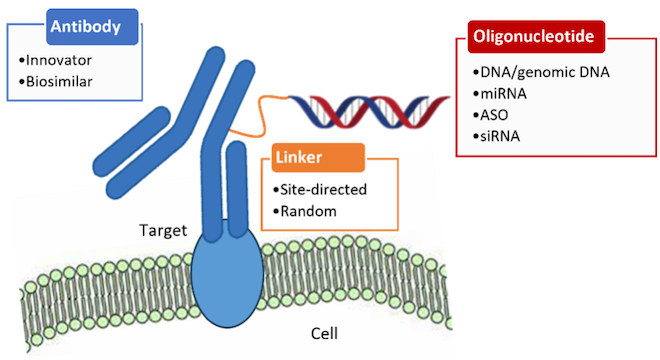 Figure 1. Scheme of antibody–oligonucleotide conjugates. miRNA: microRNA, ASO: antisense, siRNA: small interfering RNA.
Potential Challenges and Solutions for Process Development, Manufacturing, and Characterization of AOC
The application of AOCs as biotherapeutics is an emerging field, and, due to their structural characteristics, some manufacturing steps, as well as analytical methods for their characterization, need to be modified or developed to address the production for clinical trials. Some considerations for the synthesis of AOCs are as follows:
The analytical and purification methods will be developed specifically for AOC because an oligonucleotide is larger than a typical drug–linker and can have a MW greater than 10 kDa. This means that the oligonucleotide has a larger influence on the physical and chemical properties of the conjugated antibody (150 kDa) than small molecules.9
The analysis and characterization need to be adapted to the AOC compared with the antibody and modified antibody. The oligonucleotides are negatively charged with phosphate backbones (with over 20 negative charges), they are water soluble and will dominate the overall charge profile of the AOC.
OARs determination. Chromatographic methods, which rely on the hydrophobicity of the drug-linker, are not transferable to OAR, and it is usually accomplished by liquid chromatography—mass-spectrometry (LC-MS), fluorescence, or polymerase chain reaction (PCR) amplification.
Safety and facilities are important. Solvents used in oligo-based drug manufacturing can be hazardous. Manufacturers must provide safe transport to the facility and guarantee safe on-site storage. Cold storage needs to be available to keep products and intermediate compounds.
Explore the frozen storage temperature of the AOC if the product is not stable refrigerated (4 °C) rather than lyophilized powder during the early stages of clinical trials.
For stable final formulation buffer , the utilization of appropriate excipients and/or additives may be needed to preserve the AOC stability and functionality.
Pathways to Perform AOCs Process Development and Manufacturing:
AOCs are a novel class of synthetic chimeric biomolecules that have been continually gaining traction in modern biotechnological applications. This is primarily due to the unique combination of the properties of their two main constituents, exceptional targeting abilities, and biodistribution profiles of the antibody (biosimilar and/or innovative) in addition to an extensive scope of the oligonucleotide functional and structural roles in terms of potency and precision therapies to treat previously untreatable diseases. In this article, as a flexible manufacturing CDMO, we are presenting this yet emerging class of chimeric biomolecules AOCs overview of the practical considerations regarding process development, good manufacturing practice (GMP) manufacturing, characterization, and Investigational New Drug (IND)-enabling activities for early-phase clinical trials. A general overview of the field of oligonucleotides with other peptides, proteins, and small molecules is provided in recent review articles.9,10 Furthermore, for over two decades, GBI has end-to-end capabilities and experience in performing process development and manufacturing of numerous monoclonal antibodies and the corresponding antibody–ligand conjugates, which include the successful manufacturing of an antibody-genomic DNA (from salmon sperm) for human clinical studies.11–16
AOCs have more challenges and more conjugation methods than typical conjugation of small molecules in ADCs. As described earlier, the methods used to prepare AOCs include electrostatic interactions, the affinity between biotin and avidin, and direct conjugation to the antibody. The covalent methods for the synthesis of AOCs enable stable linkages and afford more defined structures making them appropriate for therapeutic applications. On the covalent approaches the oligonucleotide moiety can be chemically coupled with free primary amine or be transformed into a more reactive thiol. The appropriate bifunctional chemical linkers are usually chosen by the reactive group present in the antibody structure (native vs engineered) and the accessibility of oligonucleotide derivatives.2,9
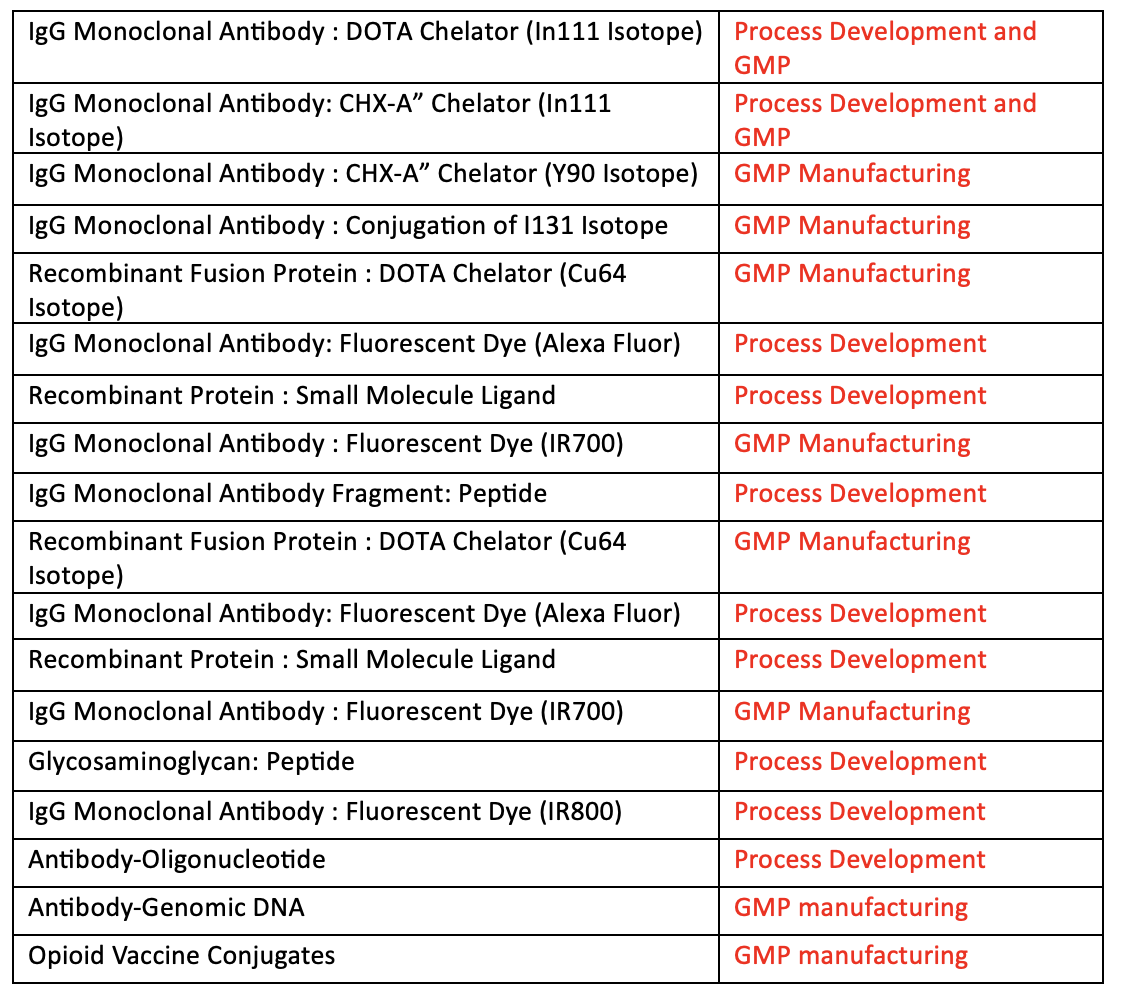
Typical conjugation performed at GBI for bio-conjugates may include the following (Table 1):
1. Oligonucleotide modification: This requires the covalent coupling of the oligonucleotide with an appropriate heterobifunctional crosslinking agent to afford the oligonucleotide–linker. The linker design requires to be stable in circulation and upon antibody-mediated internalization, the payload is efficiently released. Reactive groups, such as maleimide, thiol, NHS-ester and other functional groups, are made available on the unconjugated end of the linker for conjugating onto the antibody.
2. Antibody conjugation onto the activated linker–oligonucleotide conjugate: Several approaches can be employed to conjugate an antibody onto the activated linker-oligonucleotide payload.10,13–15
Site-directed conjugation via cysteine coupling: The cysteine coupling strategy is based on the reaction between the cysteine residue of the antibody generally at the hinge disulfide region and the thio-reactive functional group (e.g., maleimide) introduced on the oligo to combine the two. Typically, the cysteine residues in antibodies form disulfide bonds including the hinge region, so there are no free sulfhydryl groups. For over a decade, GBI has developed novel processes for the specific reduction one of the two disulfides at the hinge (e.g., IgG1 ) and away from the antigen-binding region, compared with the lysine–amine random coupling strategy, the cysteine coupling strategy performs better in controlling heterogeneity and AOC mole ratio (typically 2:1 oligo:antibody), and the AOC produced is more efficient and has a wider therapeutic window.15,16
Random conjugation of the amine reactive antibody with the activated (via NHS-ester) linker– oligonucleotide conjugate. This well established and classical approach is usually performed via the direct conjugation of the primary amines of the lysine side chains of the antibody with the activated (via NHS-ester) oligo-linker to afford a range of AOC mole ratios in a Gaussian distribution.
Direct conjugation (no linker) of the antibody and the oligonucleotide through carbodiimide (EDC)/NHS-ester chemistry.
GBI’s Antibody–Oligonucleotide Process Development and GMP Manufacturing Requirements
A project for GMP manufacturing of AOC at GBI starts with the assessment of the technology and clinical manufacturing. This assessment involves the tech transfer of data by the client. The data to be analyzed will include a) chemical (small molecule payload) and protein (antibody) conjugation processes and characterization, as well as safety, equipment and facility considerations (with organic solvents); b) target parameters for process optimization such as mole ratio of antibody:oligonucleotide; mixing studies, conjugation temperature and time, process economics, compliance, scalability among others; and c) IND-enabling activity requirements for chemistry, manufacturing, and controls (CMC) submission to the regulatory authorities such as product stability (via ICH guidelines), appropriate product release assays (safety, identity, potency, purity, overall quality), and creation of a reference standard.
A typical end-to-end project usually involves antibody production, beginning from a research cell bank (RCB). This run comprises of process development (PD), master cell bank (MCB) creation, and GMP manufacturing of the antibody. This process generally takes about eight months using GBI’s antibody manufacturing platform and has been well described in our previous articles (Step 1 in Figure 2).13,17 An alternative approach is for the client to provide a commercially available biosimilar for the antibody.
The project continues with the PD and GMP manufacturing of the oligonucleotide–linker, which is a conjugate intermediate, taking approximately two months (Step 2, Figure 2).
The last stage is the PD and GMP run for the AOC conjugation where several options and approaches are available at GBI and as described in the previous section. The time for AOC conjugation is about three months (Step 3, Figure 2). The resulting AOC drug substance (after formulation) is filled aseptically to afford the drug product.
The total end-to-end (from RCB through to aseptic fill and finish of the AOC) timeline proposed by GBI is about 10–12 months considering that some of the activities may occur in parallel. GBI as a flexible CDMO can also partially execute the project, depending on the client's needs.
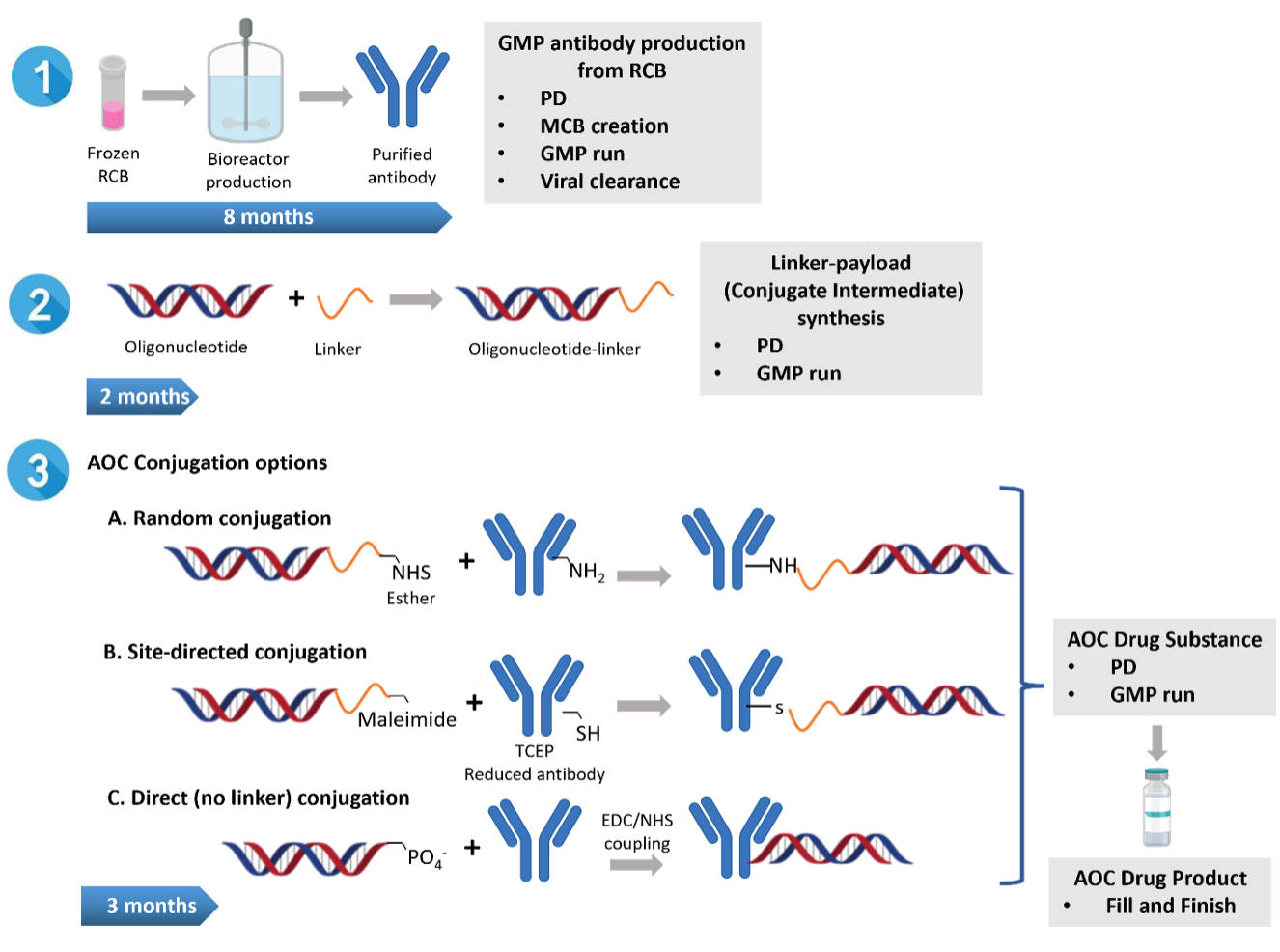 Figure 2. Manufacturing of antibody–oligonucleotide conjugate (AOC) at GBI. Steps 1, 2 and 3 for process development, manufacturing and IND-enabling activities may overlap while the purified antibody, oligonucleotide, and linker are available. RCB: Research Cell Bank, PD: process development, MCB: Master Cell Bank, GMP: Good Manufacturing Practices, TCEP: Tris(2-carboxyethy1)phosphine, EDC: 1-ethyl-3-(3-dimethylaminopropyl) carbodiimide, NHS: N-hydroxysuccinimide.
GBI has been developing and manufacturing a wide range of antibody-drug conjugates for more than two decades. Table 1 depicts selected antibody conjugates with many types of linker/payloads, including oligonucleotide and genomic DNA for clinical studies.14
Table 1: Selected Antibodies Conjugates Manufactured by GBI
 Conclusion and Future Outlook
The field of AOCs has recently received increasing attention as an emerging class of functionalized antibodies that have already been used in a wide range of applications. Combining the specific binding abilities of antibodies with the vast structural and functional properties of oligonucleotides, these conjugates have found a wide variety of applications as imaging, detection, and a versatile class of chimeric biomolecules for therapeutic agents. It is envisioned that the landscape of AOCs will evolve rapidly over the next decade or so as the field of ASO, siRNA, miRNA and other oligonucleotides advances. This evolution includes addressing major challenges associated with analytical characterization, target and disease selection, drug trafficking, in vivo stability knowledge, and mechanistic understanding of existing and new AOC constructs. With over 20 years of experience and knowledge of bio-conjugates (including nucleic acid conjugates), GBI as an end-to-end CDMO is uniquely qualified to partner with prospective clients and researchers in the process development, GMP manufacturing, characterization, and pertinent IND and BLA enabling activities of the “naked” mAb (from the RCB), linker–oligonucleotide conjugates, antibody–linker–oligonucleotide conjugates drug substances, and aseptic fill/finish to afford the vialed drug product.
References
1. Ibtehaj, Naazneen, and Ruksana Huda. “High-dose BAFF receptor specific mAb-siRNA conjugate generates Fas-expressing B cells in lymph nodes and high-affinity serum autoantibody in a myasthenia mouse model.” Clinical Immunology. 176: 122–130 (2017).
2. Bäumer, Nicole, Wolfgang E Berdel, and Sebastian Bäumer. “Immunoprotein-Mediated siRNA Delivery.” Molecular Pharmaceutics. 14: 1339–1351 (2017).
3. Lee, Sang-Kyung, et al. “Cell-Specific siRNA Delivery by Peptides and Antibodies.” Methods in Enzymology. 502: 91–122 (2012).
4. Chen, Xiuhui, et al. “RNA Interference-Based Therapy and Its Delivery Systems.” Cancer and Metastasis Reviews. 37: 107–124 (2018).
5. Hoy, Sheridan M. “Patisiran: First Global Approval.” Drugs. 78: 1625–1631 (2018).
6. Scott, Lesley J. “Givosiran: First Approval.” Drugs. 80: 335–339 (2020).
7. Nagar, Shalini. “A Look At siRNA & Market Trends.” Advancing RNA. 3 Jan. 2024.
8. Mullard, Asher. “Antibody–Oligonucleotide Conjugates Enter the Clinic.” Nature Reviews Drug Discovery. 21: 6–8 (2022).
9. Dugal-Tessier, Julien, Srinath Thirumalairajan, and Nareshkumar Jain. “Antibody-Oligonucleotide Conjugates: A Twist to Antibody-Drug Conjugates.” Journal of Clinical Medicine. 10: 838 (2021).
10. Dovgan, Igor, et al. “Antibody–Oligonucleotide Conjugates as Therapeutic, Imaging, and Detection Agents.” Bioconjugate Chemistry. 30: 2483–2501 (2019).
11. Sesay, Muctarr. “Vaccines Present a Novel Strategy for Opioid Overdose Prevention.” Pharma’s Almanac. 31 Oct. 2022.
12. Sesay, Muctarr. “Theranostic Manufacturing Solutions.” Pharma’s Almanac. 29 Aug. 2022.
13. Sesay, Muctarr, and Andrew Majdoch. “Leveraging Experience to Reduce Timelines for IND-Enabling Activities.” Pharma’s Almanac. 19 Sep. 2022.
14. Pincus, Steven E, et al. “Evaluation of Antigen-Based Heteropolymer for Treatment of Systemic Lupus Erythematosus in a Nonhuman Primate Model.” Clinical Immunology. 105: 141–154 (2002).
15. Tati, Swetha, et al. “Humanization of JAA-F11, a Highly Specific Anti-Thomsen-Friedenreich Pancarcinoma Antibody and In Vitro Efficacy Analysis.” Neoplasia. 19: 716–733 (2017).
16. Revskaya, Ekaterina, et al. “A Radiolabeled Fully Human Antibody to Human Aspartyl (Asparaginyl) β-Hydroxylase Is a Promising Agent for Imaging and Therapy of Metastatic Breast Cancer.” Cancer Biotherapy and Radiopharmaceuticals. 32: 57–65 (2017).
17. Sesay, Muctarr, and Natalia Bourguignon. “Expediting Radioimmune Conjugate Pharmaceuticals for First-In-Human Phase 0 Proof-of-Concept Human Studies from Stable Pool.” Pharma’s Almanac. 15 Mar. 2024.