
Key Takeaways
Single-use bioreactors reduce cleaning requirements, enable faster facility turnaround, and support flexible multiproduct manufacturing.
Stainless-steel bioreactors remain the traditional backbone of large-scale biologics production due to durability and established process performance.
SUBs can significantly reduce capital expenditures and facility build timelines, making them attractive for new or modular facilities.
Stainless systems can provide cost advantages at very large scales, especially for high-volume commercial products.
Many modern facilities now adopt hybrid manufacturing strategies, combining single-use upstream systems with stainless or mixed downstream infrastructure.
Why This Comparison Matters Now
The biopharmaceutical industry is undergoing a shift in manufacturing strategy driven by several factors: rapid growth in biologics pipelines, the rise of advanced therapies, and increasing pressure to accelerate development timelines while controlling costs.
Historically, large stainless-steel bioreactors dominated commercial biologics manufacturing. These systems were designed for high-volume production and long product lifecycles, particularly for monoclonal antibodies.
However, the emergence of single-use bioreactor systems has introduced a new manufacturing paradigm. By eliminating the need for cleaning and sterilization between batches, single-use technologies enable faster facility turnaround and greater operational flexibility. As a result, many new biologics facilities are being designed around single-use infrastructure or hybrid models combining both approaches.
For developers and CDMOs, the question is no longer whether single-use technology can support commercial manufacturing (it clearly can!) but rather which platform best aligns with the scale, flexibility, and life cycle of a given product.
 Mechanistic Differences
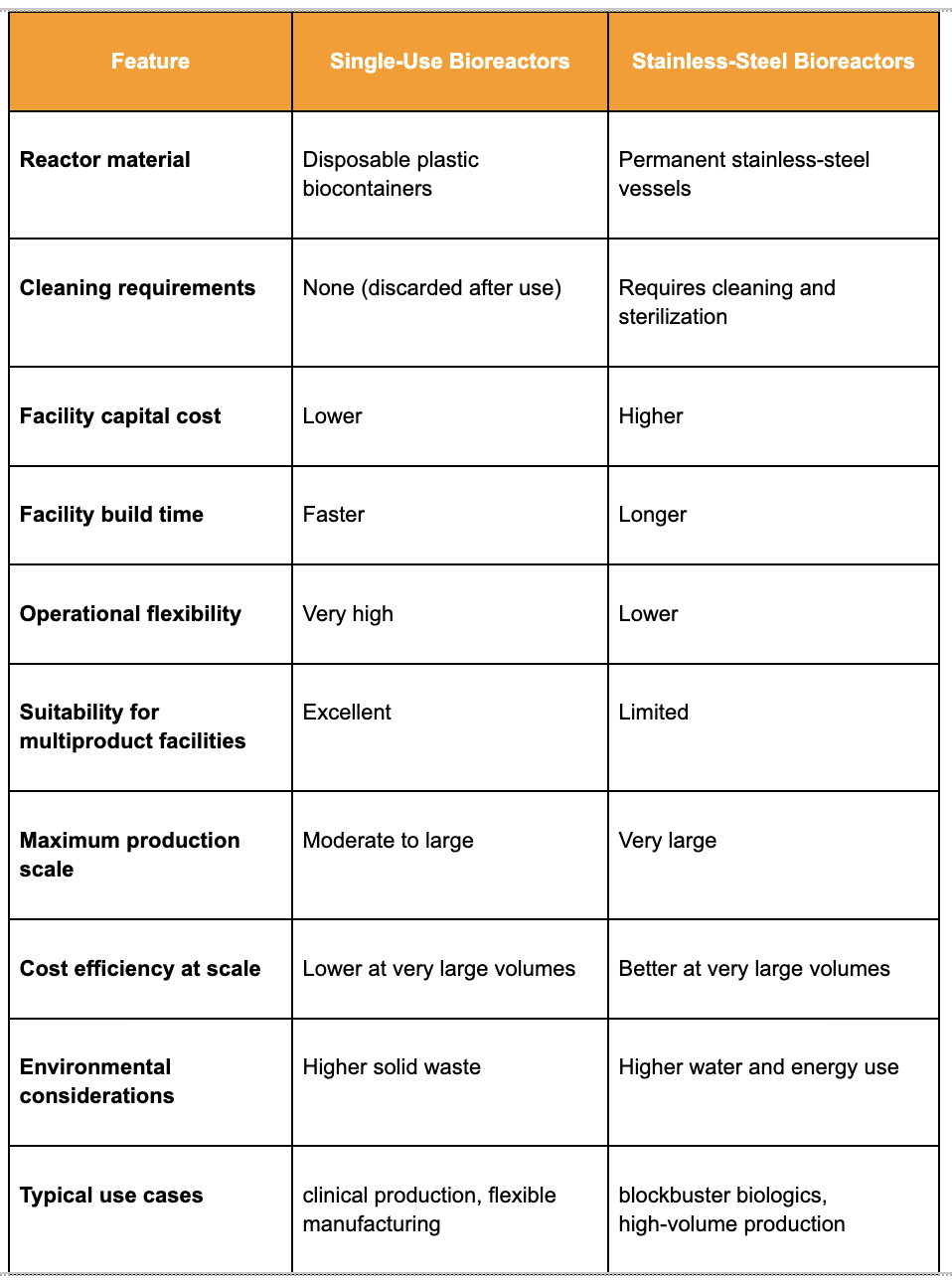
The core difference between single-use and stainless-steel bioreactors lies in how the bioprocess environment is constructed and maintained.
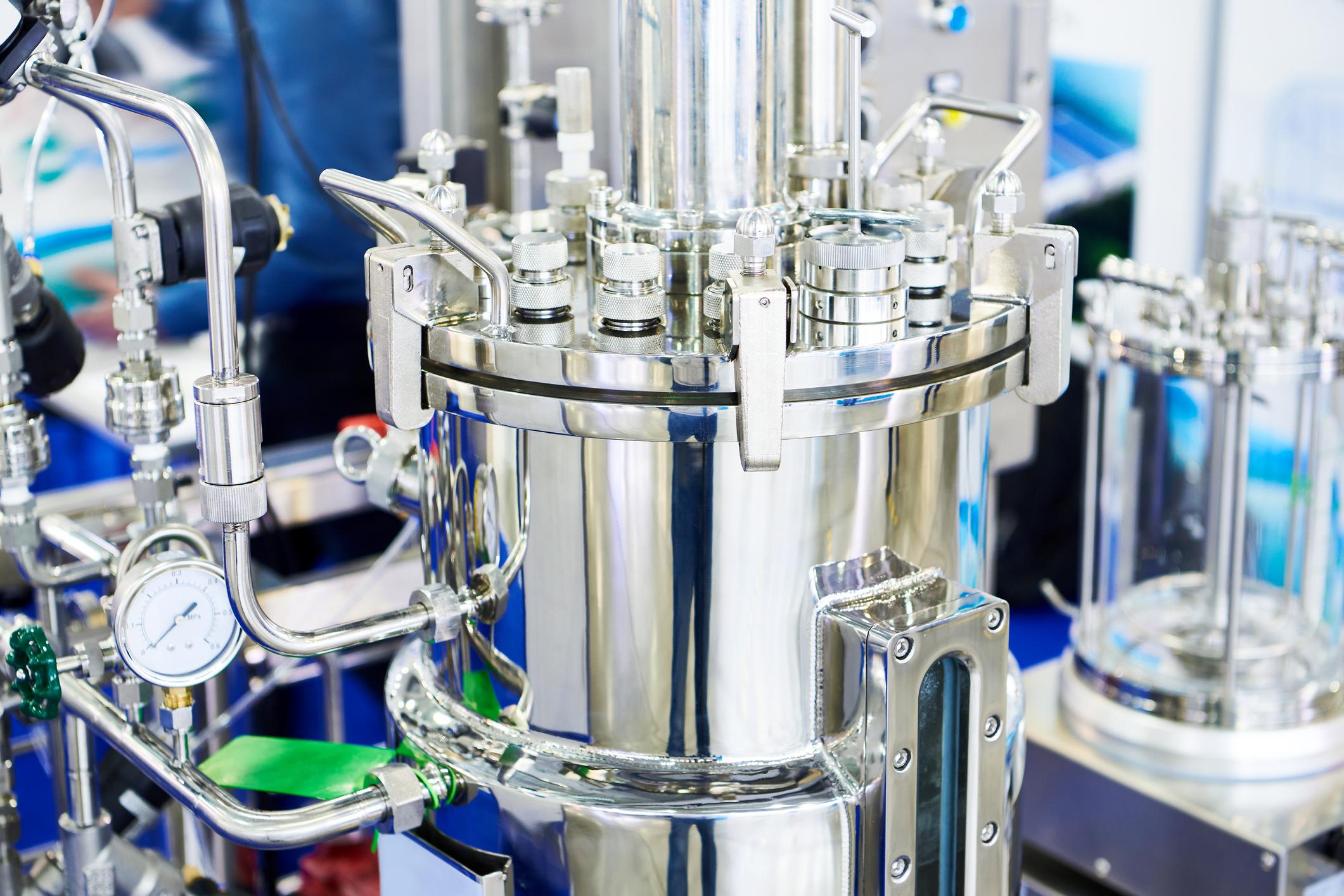
Stainless-steel bioreactors are permanent vessels integrated into large fixed manufacturing systems. They are designed for repeated use and require cleaning-in-place (CIP) and sterilization-in-place (SIP) procedures between batches to ensure sterility.
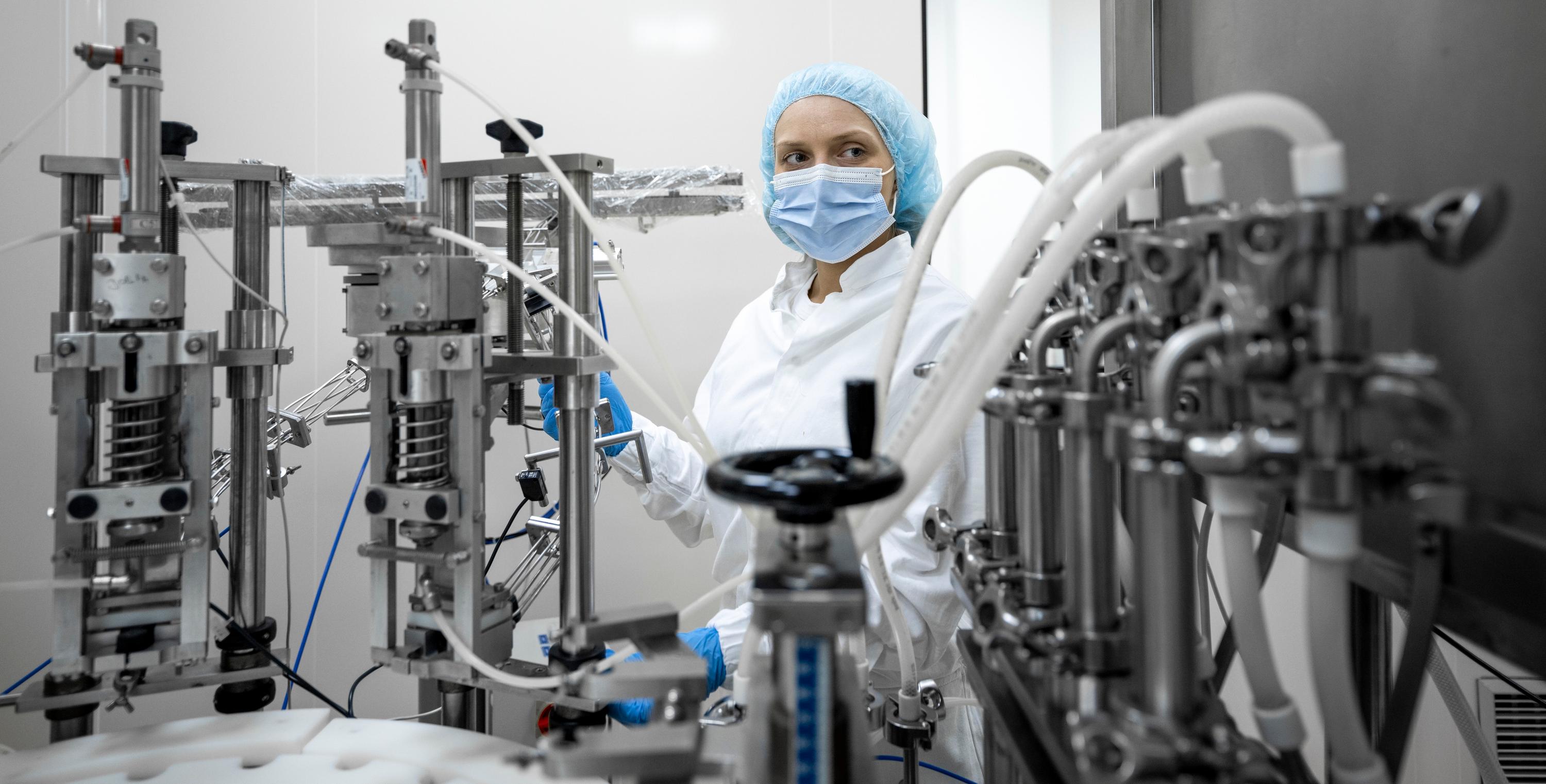
Single-use bioreactors replace the traditional vessel with disposable polymer biocontainers that are presterilized and installed within reusable support structures. After the production run, the biocontainer is discarded and replaced with a new one for the next batch.
Because single-use systems eliminate CIP and SIP steps, they can dramatically reduce turnaround time between batches and simplify facility operations.
Manufacturing and Operational Considerations
Capital Investment
One of the most significant advantages of single-use systems is the reduction in upfront facility investment. Stainless-steel manufacturing plants require extensive infrastructure, including clean steam generation, water-for-injection systems, and dedicated cleaning systems.
Single-use facilities can be constructed more quickly and with less complex infrastructure, reducing capital expenditures and accelerating time to operation.
Process Flexibility
Single-use systems are particularly attractive for multiproduct facilities or contract manufacturers that need to rapidly switch between production campaigns. Because the disposable biocontainers are replaced after each run, the risk of cross-contamination is reduced and changeover times are minimized.
Stainless-steel systems are generally optimized for long-term production of a small number of products and are less flexible when frequent changeovers are required.
Scale Considerations
Stainless-steel systems still offer advantages at very large production scales. Large commercial biologics facilities often operate bioreactors with volumes exceeding 10,000–20,000 liters.
Single-use systems have historically been limited to smaller scales, though recent advances have pushed their capacity into the several-thousand-liter range, allowing them to support many commercial biologics programs.
Environmental Considerations
The sustainability debate between single-use and stainless systems is complex.
Single-use technologies generate solid plastic waste from disposable biocontainers and tubing. However, they often consume significantly less water and energy because they eliminate large-scale cleaning and sterilization processes.
Stainless-steel facilities generate less solid waste but require large quantities of purified water, steam, and cleaning chemicals, which can increase energy consumption and wastewater generation.
The environmental footprint of each approach therefore depends heavily on facility design and operational practices.
Regulatory and Quality Implications
Both single-use and stainless-steel systems are widely accepted by regulators and have been used in the production of approved biologics.
Regulatory concerns related to single-use systems typically focus on extractables and leachables from polymer components, which must be carefully characterized during process development.
Stainless-steel systems, while historically well understood, require robust validation of cleaning procedures to ensure that residues and cross-contamination risks are adequately controlled.
In practice, both platforms can support highly controlled GMP manufacturing environments when properly validated.
Best Fit by Use Case
Single-use bioreactors are generally preferred when:
facilities must support multiple products
rapid facility deployment is required
development or clinical-stage production demands flexibility
manufacturing campaigns are relatively short or variable
Stainless-steel bioreactors are often preferred when:
production volumes are very large and consistent
long-term commercial manufacturing is expected
facility infrastructure already supports stainless systems
economies of scale outweigh flexibility considerations
Verdict: Which Should You Choose?
Neither platform is universally superior; instead, each aligns with different manufacturing strategies.
Single-use bioreactors excel in flexibility, speed, and lower capital investment, making them well suited for modern multiproduct facilities and emerging biologics programs.
Stainless-steel bioreactors remain advantageous for large-scale, high-volume manufacturing, where long-term efficiency and infrastructure stability are critical.
As a result, many manufacturers now adopt hybrid manufacturing models, combining single-use upstream bioreactors with stainless-steel or mixed downstream processing systems.