Key Takeaways
Cell therapy manufacturing remains largely manual despite advances in automation, creating persistent risks around contamination, variability, and scalability.
Closed and automated systems work best for standardized unit operations, improving control of parameters such as mixing, incubation, and environmental conditions.
No universal automation platform exists for cell therapy manufacturing due to the diversity of cell types, workflows, and biological requirements.
Hybrid manual–automated workflows have become the practical industry standard, balancing efficiency gains with the flexibility needed for complex biological processes.
For CDMOs, automation strategy is inseparable from manufacturing strategy, shaping scalability, change control, and long-term commercial readiness.
Why Automation in Cell Therapy Is Both Necessary and Limited
Cell therapy manufacturing today remains dominated by manual, open processes that rely heavily on operator intervention and complex handling steps. These workflows are difficult to scale consistently and are inherently vulnerable to human error, particularly as production volumes increase and clinical programs expand. Despite significant technological progress, many manufacturing operations still depend on hands-on manipulation of cells and materials, reflecting both the biological complexity of these products and the early stage of industrial standardization in the field.
These manual approaches carry well-recognized risks. Open handling increases the potential for contamination, while variability in operator technique and environmental conditions contributes to batch-to-batch inconsistency. As cell therapies move from exploratory development toward broader clinical and commercial use, these limitations become more pronounced, challenging manufacturers to maintain control over product quality and reproducibility using labor-intensive methods alone.
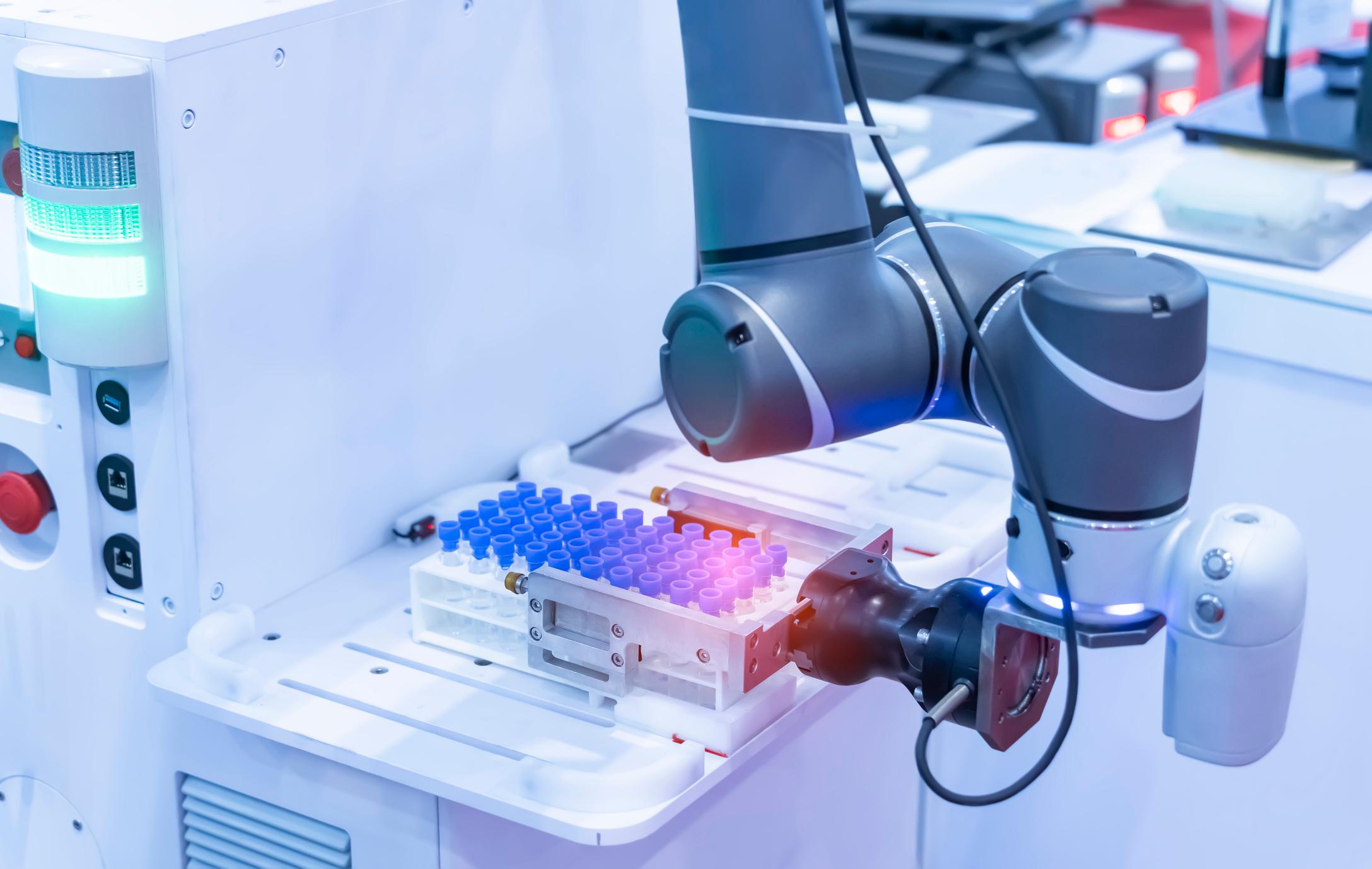
Automation has emerged as a response to these constraints. Closed and automated systems are designed to reduce process variability, minimize operator dependency, and improve consistency by controlling critical parameters such as timing, mixing, and incubation conditions. In this sense, automation functions as a risk-reduction strategy, addressing some of the most persistent vulnerabilities of manual cell processing while enabling more standardized execution of complex workflows.
At the same time, broad adoption of automation across cell therapy manufacturing remains limited. Industrial-scale solutions are still developing, and the complexity of biological processes makes it difficult to translate laboratory workflows directly into fully automated production platforms. The field continues to face technological and operational barriers that slow widespread implementation, leaving many manufacturers in an intermediate state between traditional manual processing and fully automated systems.
These realities collectively frame automation as a necessary but incomplete solution. Automation does not replace human expertise; it reshapes where and how that expertise is applied. While automated systems can mitigate specific risks associated with manual handling, they also introduce new constraints related to system design, process rigidity, and integration with existing workflows. The result is a manufacturing landscape defined not by full mechanization, but by selective automation layered onto processes that remain fundamentally biological and highly specialized.
Where Automation Works: Closed and Automated Systems
Closed System Manufacturing
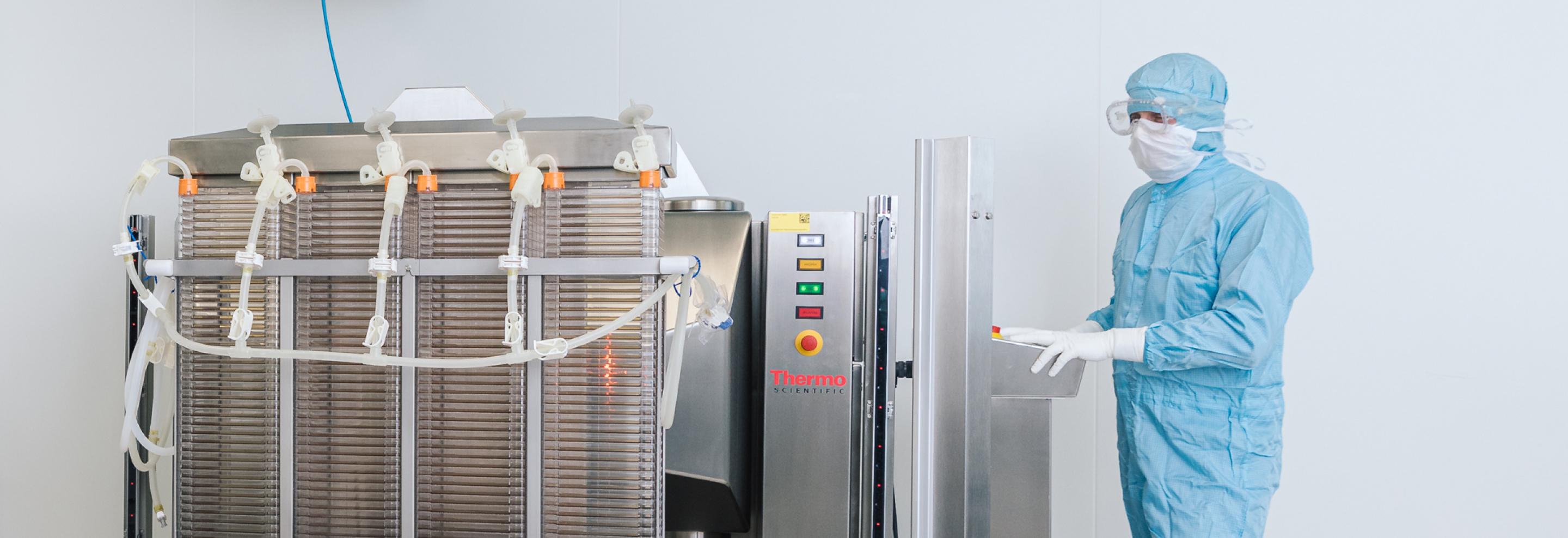
Closed and automated systems represent the area where automation has delivered its most tangible benefits in cell therapy manufacturing. By reducing or eliminating open handling steps, these systems lower contamination risk and decrease the degree of variability introduced through human intervention. Compared with traditional manual workflows, closed processing environments provide greater consistency in how cells are handled, transferred, and maintained, supporting more reproducible manufacturing outcomes across batches.
Beyond contamination control, closed automation enables tighter regulation of key process parameters. Automated control of operations such as mixing, incubation timing, and environmental conditions allows manufacturers to standardize steps that would otherwise depend on operator judgment and technique. This increased precision helps stabilize processes that are highly sensitive to small deviations, reinforcing the role of automation as a tool for improving process robustness rather than simply increasing throughput.
These advantages become particularly important as programs move toward scale. Expanding cell therapy production using manual, open processes multiplies the number of touchpoints and the associated labor burden, creating operational and quality risks that are difficult to sustain at higher volumes. Closed and automated steps are therefore increasingly viewed as necessary components of scalable manufacturing strategies, reducing both the intensity of human labor and the cumulative exposure of products to potential sources of variability.
Integrated vs. Modular Automation
Within closed system manufacturing, two primary automation architectures have emerged: integrated and modular approaches. Integrated closed systems are designed to automate end-to-end workflows within a single platform, encompassing multiple unit operations from cell processing through downstream steps. These systems aim to provide continuity of control and minimize transfers between devices, offering a highly contained manufacturing environment.
Modular closed systems, by contrast, focus on automating individual unit operations rather than the entire process. In this model, discrete automated devices are linked together to form a workflow, allowing manufacturers to optimize or replace specific steps without redesigning the full production chain. This approach can offer greater flexibility in adapting to different cell types or evolving process requirements while still benefiting from closed-system operation.
Choosing between integrated and modular automation is not purely a technical decision. System design must balance biological requirements with business and technological constraints, including cost, facility layout, workforce expertise, and long-term scalability. Automation strategies therefore emerge from a series of trade-offs, reflecting the need to align scientific control with operational practicality. In this sense, where automation works best is not in imposing a single universal solution, but in enabling carefully engineered systems that accommodate both the complexity of living products and the realities of industrial manufacturing.
Where Automation Falls Short
Persistence of Manual and Semi-Automated Workflows
Despite the availability of automated technologies, cell therapy manufacturing is still frequently performed using manual methods. Many production steps continue to rely on open handling and operator-driven execution, reflecting both the complexity of biological processes and the practical challenges of translating laboratory workflows into fully automated systems. As a result, automation has not displaced manual manufacturing but has instead been layered onto existing processes in selective and incremental ways.1,2
In practice, this has led to the widespread adoption of semi-automated workflows. These approaches combine automated unit operations with manual interventions for tasks such as transfers, setup, or oversight. While this hybrid model can reduce some labor demands and standardize certain steps, it does not eliminate dependence on human involvement. Instead, it creates a manufacturing environment in which automation and manual control coexist, each addressing different parts of the process.
Semi-automation also introduces its own limitations. By retaining manual interfaces between automated steps, these workflows can restrict direct process monitoring and constrain operational flexibility. The need to coordinate human actions with machine-driven operations adds complexity to scheduling, training, and quality oversight, reinforcing the reality that partial automation does not necessarily simplify manufacturing systems as much as expected.3
Technical and Process Diversity Barriers
A central obstacle to full automation is the diversity of cell types and manufacturing processes across the field. Cell therapies vary widely in their biological characteristics, culture requirements, and processing steps, making it difficult to develop standardized automation platforms that can be applied universally. The absence of common, platform-like manufacturing processes limits the transferability of automated solutions from one therapy to another and slows the emergence of broadly applicable technologies.4
Even within highly engineered automated environments, human involvement remains necessary. Advanced closed and automated systems still depend on operators for functions such as sampling and reagent introduction, underscoring the limits of current technology in achieving fully hands-off operation. These points of interaction preserve opportunities for variability and reinforce the dependence of manufacturing performance on trained personnel, even when sophisticated equipment is in place.5
Cost and Development Constraints
Economic and developmental factors further constrain the reach of automation. Implementing automated systems requires substantial up-front capital investment, which can be difficult to justify in early-stage programs where processes are still evolving and clinical outcomes remain uncertain. At the same time, early automation can reduce flexibility, locking manufacturers into workflows that may need to change as product understanding matures.2
Transitioning from manual to automated manufacturing is also not a simple substitution of equipment. It demands significant process redesign, validation effort, and operational reconfiguration, all of which carry implications for cost and timelines. These requirements can delay development and introduce additional risk if automation strategies must be revised midstream. Together, these financial and technical realities explain why automation adoption remains uneven and why many manufacturers continue to rely on hybrid approaches rather than pursuing full mechanization of cell therapy production.6
Hybrid Manual–Automated Manufacturing Models
Hybrid manufacturing models have emerged as the dominant operational reality in cell therapy production, reflecting a balance between the advantages of automation and the continued necessity of human intervention. Semi-automated workflows reduce personnel requirements by mechanizing selected unit operations, yet they still retain manual steps for setup, transfers, and oversight. This structure allows manufacturers to gain efficiency and consistency in targeted parts of the process without attempting to impose full automation on workflows that remain biologically complex and variable.3
Modular automation plays a central role in enabling this hybrid approach. Rather than automating the entire manufacturing chain within a single platform, modular systems allow individual unit operations to be selectively automated and integrated into broader workflows. This design supports incremental adoption of automation, making it possible to improve specific steps, such as cell expansion or washing, while preserving flexibility in other parts of the process that may still require manual handling or adaptation.7
The prevalence of hybrid models also reflects the current maturity of automation technologies across the industry. Adoption remains early and uneven, with different organizations implementing automation to varying degrees depending on their technical capabilities, product portfolios, and development stages. This uneven landscape reinforces the view that automation is not yet a universal standard but an evolving set of tools applied selectively according to operational needs and constraints.
Taken together, these patterns position hybrid workflows as a pragmatic compromise rather than a transitional failure. Automation functions as an augmentation of human expertise, not its replacement, strengthening process control where it is most achievable while leaving room for skilled operators to manage biological complexity. In this sense, the hybrid model represents a deliberate strategy: leveraging automation to reduce risk and labor intensity without sacrificing the adaptability required for living, patient-specific products.
Implications for CDMOs
For contract development and manufacturing organizations (CDMOs), the limits of automation translate directly into strategic and operational decisions. Automation initiatives must balance the need for scalability with the preservation of flexibility, particularly in environments where processes are still evolving and multiple client programs with distinct requirements are supported in parallel. Designing systems that can accommodate both growth in production volume and ongoing process refinement requires careful alignment of biological, business, and technological considerations.2
Even within facilities that deploy advanced automation, manual bottlenecks persist. Human involvement remains necessary for activities such as sampling and reagent introduction, and many workflows still rely on operator intervention at critical transition points. These remaining manual interfaces shape facility design, staffing models, and training requirements, underscoring that automation does not eliminate complexity but redistributes it across human and machine boundaries.2,5
At the same time, scaling cell therapy manufacturing increasingly depends on closed and automated steps that reduce touchpoints and labor intensity. For CDMOs tasked with supporting late-stage and commercial production, these technologies become essential tools for maintaining consistency and controlling risk as throughput increases. Automation in this context is less about achieving full mechanization and more about enabling sustainable scale under regulatory and operational constraints.
These realities introduce new dimensions to change control within CDMO operations. Hybrid systems, in which automated and manual elements coexist, require coordinated management of equipment, procedures, and human actions. Platform analytics and standardized unit operations gain importance as mechanisms for maintaining comparability across clients and across development stages, helping CDMOs manage variability within increasingly complex manufacturing ecosystems.
Early decisions about where and how to introduce automation therefore have long-term consequences. Choices made during process development influence manufacturability, facility adaptability, and the ease with which programs can transition from clinical to commercial supply. For CDMOs, automation strategy becomes inseparable from manufacturing strategy itself, shaping not only how products are made but how reliably and efficiently they can be delivered over time.
Conclusion: Automation as a Selective Tool, not a Universal Solution
The evidence across manufacturing practice and technology development points to a clear conclusion: automation can meaningfully reduce variability and contamination risk in cell therapy production, but it cannot eliminate the need for human involvement. Even the most advanced automated and closed systems continue to depend on operators for critical functions such as sampling and reagent handling, preserving points where human expertise remains central to process execution.
At the same time, manual processes still dominate many areas of cell therapy manufacturing. Despite the availability of automated platforms, much of today’s production infrastructure relies on open, operator-driven workflows that are difficult to standardize and scale. This persistence reflects not a lack of innovation, but the biological and technical complexity of translating highly customized cell processes into rigid automated systems.
Industry-wide adoption of automation therefore remains early and uneven. The transition from manual to automated manufacturing demands substantial process redesign, validation effort, and financial investment, all of which constrain how rapidly automation can be deployed. These barriers, combined with the intrinsic diversity of cell therapy processes, have slowed the emergence of universal solutions and reinforced the selective nature of automation uptake.
In practice, hybrid manual–automated workflows have become the prevailing operational model. Semi-automated systems integrate mechanized unit operations with human oversight and intervention, creating a manufacturing environment that blends consistency with adaptability. This hybrid structure reflects a pragmatic response to competing demands for control and flexibility, rather than a temporary stage on the path to full automation.
Automation succeeds when applied with precision and restraint. Where processes can be standardized and risks can be engineered out, automation works well. Where biological variability dominates, human expertise remains essential. The future of cell therapy manufacturing is therefore not defined by the replacement of people with machines, but by the careful integration of automation into workflows that remain fundamentally biological in nature.
References
1. Moutsatsou P, et al. “Automation in cell and gene therapy manufacturing: from past to future.” Biotechnol. Lett. 31: 1245–1253 (2019).
2. Lee, Jia Shen Zach, et al. “Transition from manual to automated processes for autologous T cell therapy manufacturing using bioreactor with expandable culture area.” Nature Scientific Reports. 15: 15819 (2025).
3. Gupta, Shubhranshu. “Exploring The Market For Closed-Loop Cell Therapy Production." Cell & Gene. 18 Jun. 2025.
4. Zynda, Evan. “Addressing Cell Therapy Challenges Through a Modular, Closed, and Automated Manufacturing System.” BioPharm International. 36: 26–29 (2023).
5. Kok, Nina, et al. “Closed-system manufacturing of therapeutic NK cells using automated cell enrichment and concentration processes enables scalable, robust and cost-effective solutions.” Front. Bioeng. Biotechnol. 13: 1586912 (2025).
6. Automated and Closed Cell Therapy Processing Systems Market Size, Trends and Shares. Towards Healthcare. 1 Nov. 2025.
7. “Modular vs. End-to-End Automation in Cell and Gene Therapy Manufacturing: Finding the Right Fit.” Cellular Origins. Accessed 26 Jan. 2026.