Recent clinical successes with CRISPR gene-editing therapies are driving significant interest in the field and expansion of the CRISPR therapeutic pipeline. Developers face many challenges, however, from the need for more regulatory clarity to a highly fragmented outsourcing landscape. The acquisition of BIOVECTRA by Agilent Technologies positions the combined companies as an end-to-end partner for CRISPR therapy developers that addresses many of these top challenges. With BIOVECTRA’s microbial fermentation, synthetic chemistry, pDNA, mRNA, LNP formulation, RNP formulation and aseptic fill/finish capabilities and Agilent’s capabilities in oligonucleotide synthesis, the two companies are able to act as a single partner for all aspects of CRISPR development and manufacturing and provide streamlined services for preclinical through commercial supply that save our clients time and money while ensuring high quality and reducing risk.
The Milestones Powering CRISPR’s Next Phase
Interest in therapeutics based in the CRISPR (clustered regularly interspaced short palindromic repeats) system has accelerated in the wake of several landmark achievements that have validated both the science and the business case for gene editing. In 2024, the U.S. Food and Drug Administration (FDA) approved Casgevy® (exagamglogene autotemcel, Vertex Pharmaceuticals) for the treatment of sickle cell disease, the first CRISPR-based therapy to reach the market. Just months later, in 2025, researchers at the Children’s Hospital of Philadelphia (CHOP) and the Perelman School of Medicine at the University of Pennsylvania achieved another first: successfully treating an infant, baby KJ, with carbamoyl phosphate synthetase 1 (CPS1) deficiency using a personalized CRISPR gene-editing therapy.
These milestones have renewed investor confidence in the field and prompted increased government attention and support. While funding across biotechnology has softened, CRISPR remains one of the few modalities still trending upward, with active clinical programs and an expanding pipeline of therapies. A key driver of this resurgence is the growing shift toward in vivo gene editing — where the editing components are delivered directly to target tissues — offering a more streamlined and patient-friendly alternative to the complex ex vivo workflows that require cell isolation, modification, and reinfusion.
The broad applicability of CRISPR technology is also fueling growth. Developers are increasingly moving beyond the initial focus on rare and ultra-rare diseases to explore treatments for more common conditions, such as cardiovascular and metabolic disorders. Each clinical success reinforces the potential for CRISPR-based medicines to transform standards of care, expanding the reach of gene editing from niche applications to mainstream therapeutic strategies.
Regulators Bring CRISPR into Clearer Focus
Although comprehensive regulatory frameworks for genome-editing therapies are still evolving, recent actions by global agencies have begun to clarify expectations for developers. A major step forward came in January 2024 with the U.S. Food and Drug Administration’s Human Gene Therapy Products Incorporating Human Genome Editing: Guidance for Industry. This document provides recommendations for developing therapies involving genome editing (GE) of human somatic cells and, crucially for CRISPR programs, specifies a guide RNA purity threshold of greater than 80%.
That single figure has already had a ripple effect across the field. Achieving and accurately verifying 80% purity of guide RNA depends heavily on the analytical method employed, an area where BIOVECTRA and Agilent Technologies have long excelled. In response, Agilent has enhanced their downstream purification processes and analytical controls to consistently meet or exceed this benchmark. Drawing on Agilent’s expertise in oligonucleotide synthesis and deep experience in process development and purification, they now apply advanced orthogonal purification methods to ensure that guide RNAs and other CRISPR components achieve the desired levels of purity and structural integrity.
Further regulatory progress is anticipated. Agencies including the FDA and EMA are actively engaging with industry stakeholders to establish clearer, more efficient pathways for gene-editing products. Of particular interest is the potential for “platform” frameworks for Investigational New Drug (IND) filings, which would allow developers to modify elements such as guide RNAs or delivery vectors within an established process rather than starting each submission from scratch. Such an approach could accelerate development timelines while maintaining rigorous oversight, reflecting regulators’ growing willingness to adapt existing models to the realities of rapidly advancing technologies like CRISPR.
Why CRISPR Requires More Than Vaccine-Era Expertise
At its core, CRISPR gene editing relies on a CRISPR-associated (Cas) nuclease, an enzyme that cleaves a specific DNA sequence, guided to its target by a short strand of RNA. The guide RNA may take the form of a single-guide RNA (sgRNA), which links CRISPR RNA (crRNA) and trans-activating CRISPR RNA (tracrRNA) into one molecule, or a dual-guide format in which the two components remain separate.
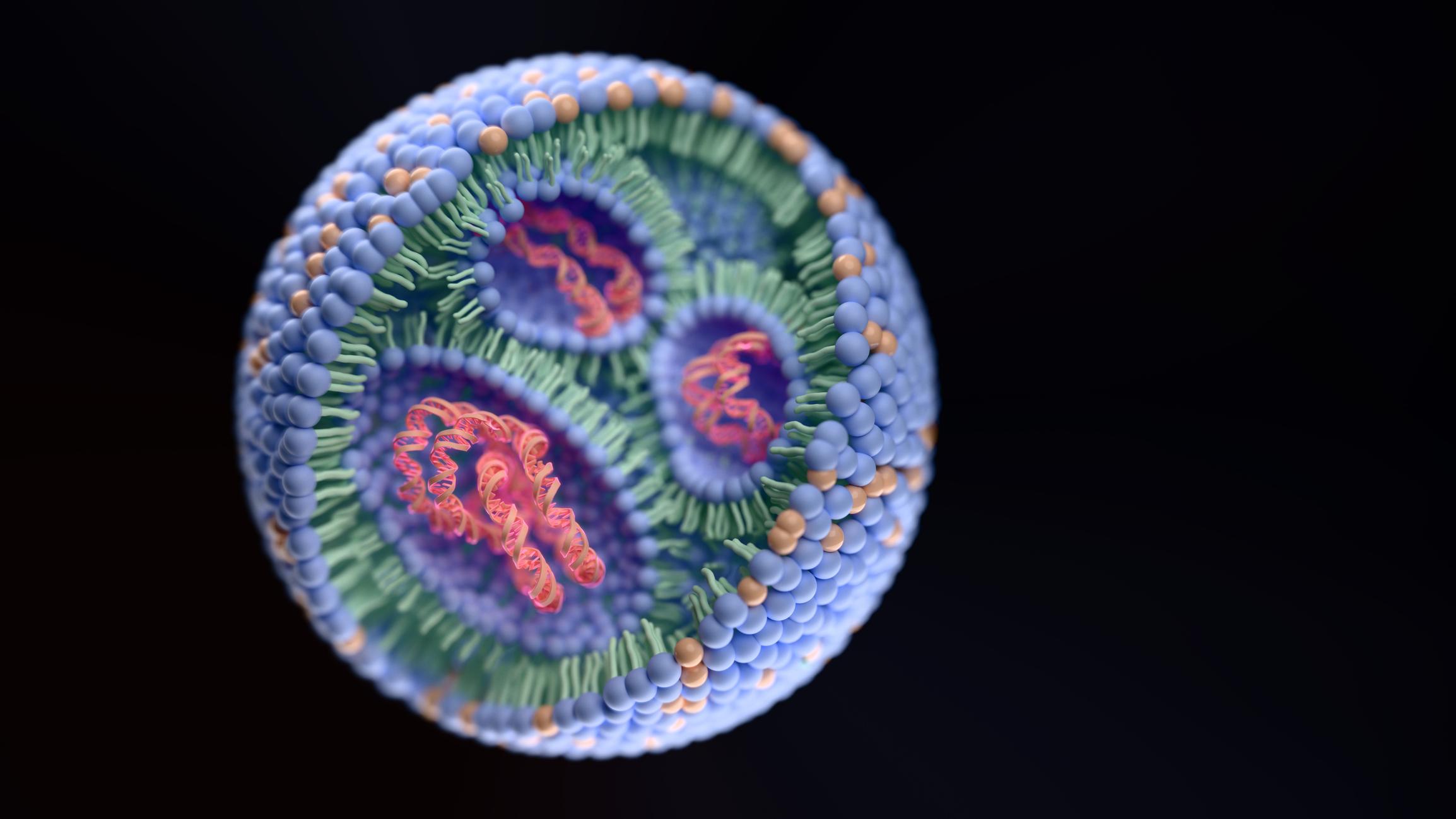
For in vivo CRISPR therapeutics, the editing machinery is not delivered directly as protein and RNA, but instead the nuclease is encoded in messenger RNA (mRNA) that instructs the patient’s cells to produce the Cas enzyme, which then binds with the guide RNA. This approach can enable faster and more efficient editing while reducing the likelihood of off-target effects. Delivery typically depends on lipid nanoparticles (LNPs), a platform proven during the global rollout of mRNA vaccines. As a result, much of the manufacturing infrastructure built for mRNA vaccine production — plasmid DNA templates, in vitro transcription (IVT), encapsulation, and fill–finish — can now be applied to in vivo CRISPR therapeutics with only modest adaptation.
However, CRISPR manufacturing demands more than mRNA expertise alone. When the therapy requires direct delivery of the Cas protein and guide RNA, different technologies and capabilities come into play. Guide RNAs are synthesized using solid-phase oligonucleotide chemistry rather than the plasmid-based IVT used for mRNA. They are also considerably longer and more structurally complex than the oligonucleotides employed in typical antisense or siRNA therapeutics, which introduces unique synthesis and purification challenges.
Here, the combined strengths of Agilent and BIOVECTRA create clear value. Agilent’s two decades of experience producing therapeutic-grade oligonucleotides translates seamlessly into the long, high-purity guide RNAs required for CRISPR applications, while BIOVECTRA contributes extensive expertise in plasmid design, mRNA synthesis, and LNP formulation. Together, these capabilities cover the full molecular spectrum of CRISPR development from DNA template to RNA component to final delivery system.
From Fragmentation to Flow: Solving the Supply Chain Challenge in Gene Editing
For developers of CRISPR therapeutics, one of the greatest operational hurdles is the fragmented nature of the current outsourcing ecosystem. Because each component of a CRISPR therapy — plasmid DNA, mRNA, guide RNA, Cas protein, custom lipids, ribonucleoproteins (RNPs) and LNPs — requires specialized expertise and equipment, drug developers can find themselves coordinating a network of five or more contract manufacturers and an equal number of analytical testing providers.
This complexity forces companies to manage a strictly linear production chain: one partner produces a critical raw material that must be transferred to the next for conversion, and then to another for formulation or fill/finish. To keep programs on track, every step must align perfectly across suppliers, with production slots, material readiness, and release testing synchronized down to the week. Any delay at a single site can cascade across the entire workflow, extending timelines and driving up cost.
The logistical burden compounds further when materials move between facilities. Each vendor transfer requires dedicated storage, additional shipping coordination, and repeat stability studies. Every shipment also introduces risks of temperature excursions, handling errors, or even loss in transit, necessitating redundant identity and purity testing upon arrival. These additional verifications, while essential for maintaining quality, add both time and expense to an already intricate process.
The result is a development landscape where fragmentation itself becomes a source of inefficiency and risk. As programs advance toward the clinic, the ability to integrate or consolidate these functions under a single, end-to-end partner can translate directly into faster timelines, lower costs, and greater confidence in product integrity.
Navigating a Constantly Changing CRISPR Landscape
Every CRISPR therapeutic is, by definition, a custom build. Each program involves distinct design choices that influence nearly every stage of manufacturing, from molecular design to formulation and delivery. For RNP CRISPR products, the Cas nuclease and guide RNA must be carefully engineered, produced, and combined at an enzyme-specific ratio. For in vivo therapies, plasmid DNA must be designed for optimal IVT, while the LNP formulation must be tailored for efficient, tissue-targeted delivery. Challenges can arise at any point in this chain, as each component affects the performance and manufacturability of the next.
The field’s rapid evolution adds another layer of complexity. New generations of gene-editing enzymes, chemically modified nucleotides, and mRNA constructs with variable cap analogs and poly(A) tails are continually emerging to improve editing precision and safety. Similarly, new polymerases are being adopted to enhance transcription efficiency and product quality. Even subtle changes in the size or sequence of the Cas enzyme, guide RNA, or mRNA can alter encapsulation efficiency and downstream processing behavior, requiring adjustments in LNP formulation and process parameters.
Meanwhile, LNP technology itself is advancing quickly. Developers are experimenting with novel lipid chemistries and surface ligands to improve cell specificity and biodistribution, efforts that mirror the broader industry’s push toward targeted nanoparticle delivery. Each of these innovations holds promise, but together they create a moving target that demands deep technical understanding and flexible process development.
For BIOVECTRA and Agilent Technologies, this dynamic environment underscores the value of experience and adaptability. Both organizations work closely with clients to address these design interdependencies, optimizing each step—from plasmid template through guide RNA synthesis and LNP formulation—to ensure efficiency, reproducibility, and regulatory alignment even as the underlying science continues to evolve.
Anticipating Challenges, Engineering Solutions
BIOVECTRA and Agilent Technologies bring together decades of specialized experience across every critical component of CRISPR therapeutic manufacturing. Their combined expertise spans therapeutic oligonucleotide synthesis (leveraged for guide RNA production), plasmid DNA design and manufacturing (as templates for IVT), mRNA manufacturing, and LNP formulation and fill/finish. For ex vivo applications, we offer the manufacturing of custom gene editing enzymes and RNP complexation. Additionally, custom synthesis of linkers, peptides, PEGylated or ionizable lipids, and other synthetic molecules is available for enhanced targeting and delivery. This end-to-end capability is supported by sophisticated downstream purification systems and high-resolution analytical technologies that ensure product integrity and reproducibility at every stage.
Each new program benefits from this depth of experience. Drawing on established process and analytical development frameworks, the teams are able to anticipate potential pitfalls, streamline scale-up, and accelerate programs toward the clinic and commercial readiness. Their approach emphasizes consistency and manufacturability from the outset, using simplified yet robust processes that reliably yield high-quality materials and maintain uninterrupted supply.
One example is BIOVECTRA’s plasmid manufacturing process, which is specifically engineered to maintain intact poly(A) tails and prevent unwanted recombination events in mRNA templates, which are critical to achieving high-purity, supercoiled DNA suitable for IVT. This same level of precision extends throughout the workflow. Both organizations recognize how the quality of each raw material directly influences the success of subsequent steps, and they design every process to minimize the risk of carrying impurities or inconsistencies forward.
Equally important is the ability to anticipate and adapt. BIOVECTRA and Agilent collaborate closely with clients to identify and mitigate challenges early, maintaining open communication and a problem-solving mindset throughout development. The process development teams continually evaluate new technologies — whether novel polymerases, modified nucleotides, or next-generation lipids — and confirm improvements that enhance efficiency, quality, or cost-effectiveness. Participation in early-stage beta testing with raw material suppliers further ensures clients benefit from the latest validated innovations. All process modifications are governed by a rigorous change control system that provides full traceability, documenting both the rationale and measurable impact of each update.
This commitment to continuous improvement is matched by a strong focus on scalability. BIOVECTRA and Agilent can produce CRISPR therapeutic components across a full range of volumes, from small-scale preclinical batches to large-scale commercial supply. Even at the earliest development stages, processes are designed with the entire product life cycle in view, ensuring that early decisions support efficient tech transfer, commercial manufacturability, and regulatory compliance down the line. This life cycle–oriented approach ultimately saves clients both time and cost while laying the foundation for reliable, long-term production.
Integration in Action: A Unified Partner for the CRISPR Era
The acquisition of BIOVECTRA by Agilent Technologies has created a uniquely comprehensive partner for CRISPR therapy developers, capable of supporting every stage of product development. Both companies’ CDMO operations are now aligned within Agilent’s Life Science and Diagnostics Markets Group, combining complementary strengths that together form a fully integrated service offering. BIOVECTRA’s capabilities in microbial fermentation, synthetic chemistry, pDNA, mRNA, LNP formulation, RNP formulation and aseptic fill/finish seamlessly complement Agilent’s long-established leadership in therapeutic oligonucleotide synthesis.
This alignment directly addresses the key challenges faced by developers of gene-editing therapies: fragmented supply chains, multiple vendor handoffs, and variable quality oversight. By uniting under one operational framework, Agilent and BIOVECTRA can serve as a single, end-to-end partner encompassing all aspects of CRISPR manufacturing. Agilent’s expertise in high-quality guide RNA production dovetails with BIOVECTRA’s biologics infrastructure to provide a continuous, coordinated workflow that saves clients time and cost while reducing risk and complexity.
For therapies comprising a nuclease and guide RNA strand(s), the guide RNA is synthesized by Agilent and transferred internally to BIOVECTRA, where the Cas enzyme is produced, RNPs are generated, and final fill/finish is completed. This single internal handoff eliminates the logistical and quality-control burdens typical of multi-vendor programs. For in vivo therapies, as mentioned above, Agilent manufactures the guide RNA, which is transferred to BIOVECTRA where all the other components (pDNA, mRNA, and LNP) are manufactured within BIOVECTRA’s integrated facilities, ensuring consistency and control throughout.
Every project operates under a unified quality agreement that spans both organizations, supported by robust regulatory and quality systems and harmonized operational standards. A cross-functional team manages each program from initiation through completion, maintaining alignment of scope, expectations, and timelines. This structure allows for a single, consolidated project schedule in which all production slots and release milestones are coordinated to minimize downtime and maximize efficiency.
Beyond gene-editing programs, BIOVECTRA also brings deep experience in the development and manufacture of other advanced modalities, including antibody–drug conjugates (ADCs), highly potent active pharmaceutical ingredients (APIs), and GLP-1 therapeutics. These adjacent capabilities strengthen the company’s scientific and operational foundation and provide valuable insights that can be applied to CRISPR manufacturing. Together, BIOVECTRA and Agilent possess the proven expertise, commercial experience, and quality culture required to shepherd programs from early clinical phases through full-scale commercial launch.
Ultimately, this integration goes beyond merging capabilities to establish a united vision for the sector. BIOVECTRA and Agilent share a commitment to advancing the science of gene editing through partnership, innovation, and operational excellence, accelerating the delivery of next-generation CRISPR medicines that have the power to transform patient lives.