Key Takeaways
Personnel are the primary contamination source in aseptic processing, meaning operator behavior directly influences sterility assurance outcomes.
Human interventions and movement disrupt controlled environments, making training, discipline, and consistent aseptic technique critical risk-reduction tools.
Barrier technologies and automation reduce—but do not eliminate—human contamination risk, reinforcing the need for integrated human-factors management.
Modern contamination control strategies (CCS) must treat human performance as a managed variable, not a peripheral compliance requirement, to strengthen sterile manufacturing reliability.
The Persistent Reality of Human-Driven Contamination
Modern aseptic processing environments are among the most tightly controlled manufacturing systems in existence. They are engineered to maintain sterility through sophisticated airflow control, environmental monitoring, barrier technologies, and validated procedures. Yet despite decades of technological advancement, one contamination risk remains consistently dominant: people.
Personnel have long been recognized as a primary source of contamination in aseptic manufacturing environments. In sterile processing areas specifically, humans are widely identified as the largest source of microbial contamination. Observational and regulatory perspectives align on this point: personnel remain the number-one contamination risk in cleanroom operations, and a majority of contamination events involve human participation or presence.
This persistence reflects a structural reality rather than a failure of engineering. Aseptic processing is designed to eliminate uncontrolled biological exposure, but humans are themselves dynamic biological systems. They shed particles, harbor microorganisms, generate heat, and create airflow disturbances. Unlike equipment, they cannot be sterilized, fully standardized, or rendered static.
As a result, aseptic manufacturing exists in a permanent tension between technological precision and biological variability. Facilities can be designed, validated, and monitored with extreme rigor. Human behavior cannot be controlled with the same deterministic precision. The challenge of sterility assurance therefore extends beyond equipment and environment into the domain of human performance.
Understanding contamination risk in aseptic processing requires acknowledging that sterility is not maintained solely through engineering controls. It is maintained through a complex interaction between physical systems and human behavior.
Why Humans Are Inherently Risk-Bearing in Sterile Environments
Human contamination risk is not limited to the simple presence of personnel. It arises from the ways humans interact with the sterile environment: through movement, intervention, and operational engagement.
Human intervention is widely recognized as one of the most significant risk points in aseptic manufacturing. Each time an operator interacts with equipment, adjusts components, introduces materials, or performs corrective actions, the sterile boundary is potentially challenged. These activities are intrinsic to operation, not exceptional events. Setup, intervention, and material handling are common pathways through which contamination may be introduced.
The physical mechanisms underlying this risk are well understood. Personnel movement near open sterile containers or critical zones can disrupt carefully controlled airflow patterns, allowing contaminants to enter protected areas . Even minor disturbances (e.g., hand positioning, body orientation, or proximity) can create turbulence sufficient to compromise unidirectional airflow. In environments designed around airflow predictability, human motion represents a fundamentally unpredictable variable.
This unpredictability is compounded by the fact that interventions are often necessary precisely when systems deviate from ideal conditions. Equipment adjustments, corrective actions, and troubleshooting frequently occur during non-routine circumstances when process stability is already under strain. The combination of operational urgency and manual interaction amplifies contamination risk.
In this sense, humans function not only as contamination sources but also as environmental disruptors. They alter airflow, introduce variability, and create system perturbations that engineered controls must continually accommodate.
Behavior, Discipline, and Training as Determinants of Sterility Outcomes
While human presence introduces inherent biological risk, contamination events are not determined solely by physical factors. Behavior, discipline, and competence strongly influence whether contamination potential becomes contamination reality.
Deviation from aseptic practices, often associated with inadequate supervision or insufficient personnel discipline, has been identified as a contributor to contamination events. Even when procedures are well defined, their effectiveness depends on consistent execution. Aseptic technique is not merely procedural compliance; it is a practiced skill requiring precision, attentional control, and situational awareness.
Training and qualification play a central role in mitigating this risk. Personnel competence, experience, and behavioral consistency are widely recognized as critical elements in contamination control. Regulatory inspection frameworks likewise identify poor employee practices and inadequate training as risk factors that can compromise sterile manufacturing processes.
This emphasis reflects a recognition that aseptic processing demands more than technical knowledge. It requires behavioral reliability under controlled but complex conditions. Operators must maintain strict procedural adherence while managing dynamic systems, responding to deviations, and working within environments that restrict movement and sensory feedback. Small variations in technique (e.g., hand positioning, timing, sequencing, or attention) can influence contamination risk.
Human performance therefore becomes a central quality attribute in aseptic manufacturing. Equipment can be validated once and monitored continuously. Human performance must be sustained repeatedly, under varying operational conditions, across time and across individuals.
The Industry’s Structural Response: Reducing Human Interaction
Given the persistent contamination risk associated with personnel, the industry has pursued a clear strategic response: reduce human interaction with the sterile field wherever possible.
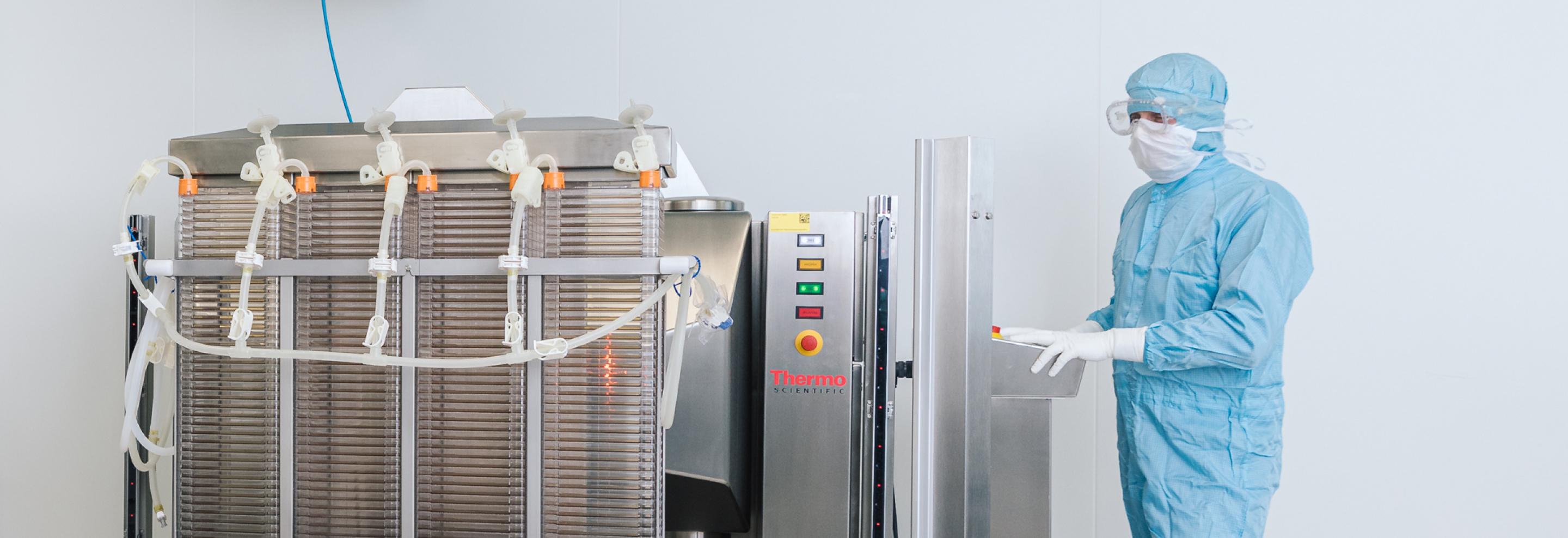
Technological development in aseptic processing has increasingly focused on mitigating risks associated with operator presence. Barrier technologies, such as isolators and restricted access barrier systems (RABS), physically separate personnel from critical processing zones, reducing the potential for contamination through direct contact or airflow disruption.
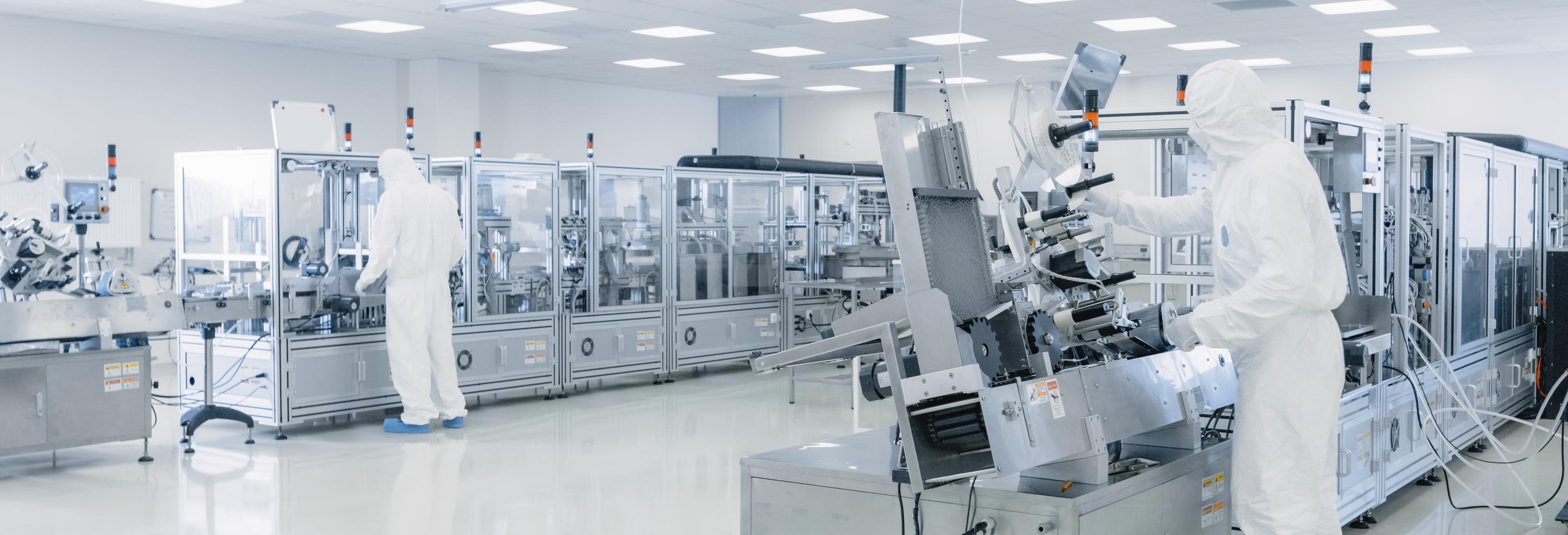
Automation and robotics further extend this approach by minimizing manual interventions and routine operator involvement. These technologies reduce the frequency and scope of human interaction with sterile product, thereby reducing opportunities for contamination.
Regulatory frameworks explicitly reinforce this direction. Contamination control strategies under modern sterile manufacturing expectations emphasize minimizing human intervention, recognizing it as a major contamination source. The objective is not merely procedural improvement but structural risk reduction through system design.
This evolution reflects a shift from controlling human behavior to engineering around human limitations. Rather than relying solely on training and discipline, facilities increasingly seek to design processes that require fewer human actions in the first place.
Regulation as Formal Recognition of Human Factors
Regulatory expectations in sterile manufacturing reflect sustained recognition of the central role of personnel in contamination risk management.
Current good manufacturing practice (CGMP) requirements mandate procedures specifically intended to prevent microbial contamination in sterile drug production. These expectations encompass facility design, environmental monitoring, and personnel training, all of which are considered essential components of contamination prevention systems.
Modern sterile manufacturing guidance further requires comprehensive contamination control strategies that identify and manage risk across all critical control points. Within these frameworks, personnel are treated as a core risk vector requiring structured control measures, including qualification, monitoring, and procedural standardization.
Regulation thus formalizes what operational experience has long demonstrated: contamination control cannot be achieved without systematic management of human performance. Personnel competence, training, and behavior are not peripheral considerations; they are embedded within regulatory definitions of process control.
The Limits of Engineering Controls
Despite extensive technological and regulatory efforts, personnel continue to represent a dominant contamination risk. Barrier systems, automation, and procedural controls reduce exposure but do not eliminate the need for human involvement.
Aseptic processes still require human oversight, decision-making, and intervention. Operators monitor systems, respond to deviations, maintain equipment, and ensure procedural execution. Even highly automated environments depend on human judgment for system management.
Engineering controls can reduce direct interaction with sterile product, but they cannot remove human responsibility for process integrity. Contamination risk therefore persists not because controls are ineffective, but because human participation remains structurally necessary.
This persistence highlights a fundamental characteristic of aseptic manufacturing: sterility assurance is not purely technological. It is a socio-technical outcome produced through the interaction of engineered systems and human behavior.
Toward a Human-Centered Contamination Control Strategy
Recognizing the enduring role of personnel in contamination risk suggests a complementary approach to technological mitigation: systematic management of human performance as a core contamination control strategy.
Training, qualification, and behavioral standardization are already widely recognized as risk-reduction mechanisms; however, the key challenge lies in treating these elements not as supporting activities but as central components of sterility assurance.
A human-centered contamination control strategy emphasizes consistency of technique, reliability of performance, and alignment of behavior with environmental constraints. It acknowledges that sterility is maintained not only through physical separation but through disciplined human interaction with controlled systems.
Such an approach positions personnel not simply as risk sources to be minimized, but as operational variables to be actively managed. Contamination control becomes a function of both engineering design and human reliability.
Sterility as a Human–Technology System
The persistent identification of personnel as the dominant contamination risk does not indicate failure of modern aseptic design. It reflects something more fundamental: sterile manufacturing is not only a technical discipline but also a performance discipline.
Facilities can be designed to reduce human interaction. Barrier systems can isolate critical zones. Automation can reduce routine intervention. Regulatory frameworks can mandate structured contamination control strategies. Yet none of these eliminate the need for human decision-making, judgment, and execution. At its core, aseptic processing is a system that depends on controlled human behavior within tightly engineered constraints.
The industry’s long-term trajectory toward automation, barrier technologies, and structured contamination control strategies acknowledges this reality. It does not attempt to remove humans entirely. Instead, it seeks to manage the interface between biological variability and mechanical precision.
The future of contamination risk reduction therefore lies in integration, not substitution. Engineering controls and automation will continue to reduce exposure opportunities. At the same time, training systems, behavioral standardization, and performance oversight must be treated as equal components of sterility assurance. Operator behavior remains one of the biggest contamination risks not because it is uncontrolled, but because it is indispensable.
Sterility is ultimately achieved not when humans are eliminated from the system, but when the system is designed with human performance as a central, managed variable.