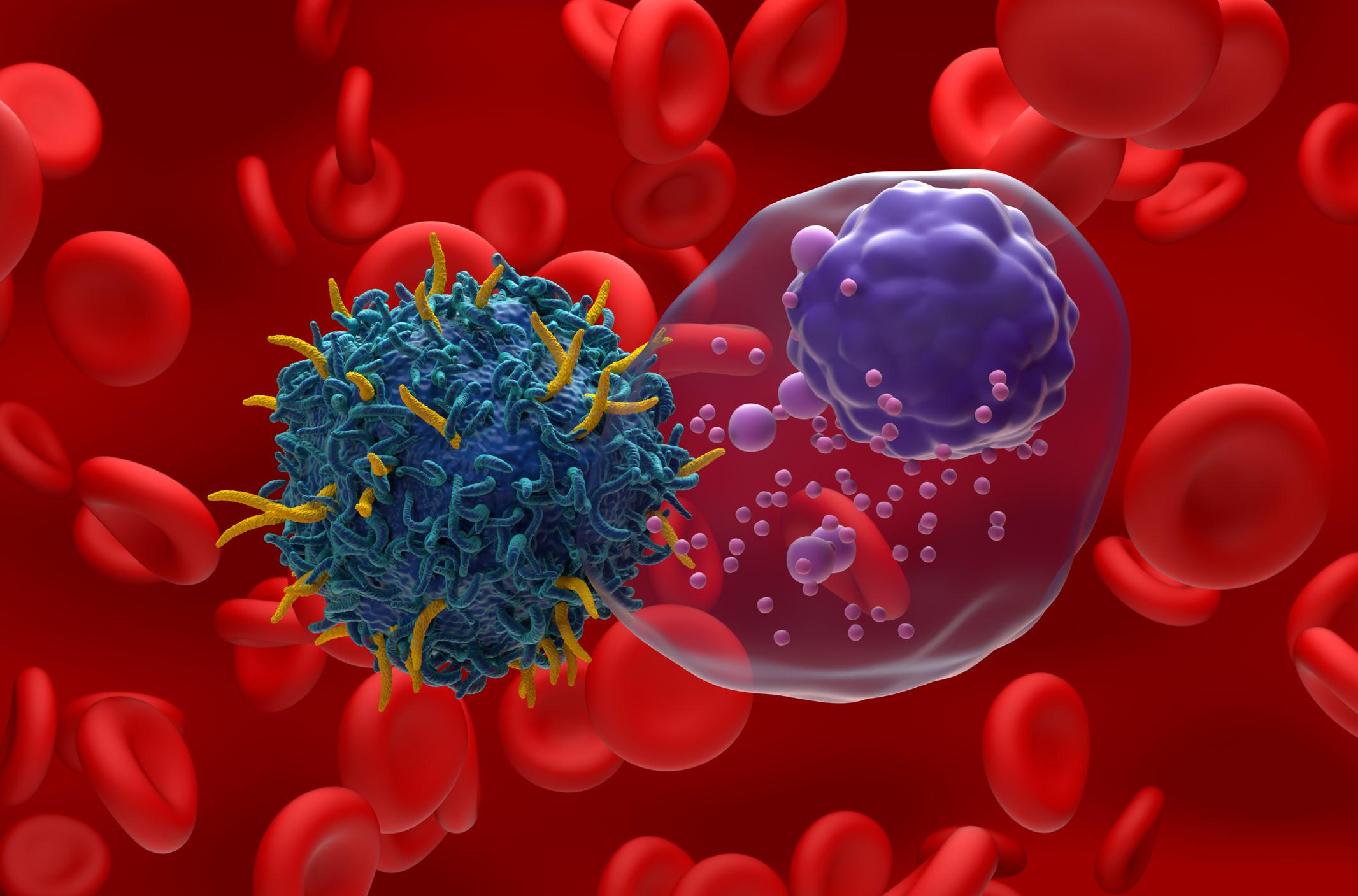
CAR-T cell therapy works by extracting a patient's T cells and engineering them to express a chimeric antigen receptor (CAR), which enables the cells to both recognize and kill tumor cells. Although first approved for hematologic malignancies, CAR-T cell therapy is now being investigated to treat several autoimmune conditions, including lupus and HIV. Although CAR-T therapy offers advantages over alternative treatments, such as chemotherapy and radiotherapy, by offering a more targeted treatment and often with shorter durations, it still poses many drawbacks. CAR-T cell therapy is associated with many logistical challenges, such as high costs, lengthy production timelines, and complex manufacturing, all of which can be extremely problematic for treating patients with rapidly progressing, very advanced disease.
In vivo CAR-T cell therapy aims to overcome many of these problems. While traditional CAR-T therapy requires the patient's cells to be extracted, engineered ex vivo, and reinfused, a new in vivo approach is being developed to allow this process to take place inside the patient's own body. By using viral vectors or lipid nanoparticles (LNPs) as the delivery tool, CAR-encoding genetic material can be directly delivered to T cells in vivo, eliminating the need for any ex vivo lab manufacturing. This process would reduce costs and time consumption and broaden access to CAR-T cell therapy.
Here are five companies at the forefront of in vivo CAR-T cell development: Umoja Biopharma, Legend Biotech, Aera Therapeutics, Sana Biotechnology, and Moderna.
Umoja Biopharma: The Use of VivoVec™
Umoja Biopharma, headquartered in Seattle, Washington, is developing a next-generation platform to generate CAR-T cells in vivo. The company’s exclusive platform, VivoVec, aims to generate CAR-T cells within the patient through targeted in vivo gene delivery.
At the core of Umoja Biopharma’s approach to in vivo CAR-T development is VivoVec, a lentiviral vector which has been specifically engineered with a multi-domain fusion (MDF) protein paired with an anti-CD3 antibody fragment with CD80 and CD58 binding domains to bind and transduce T cells within the patient’s bloodstream. This avoids the need to draw blood from the patient and modify and expand them in the lab. Umoja describes this technology as building “self-driving” CAR-T cells, with the vector allowing co-delivery of the CAR and additional genetic payloads to support T cell activation and survival. An advantage of Umoja’s approach is the elimination of lymphodepleting chemotherapy prior to treatment of patients, as well as the ex vivo manufacturing steps.
Umoja Biopharma’s development pipeline currently consists of six therapies, targeting CD22, CD20, CD19, BCMA x GPRC5D, and two undisclosed targets. All six of these programs utilize the VivoVec delivery platform and are being developed for multiple indications, such as oncology and autoimmune conditions.
Umoja’s most advanced therapies are currently UB-VV400/410 and UB-VV111, targeting CD22 and CD19, respectively. Both programs have entered into phase I clinical development. The company has disclosed that UB-VV400/410 is in the pipeline for non-Hodgkin lymphoma and autoimmune disease, and UB-VV111 is focused on hematology indications.
The company has entered strategic partnerships, such as an in-licensing agreement with IASO Biotherapeutics for UB-VV400/410 and an out-licensing partnership with AbbVie for UB-VV111 and other undisclosed programs. These industry collaborations indicate a growing interest in the in vivo CAR-T cell therapies that Umoja Biopharma is developing.
What distinguishes Umoja Biopharma from other companies is their rapamycin-activated cytokine receptor (RACR), which enables clinicians to control the CAR-T cell levels inside the patient's body after injection through administration of a rapamycin pill. This additional safety mechanism presents a distinct feature that Umoja Biopharma have implemented into their in vivo CAR-T cell therapies.
As the clinical research and development of in vivo CAR-T therapeutics continues to advance, Umoja Biopharma is positioned at the forefront of cutting-edge CAR-T technologies. By avoiding the complex manufacturing process involved in ex vivo CAR-T therapies and simplifying the process for patients and clinicians, the company, if successful, could provide a more scalable and efficient alternative to traditional CAR-T cell therapies.
If VivoVec can consistently generate CAR-T cells in vivo without lymphodepletion, Umoja Biopharma may redefine how autologous cell therapies are delivered.
Legend Biotech: Advancing In Vivo Therapeutics via TaVec™
Headquartered in Bridgewater, New Jersey, Legend Biotech is a fully integrated cell therapy company with a focus on CAR-T. Since the successful development and 2022 U.S. Food and Drug Administration (FDA) approval of the company's ex vivo CAR-T therapy CARVYKTI®, Legend Biotech has continued to research and develop their therapies to enhance the treatment of patients.
Legend’s in vivo approach utilizes TaVec, a proprietary lentiviral vector platform that targets and binds to CD3 on the surface of T cells, allowing selective transduction of T cells within the bloodstream while restricting non-T cell populations. The vector is designed to limit off-target effects while efficiently delivering genetic information in vivo. Promising first-in-human data using TaVec has shown dose-dependent post-administration CAR-T expansion, with the engineered cells remaining in the peripheral blood for up to 116 days but with rapid clearance of the lentiviral vector itself within 24 hours.
Legend Biotech is currently developing three in vivo CAR-T cell therapies named LB2501, LB2503, and LB2505, designed to target CD19/CD20, GPRC5D, and BCMA, respectively. The aim is for direct production of CAR-T cells within the patient after a single IV infusion, with all three currently at phase I initiation/enrollment stages. The three pipeline therapies are being developed for patients with relapsed/refractory conditions — either B cell non-Hodgkin lymphoma, multiple myeloma, or autoimmune diseases.
The company has previously partnered with companies, such as Johnson & Johnson for the co-development of CARVYKTI and Novartis for LB2102. However, LB2501 is being independently researched and is wholly owned by Legend Biotech.
A key differentiator for Legend Biotech’s therapies is their impressive initial safety profile. At its highest tested dose in early-stage research, a 100% objective response rate to LB2501 was observed, alongside no serious adverse events, neurotoxic effects, or dose-limiting toxicities. The company’s in vivo platform was created internally rather than in-licensed, and, with the success of CARVYKTI, they have continued to invest into more CAR-T therapy research and development.
Legend Biotech’s dual CD19/CD20 targeting system addresses a limitation of CAR-T therapies that are designed with a single target, antigen-loss escape. This happens when tumor cells evade treatment by shedding the surface marker that the CAR-T cells have been designed to recognize. This makes Legend’s LB2501 unique and positions the company as one of the few in vivo CAR-T cell therapy developers with an approved ex vivo treatment and an in vivo pipeline treatment that is wholly owned.
As the in vivo CAR-T therapeutics field continues to grow and move toward confirmatory clinical trials, the expertise and internally developed vector delivery platform that Legend has sets them apart, making them a fast-moving, promising company in the in vivo CAR-T sector.
Aera Therapeutics: Removing the Need for Viral Vectors for In Vivo CAR-T Therapy
Aera Therapeutics is a private biotech company headquartered in Cambridge, Massachusetts. The company has a focus on overcoming delivery platforms that are limiting therapeutics, especially genetic medicines.
The company’s in vivo CAR-T approach is built on their exclusive targeted LNP (tLNP) platform, a non-viral delivery system designed to direct specific genetic payloads to specific cells within the body. Not using a viral vector as the delivery platform eliminates the risk of viral integration into the host genome. Given that Aera’s pipeline in vivo CAR-T therapy is designed to treat autoimmune disease rather than oncology, where the risk of critical gene disruption is usually outweighed by the benefits for treating aggressive cancers, it is safer to use a non-viral delivery system that removes the risk of mutagenesis.
Aera Therapeutics is currently developing AERA-109, a targeted in vivo CAR-T cell therapy designed for patients with serious autoimmune diseases. By using Aera Therapeutics proprietary tLNP delivery system alongside CAR-T cell technology, the therapy directly reprograms immune cells inside the body. AERA-109 is currently at the IND-enabling stage and is expected to proceed with clinical development later in 2026.
Aera Therapeutics also has next-generation targeted LNP programs currently in the discovery phase, with further details currently undisclosed. The company is primarily focused on driving their internal pipeline independently and is currently exploring several other delivery-based therapeutics, including antibody–oligo conjugates and protein nanoparticles.
What sets Aera Therapeutics apart from companies like Umoja Biopharma and Legend Biotech is their use of a non-viral delivery system. Aera’s platform is focused on delivery via targeted LNPs rather than viral vectors.
Aera Therapeutics tLNP platform, alongside its broad portfolio of non-viral delivery technologies across multiple disease indications, positions the company with a focus on delivery innovation rather than a single-system CAR-T approach. If AERA-109 is successful in entering the clinic in the near future, it could mark one of the first head-to-head clinical tests of the use of LNPs versus lentiviral vectors in vivo CAR-T therapies for autoimmune disease.
Sana Biotechnology: Utilizing Fusogen Technology for Targeted Delivery
Sana Biotechnology, headquartered in Seattle, Washington, is a company focused on the research and development of engineered cell therapies and genetic medicines to expand the therapeutic potential of these technologies across a broad range of indications. By combining gene delivery technologies, advanced cell therapy, and approaches for immune evasion, they aim to overcome the challenges associated with conventional cell therapies.
The company’s in vivo approach for CAR-T cell therapy uses fusogen technology, a non-viral delivery system using cell-derived vehicles called fusosomes to deliver the genetic material to target cells. Fusogens are naturally occurring proteins that regulate membrane fusion in cell–cell interactions. Sana’s platform utilizes this biology paired with enhanced delivery vehicles that are engineered to reach the specific cell types necessary while avoiding tissues such as the liver, a common off-target effect observed in LNP delivery technologies.
Sana Biotechnology currently has two in vivo CAR-T cell therapy candidates in the pipeline: SG293, which targets CD8/CD19, and SG227, which targets CD8/BCMA. Both of these programs use Fusogen technology and are currently in preclinical stages, designed for potential use in oncology, autoimmune disease, or multiple myeloma.
Sana Biotech is currently developing both SG293 and SG227 independently, in comparison to Umoja Biopharma and Legend Biotech, who are both involved in partnerships in relation to the in vivo CAR-T pipeline.
What sets Sana Biotechnology apart from other companies exploring in vivo CAR-T technologies is their use of the Fusogen delivery system. This platform uses engineered biological vehicles to mimic natural cell–cell transfer systems, potentially allowing for the targeted delivery of genetic payloads.
Sana Biotechnologies decision to independently fund both SG293 and SG227 while narrowing its broader pipeline to concentrate company resources on the most promising platforms is a notable decision. If their fusogen technology succeeds clinically, Sana’s place in the field of in vivo CAR-T cell therapies could help establish the company as a competitive developer within the sector.
Moderna: The Use of mRNA–LNP Systems
Headquartered in Cambridge, Massachusetts, Moderna is a biotechnology company best known for its mRNA–LNP vaccine platform, which they are now investigating for applications targeted toward in vivo CAR-T cell therapies.
Moderna’s approach to in vivo CAR-T relies on its already established mRNA–LNP technology, which uses LNPs to deliver mRNA directly to immune cells in the bloodstream. Once inside these cells, the mRNA is translated into a CAR, which prompts the cell to become a working CAR-T cell without the use of a viral vector or any ex vivo manufacturing. Since mRNA is transient and does not integrate into the host genome, the resulting CAR expression is temporary, in comparison to lentiviral vectors, which produce a longer lasting effect. This element of the mRNA delivery system provides a safer and reversible platform rather than long-term irreversible effects.
The company’s lead program is the development of mRNA-6007, which is currently undergoing IND-enabling development and is expected to enter phase I clinical trials in 2027. The program is an investigational in vivo CAR-T cell therapy targeting CD7 via a LNP delivery system and is currently being designed for indications across different B cell–mediated autoimmune diseases, such as lupus.
Similarly to Aera Therapeutics and Sana Biotechnology, Moderna’s development of mRNA-6007 remains wholly owned and no licensing or co-development partnerships have been disclosed in relation to this program.
Moderna’s differentiator is not only its delivery platform but the existing manufacturing infrastructure within the company. Moderna already operates one of the largest commercial mRNA production systems, which provides a huge advantage. Moderna’s use of LNP delivery is unique in contrast to Umoja, Legend, and Sana, all of which use viral vectors or fusogens as delivery platforms.
Moderna’s entry to the in vivo CAR-T space was later than other companies. However, their existing manufacturing capabilities and regulatory experience with mRNA-LNP technologies provides a huge advantage. If mRNA-6007 succeeds in the clinic, it may prompt the application of the same technologies to be utilized in the treatment of other indications across oncology and broader autoimmune disease, positioning Moderna at the forefront of in vivo CAR-T technology development.