Key Takeaways
Biofouling arises from the accumulation of biological material on surfaces and can lead to persistent contamination risks.
Biofilms can resist standard cleaning and disinfection approaches, complicating contamination control strategies.
Cleaning processes are required to be validated but may not fully eliminate biofilms in all cases.
Antifouling materials can reduce surface adhesion but may degrade or lose effectiveness over time.
Self-healing materials are designed to autonomously repair damage and are being explored in combination with antifouling strategies.
These emerging materials could help maintain surface performance over time, offering a potential complement to existing contamination control approaches.
The Persistent Challenge of Contamination Control
Contamination control in pharmaceutical manufacturing begins at the surface level. Biofouling, defined as the accumulation of microorganisms, cells, and biomolecules on material interfaces, represents a fundamental mechanism by which contamination can take hold in process equipment and fluid pathways. These interactions are not incidental; they are driven by the inherent tendency of biological materials to adhere to and colonize surfaces under favorable conditions.
Once established, these accumulations can develop into structured biofilms. Biofilms form when microorganisms attach to a surface and produce a protective matrix that enables them to persist in place. These systems are not limited to natural environments; they are well documented in engineered and industrial settings, where they can remain stable over extended periods despite external interventions.1 Their structure and organization contribute to their durability, making them difficult to dislodge through conventional means.
Within pharmaceutical manufacturing environments, biofilms are recognized as a meaningful contamination risk. They can act as reservoirs for microbial populations, introducing the potential for ongoing contamination in systems intended to remain clean or sterile, including critical utilities, such as water systems used in drug production.2 Their presence complicates efforts to maintain controlled environments and can challenge assumptions about system cleanliness.
Regulatory frameworks reflect the importance of these risks. Cleaning processes must be validated to demonstrate that equipment can be consistently returned to a state that prevents contamination or adulteration of drug products.3 This requirement establishes a baseline expectation: contamination control is not optional, and it must be demonstrated through reproducible, documented procedures.
Even within this structured framework, the relationship between surfaces and contamination remains central. Validation confirms that cleaning processes are effective under defined conditions, but it does not eliminate the underlying mechanisms that allow fouling and biofilm formation to occur. As a result, surfaces continue to represent both the point of vulnerability and the focus of control in bioprocess environments.
Biofilms as a Surface-Driven Problem
Biofilm formation is fundamentally shaped by the interaction between biological material and the surfaces it encounters. The initial attachment of microorganisms is influenced by surface characteristics, such as chemistry, texture, and energy, which together determine how readily cells and biomolecules adhere and begin to accumulate.4 These early interactions set the stage for further development, anchoring biological material in place and enabling the transition from transient contamination to stable colonization.
As biofilms mature, their structure contributes directly to their persistence. They form organized communities embedded within a self-produced matrix that provides mechanical stability and protection. This structure can limit the penetration of cleaning agents and create localized environments that support continued survival, even under conditions designed to eliminate contamination.5 The result is not simply a layer of adhered material but a dynamic and resilient system that responds to its surroundings.
In pharmaceutical contexts, this resilience has practical consequences. Biofilms that establish themselves within process equipment or utility systems can remain in place and serve as ongoing sources of contamination, releasing microorganisms intermittently or continuously into the surrounding environment.2 Their persistence underscores a key point: the challenge is not solely the presence of microorganisms, but the interaction between those organisms and the materials that support their attachment and growth.
This reframes contamination control as a surface-driven problem. The properties of materials used in bioprocessing do not simply influence performance and durability; they also shape the likelihood, stability, and persistence of biofilm formation.
Limits of Cleaning-Centric Strategies
Cleaning sits at the center of contamination control in pharmaceutical manufacturing. Regulatory expectations require that cleaning processes be validated to demonstrate that equipment can be reliably returned to a state that prevents contamination or adulteration of drug products.3 These programs are designed to be repeatable and defensible, with defined procedures, acceptance criteria, and ongoing maintenance to ensure continued performance over time.
In practice, however, the effectiveness of cleaning depends on the nature of the contamination being addressed. Biofilms introduce a level of complexity that can challenge standard approaches. Their structured matrix and surface attachment can limit the reach of cleaning agents, and guidance acknowledges that they may require strategies beyond those used in typical validated cleaning procedures.6 This creates a gap between the assumptions underlying cleaning validation and the behavior of certain types of contamination.
Variability further complicates the picture. Cleaning processes may not always achieve complete removal of biofilms, and outcomes can depend on factors such as surface condition, biofilm maturity, and process parameters.7 Even when procedures are followed as validated, residual contamination can persist in localized areas or re-establish over time.
The prevailing model remains reactive: contamination is identified or anticipated, cleaning is performed, and validation confirms that the process meets predefined criteria. This framework has supported decades of pharmaceutical manufacturing, but it does not directly address the underlying interactions that allow fouling and biofilm formation to occur at the surface level.
Antifouling Materials: Progress and Limitations
Efforts to address fouling at its source have led to the development of antifouling materials designed to reduce or prevent the adhesion of biological material to surfaces. These approaches focus on interrupting the earliest stages of fouling, limiting the ability of microorganisms, proteins, and cells to attach and accumulate.8 By reducing initial adhesion, antifouling strategies aim to prevent the downstream formation of more persistent structures, such as biofilms.
Surface properties play a central role in this process. Characteristics like wettability influence how biological material interacts with a surface, affecting both the likelihood and strength of adhesion.8 By tuning these properties, materials can be engineered to create environments that are less favorable for fouling, either by minimizing attractive forces or by promoting the release of loosely attached material before stable attachment occurs.
Despite these advances, antifouling performance is closely tied to the integrity of the surface itself. Coatings and engineered surface features can degrade over time due to mechanical wear, chemical exposure, or handling. As damage accumulates, the properties that initially conferred resistance to fouling can diminish, allowing adhesion and accumulation to resume.8 This dependence on surface condition introduces a limitation: antifouling materials can be effective, but their performance is not static and may decline as the surface evolves during use.
Self-Healing Materials: Restoring Function
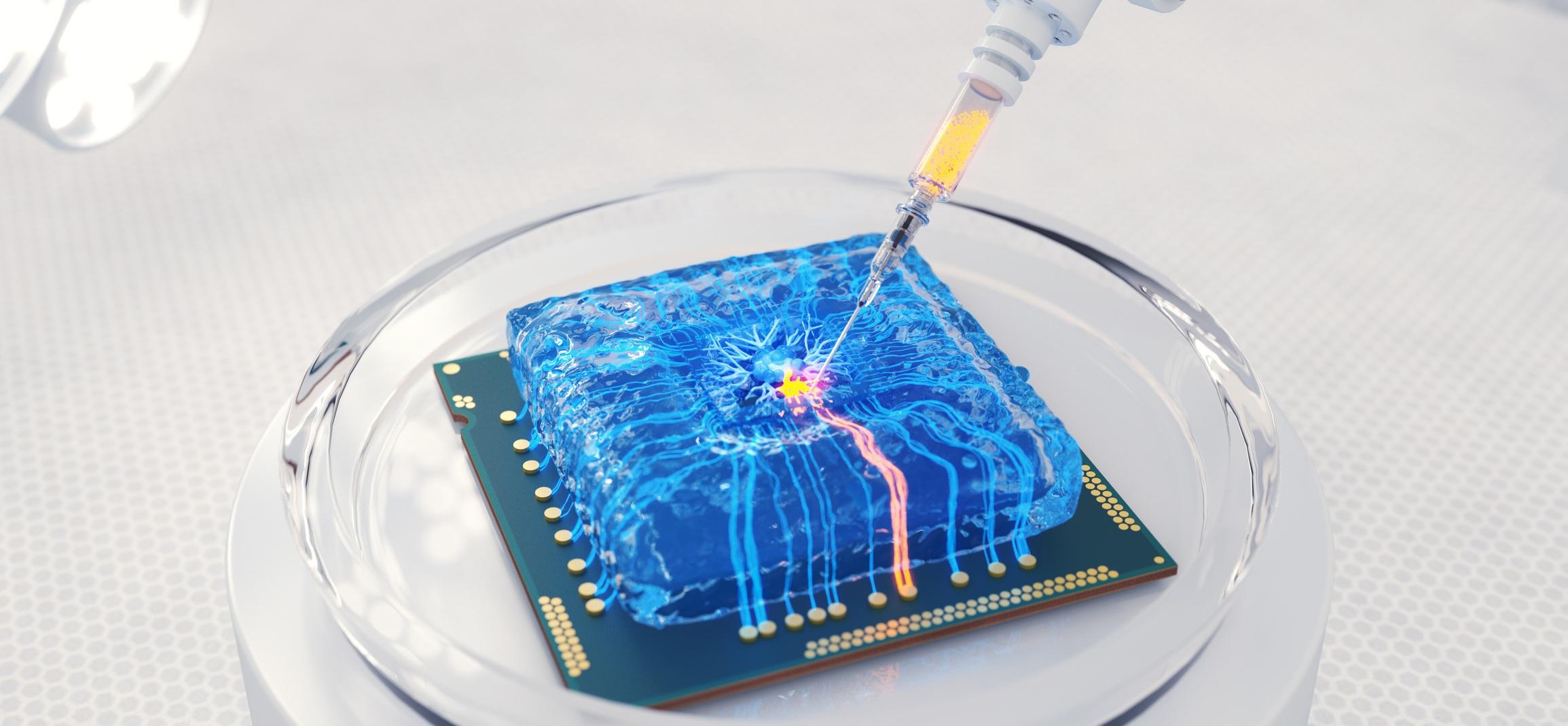
Self-healing materials introduce a different approach to maintaining surface performance over time. Rather than relying solely on initial surface properties to resist damage, these systems are designed to respond when degradation occurs. Self-healing coatings incorporate mechanisms that enable them to repair damage autonomously, restoring structural integrity and, in some cases, functional properties after disruption.9 This capability addresses one of the central limitations of conventional coatings: the gradual loss of performance as surfaces are exposed to mechanical and chemical stress.
Many of these materials draw inspiration from biological systems, where damage does not necessarily result in permanent loss of function. In natural systems, repair processes are triggered by disruption, allowing tissues to regain structure and continue operating. Self-healing coatings translate this concept into engineered materials, embedding responsive elements that activate in the presence of cracks, abrasions, or other forms of damage.
This represents a shift in how surface performance is maintained. Instead of relying on static resistance to wear and degradation, self-healing materials introduce the possibility of dynamic restoration, where the surface actively participates in preserving its own functionality over time.
Convergence: Self-Healing Antifouling Surfaces
As antifouling materials and self-healing systems have advanced in parallel, research has begun to explore their integration into unified material platforms. This convergence reflects a recognition that preventing fouling and maintaining surface integrity are closely linked challenges. Materials that combine antifouling properties with self-healing capabilities aim to address both simultaneously, limiting initial adhesion while also restoring performance when damage occurs.10
In this context, self-healing is not simply a structural feature but a functional one. When antifouling surfaces degrade, their resistance to biological attachment can diminish, creating localized regions where fouling can begin to take hold. Self-healing mechanisms offer a way to counteract this process by repairing surface damage and re-establishing the properties that inhibit adhesion.8 Rather than allowing performance to decline over time, these materials are designed to sustain their antifouling function through repeated cycles of damage and repair.
This approach reframes how surface performance is managed. Conventional antifouling strategies are typically evaluated based on their ability to prevent fouling under initial conditions. In contrast, self-healing antifouling materials introduce the possibility of maintaining resistance as conditions change, extending functional lifetimes and reducing the impact of wear. The emphasis shifts from a one-time barrier to a continuously maintained interface, where resistance to fouling is preserved rather than gradually lost.
Implications for Bioprocessing
In bioprocessing environments, surfaces are not passive boundaries; they are active interfaces where contamination risks emerge and are managed. Biofouling begins with surface interactions, and biofilms can persist as contamination sources even within controlled systems.2,8 This places surface condition at the center of contamination control, alongside cleaning and validation practices.
Maintaining surface integrity therefore becomes a critical factor in sustaining process performance. Antifouling materials demonstrate that surface properties can influence adhesion and accumulation, but their effectiveness depends on those properties remaining intact over time.8 When degradation occurs, the likelihood of fouling can increase, reinforcing the connection between material condition and contamination risk.
Self-healing antifouling materials introduce a different way of thinking about this relationship. By combining resistance to adhesion with the ability to repair damage, these materials suggest a path toward maintaining surface performance even as systems experience routine wear. In this context, self-healing does not replace existing contamination control strategies but could function alongside them, helping preserve the conditions that those strategies rely on.
This perspective remains conceptual within bioprocessing. There is no validated use of such materials in pharmaceutical manufacturing environments, and their performance under regulated conditions has not been established. However, the underlying principles align with the recognized importance of surfaces in contamination control and point toward a potential extension of current approaches, where maintaining surface function becomes an ongoing, material-driven process rather than solely an outcome of periodic intervention.
Barriers And Considerations
Any shift in materials used within pharmaceutical manufacturing must be evaluated within a regulatory framework that prioritizes consistency, traceability, and control. Cleaning processes are required to be validated to demonstrate that equipment can be reliably returned to a state that prevents contamination or adulteration.3 Introducing new surface technologies would therefore require a comparable level of evidence to show that they perform predictably under defined conditions and do not introduce new risks. This places a high bar on adoption, particularly for materials intended to function dynamically over time.
Durability represents a related consideration. Bioprocess surfaces are routinely exposed to mechanical stress, repeated cleaning cycles, and chemical agents. Existing antifouling coatings can lose effectiveness as they degrade under these conditions.8 Any material designed to maintain surface performance would need to demonstrate that it can withstand these environments while continuing to function as intended. Compatibility with cleaning agents is especially important, as these chemicals are integral to current contamination control strategies and cannot be easily modified without broader process implications.
Integration into established systems also presents challenges. Bioprocessing infrastructure, including vessels, piping, and utility systems, is designed around known material properties and well-characterized performance. Surface interactions influence biofilm formation and persistence, meaning that changes to material properties could alter how systems behave in practice.4 Incorporating new materials would therefore require careful evaluation of how they interact with both biological systems and existing process conditions.
These considerations do not preclude the use of advanced materials, but they shape the path to implementation. Any new approach would need to align with the expectations of regulated manufacturing while demonstrating that it can operate reliably within the physical and chemical realities of bioprocess environments.
Toward Adaptive Bioprocess Infrastructure
The trajectory of materials research points toward surfaces that do more than resist degradation. Antifouling coatings demonstrate that surface properties can be engineered to influence how biological material interacts with equipment, while self-healing systems introduce the ability to restore those properties when they are compromised. Work that combines these approaches suggests an emerging class of materials designed to maintain functionality over time rather than rely solely on initial performance.
In the context of bioprocessing, this raises the possibility of a gradual shift in how infrastructure is conceived. Conventional systems are built around passive materials whose performance is preserved through external intervention, particularly cleaning and validation. Adaptive materials, by contrast, would contribute to maintaining their own functional state, supporting the conditions required for contamination control at the surface level. This does not eliminate the need for established practices but introduces an additional layer of resilience rooted in material behavior.
Such a transition would be incremental and tightly constrained by regulatory and operational requirements. Cleaning remains a validated and necessary component of pharmaceutical manufacturing, and any new material approach would need to operate within that framework. Viewed in this way, adaptive surfaces represent a complementary paradigm. They extend existing strategies by addressing the underlying interactions between materials and biological systems, while leaving the core structure of contamination control intact.
References
1. Saini, Sonia, et al. “Biofilm-mediated wastewater treatment: a comprehensive review.” Mater. Adv. 4: 1415–1443 (2023).
2. Królasik, Joanna, and Jakub Knurek. “Risk Management Strategies for Biofilms in Water Systems used in Sterile Drug Manufacturing.” Mabion. Accessed 1 May 2025.
3. “Validation of Cleaning Processes (7/93).” U.S. Food and Drug Administration. Jul. 1993.
4. Yang, Haoyi, et al. “Mini-Review of Biofilm Interactions with Surface Materials in Industrial Piping System.” Membranes (Basel). 13: 125 (2023).
5. Boudarel, Héloïse, et al. “Towards standardized mechanical characterization of microbial biofilms: analysis and critical review.” npj Biofilms and Microbiomes. 4: 17 (2018).
6. Rivera, Elizabeth. “Cleaning Validation Program Maintenance in a Process Life-Cycle Model.” ISPE. Jan./Feb. 2021.
7. Bachlechner, Caroline, et al. “Biofilm Properties and Their Implications for Cleaning Processes in the Food Industry – A Review.” Journal of Food Protection. 89: 100695 (2026).
8. He, Zhoukun, et al. “Anti-Biofouling Polymers with Special Surface Wettability for Biomedical Applications.” Front. Bioeng. Biotechnol. Sec. Biomaterials. 9: 807357 (2021).
9. Gopal, Lakshmi, and Tirumalai Sudarshan. “Self-healing coatings.” Surface Engineering. 39: 1–5 (2023).
10. Wang, Zhanhua, et al. “Developments and Challenges in Self-Healing Antifouling Materials." Advanced Functional Materials. 30: 1908098 (2019).