Modern biologics pipelines demand technology transfer (tech transfer) approaches that can scale with increasing molecular complexity, shifting production platforms, and tightening regulatory expectations. As processes intensify, operations become increasingly digitalized, and single-use and stainless-steel systems standardize biologics manufacturing, seamless tech transfer becomes essential to maintaining quality and meeting timelines. Samsung Biologics’ manufacturing science and technology (MSAT)-led framework structures its risk assessments, standardizes workflows, and leverages multi-scale expertise to deliver reliable, right-first-time transfers for clinical and commercial success.
Seamless Tech Transfer as a Competitive Advantage
Biologic drug commercialization requires advancing a candidate from discovery through preclinical and clinical development to market approval and life cycle management. At each manufacturing stage, processes must be transferred or scaled to ensure a reliable supply of the drug substance and drug product. These transitions are unavoidable inflection points in development, and their execution efficiency directly affects timelines, costs, and regulatory readiness.
ICH Q10 defines the goal of tech transfer as the effective transfer of product and process knowledge from development to manufacturing, and between manufacturing sites, to support consistent production.¹ The Parenteral Drug Association describes tech transfer as a set of “planned and controlled actions” guided by predefined acceptance criteria to convey a manufacturing process, analytical method, packaging component, or other life cycle activity from an originator, or sending unit (SU), to a receiving unit (RU).² Together, these definitions underscore that tech transfer is not a transactional handoff but a structured, knowledge-driven progression that depends on process understanding, alignment between parties, and strong operational controls.
When implemented well, tech transfer and scale-up ensure a smooth progression from discovery to IND submission, through clinical development to Biologics License Application (BLA) filing, approval, and launch. A structured transfer framework also accelerates development by reducing uncertainty, limiting rework, and enabling the early identification of potential risks. Samsung Biologics’ MSAT teams reinforce these principles through detailed gap assessments, failure mode and effects analysis (FMEA)-based risk evaluations, workflow simulations, and standardized process controls drawn from experience across hundreds of drug substance and drug product transfers. These practices help anticipate issues related to raw material variability, facility fit, or comparability before they become bottlenecks at scale.
As pressure mounts to deliver therapies faster and at lower cost, seamless tech transfers have become a fundamental competitive differentiator. Contract development and manufacturing organizations (CDMOs) that can integrate expertise, minimize interruptions during transitions from drug substance to drug product, and maintain process consistency across scales give clients a measurable advantage in getting drugs to patients sooner.
Essential Conditions for High-Fidelity Transfers
Successful tech transfers depend on several foundational elements shared between the SU (often the client) and the RU (typically the CDMO). The first requirement is partnering with an RU that operates a mature tech transfer process that systematically evaluates facility fit, assesses risks, and anticipates challenges across upstream, downstream, analytical, and fill-finish operations.³ Samsung Biologics’ MSAT-led approach exemplifies this structure through standardized assessment tools, workflow simulations, and FMEA-based analyses that reveal potential gaps early.
Equally critical is the completeness of information shared by the SU. Providing detailed knowledge about the drug substance, drug product, and the established manufacturing process ensures that the CDMO can confirm it has the appropriate equipment, materials, and expertise. Full transparency at this stage enables a high level of process understanding, an essential prerequisite for determining where optimization, scale-up adjustments, or facility-specific modifications may be required.
Another key factor is robust alignment between the SU and RU. Whether transferring between a client and CDMO, between CDMOs, or between internal sites within the same organization, alignment is achieved only through open communication and consistent collaboration. This coordination must cover all project elements: timelines and milestones; anticipated development, optimization, or characterization work; raw material sourcing and lead times; and analytical requirements for monitoring and releasing drug products while ensuring consistency. Samsung Biologics emphasizes this alignment by establishing a master project schedule and defining communication pathways between the MSAT, quality assurance (QA), quality control (QC), and supply chain management (SCM) teams to unify the approach throughout the project life cycle.
Experience also determines success. CDMOs that have repeatedly advanced drug substance and drug product programs from early phases to commercialization bring a deep understanding of phase-appropriate challenges and the proactive measures needed to avoid them. For early-stage candidates, this may involve refining the processes for facility fit, such as harvest optimization or filter-sizing studies conducted in MSAT laboratories. For late-stage programs, it may include strategic process characterizations, validation planning, and protocol design for comparability.
Finally, ExellenS™ — Samsung Biologics’ optimized manufacturing framework built on standardized facility designs, harmonized equipment, and streamlined processes — forms the strategic foundation for efficient tech transfer, enabling rapid plant set up, seamless project switching, and consistent performance across a global network. Key operational capabilities optimize tech transfer. These include strategic teams empowered to make timely decisions, templated tech transfer documentation, harmonized SOPs, centralized on-site QC testing to streamline end-to-end services, and a geographic footprint that supports work during client downtimes and provides access to strong local vendor networks.
A central element of this documentation is Samsung Biologics’ process control strategy (PCS). This foundational MSAT document defines the process design, control elements, critical quality attributes, and phase-appropriate validation requirements. Samsung Biologics employs phase-specific PCS templates: a simplified, standardized PCS for early-phase projects, which generally follow established platform processes, and more detailed, client-tailored PCS documents for late-phase and commercial programs that reflect each client’s process requirements. Through the ExellenS™ framework, these capabilities are integrated into a unified execution model that delivers rapid setup, seamless project transitions, and consistently high-quality performance throughout the technology transfer life cycle.
Collectively, these elements enable a tech transfer process to be predictable, efficient, and resilient — qualities that are essential as biologics become more complex and timelines accelerate.
Inside Samsung Biologics’ Engine for Seamless Tech Transfer
Samsung Biologics recognizes that seamless tech transfer is essential for advancing biologics through commercialization and from drug substance to drug product. To support this progression, the company has established a comprehensive tech transfer framework to minimize risks and expedite the process. This framework draws on the MSAT team’s deep technical expertise that spans process understanding, scale-up and scale-down strategies, raw material readiness, and facility fit. Through these capabilities, the team meets aggressive timelines without compromising quality, consistency, or efficiency.
Samsung Biologics’ right-first-time philosophy is grounded in its ability to integrate technical, engineering, regulatory, and operational considerations when optimizing bioprocesses for large-scale manufacturing (Figure 1). This end-to-end framework is adaptable to the full range of modern biologics, from well-established monoclonal antibodies to emerging modalities that require more complex processing. The framework structure supports seamless transfer and scale-up, regardless of the process complexity or equipment platform.
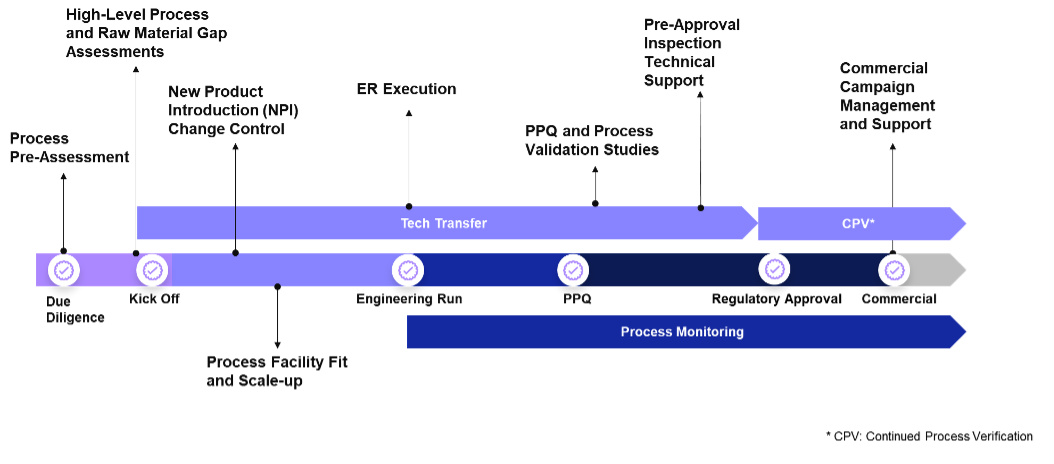 Figure 1. Samsung Biologics’ optimized end-to-end tech transfer flow
The tech transfer begins with a collaborative gap assessment and detailed workflow simulation to map the incoming process against Samsung Biologics’ equipment and facility capabilities. Standardized materials, equipment components, and documentation further streamline the transition and reduce the likelihood of deviations during early manufacturing runs. These foundational elements, together with experienced QC, support process robustness, strong manufacturing performance, and consistent regulatory compliance.
Every new project starts with a gap analysis and an FMEA-based risk assessment. Tech transfer experts evaluate the existing process from all angles: upstream, downstream, analytical, formulation, supply chain, and automation. Leveraging insights from prior tech transfers, the MSAT team collaborates with the client to tailor the mitigation plan to the development stage and project goals. If required, the team conducts targeted studies, including facility-fit assessments, harvest optimization, mixing and hold studies, filter sizing, or small-scale verification to strengthen process performance and safeguard product quality.
Even with strong planning, scale-up can expose challenges driven by raw material variability or differences in facility conditions. Samsung Biologics’ tech transfer framework incorporates a digital rapid-response system that allows both MSAT and clients to identify and resolve issues quickly. Process data recorded in the electronic master batch record (eMBR) and associated equipment sensor data are continuously monitored and transferred in real time to Samsung Biologics’ data lake, where they are visualized through the Samsung Biologics Client Portal. This systematic data flow enables the MSAT team and client to monitor the process and recognize abnormal trends immediately to determine the appropriate path forward. All databases and data flows are strictly segregated by project code and access control for data security.
The MSAT team, which serves as the primary technical communication channel, promptly relays any deviation, unexpected trend, or process event to the client. During production campaigns, the team remains on call, supported by Samsung Biologics’ 24/7 manufacturing and on-the-floor QA systems that help bridge time zone gaps and ensure rapid, coordinated decision-making. Continued verification, supported by statistical process control and trend monitoring, further maintains control throughout commercial manufacturing.
Samsung Biologics invests in expanding and refining its tech transfer model. Digitalized workflows, automated GMP documentation, and standardized templates are integrated to further accelerate tech transfer while maintaining high-quality standards. Additional efforts scale MSAT expertise for emerging modalities, such as antibody-(drug, oligonucleotide, and peptide) conjugates, mRNAs, and intensified or continuous processes. Samsung Biologics’ tech transfer framework thus remains aligned with the evolving demands of next-generation biomanufacturing.
On-Time, In-Full Delivery for Accelerated Approvals
Samsung Biologics’ tech transfer framework is supported by a project management model built around transparency, technical precision, and continuous client engagement. Each project is guided by dedicated project managers who maintain real-time communication with the client, ensuring that tech transfer issues are resolved quickly and appropriate stakeholders make informed decisions with a complete understanding of the risks and impacts.
Project planning begins with alignment on the scope, deliverables, critical paths, and timelines. A master project schedule establishes the critical path and gives cross-functional teams — including MSAT, QA, QC, manufacturing, SCM, engineering, and regulatory affairs — an understanding of the task dependencies so that they can advance activities in parallel. Project managers ensure that critical path activities remain on schedule by facilitating cross-team decision-making and eliminating obstacles.
The key to on-time and in-full delivery lies in a comprehensive understanding of the client’s tech transfer objectives. These objectives may include achieving speed-to-market, scaling operations to reduce costs, or mitigating product supply chain risks. At Samsung Biologics, the project management team develops tailored tech transfer strategies based on each client’s needs and ensures timely, in-full delivery.
One of the most significant accelerators is Samsung Biologics’ co-location of drug substance and drug product manufacturing. The proximity of these manufacturing sites eliminates redundant steps, including repeated analytical method transfers, and enables simultaneous drug substance and drug product project management. As a result, the transition from drug substance release to drug product manufacturing is reduced dramatically (Figure 2). Under a traditional, multi-site model, drug substance release and transfer typically require 81 days: 60 days for drug substance release, seven days for shipping, and 14 days for incoming drug substance release. Integrating drug substance and drug product operations with the quality system reduces this window to approximately 32 days, saving roughly seven weeks and allowing an earlier initiation of drug product manufacturing.
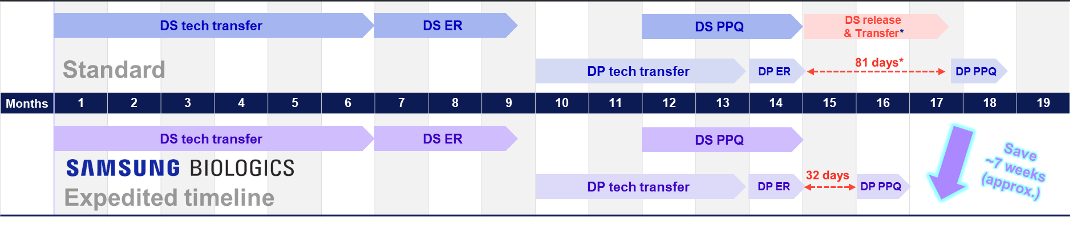 Figure 2. Samsung Biologics’ expedited end-to-end timeline with tech transfer efficiency
Digital platforms also play a central role. Connected systems — including the eMBR, manufacturing execution system (MES), laboratory information management system (LIMS), and data analytics tools — support predictive risk management, streamline documentation, and accelerate validation. Under the ExellenS™ framework, these functions are backed by standardized equipment and facility design that align manufacturing, quality, and supply chain execution across Samsung Biologics’ production plants. Dual sourcing and seamless plant-to-plant transfers ensure supply continuity and resilience against disruptions.
Together, these elements reflect a company-wide commitment to right-first-time execution and on-time, in-full delivery. Clients benefit from a transfer and manufacturing model that not only preserves quality and comparability but also reliably meets accelerated regulatory and commercial timelines.
Real-World Proof of High-Fidelity Scale-Up
The impact of Samsung Biologics’ end-to-end, MSAT-led approach is most evident in its performance across real-world tech transfer and scale-up projects. To date, Samsung Biologics has achieved a 100% success rate in transferring client processes across both single-use and stainless-steel platforms, all on time, while maintaining comparable productivity and product quality at both single-use and 15,000-L stainless-steel scales.
This track record spans multiple bioreactor manufacturers and configurations, including Mobius®, Biostat STR®, and Xcellerex XDR® systems. Samsung Biologics’ MSAT teams leverage deep multi-scale know-how to harmonize process parameters, mixing conditions, and control strategies so that the transferred process performs as intended at the larger commercial scale.
Figure 3 illustrates one such example, comparing viable cell density (VCD) and daily titer profiles for a client process originally run in a 2,000 L single-use bioreactor and the corresponding Samsung Biologics process in a 15,000 L stainless-steel bioreactor. The overlapping performance curves — purple for the client’s 2,000 L single-use run and navy black for Samsung’s 15,000 L stainless-steel run — demonstrate that scale-up was achieved without loss of productivity or quality, or a shift in process behavior.
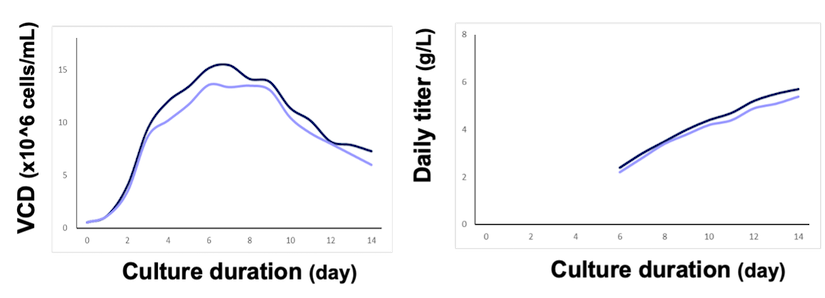 Figure 3. Transfer and scale-up of a client process with comparable productivity and quality.
Purple — client’s 2,000-L single-use run. Navy black — Samsung Biologics’ 15,000-L stainless-steel run.
The smooth transition from clinical to commercial scale was realized without compromising product quality attributes, confirming that Samsung Biologics’ framework preserves both process performance and comparability as volumes increase.
A CDMO Built for the Future of Biologics
Samsung Biologics has supported biologics developers for more than a decade, building a reputation as a reliable CDMO partner that reduces operational complexity, accelerates regulatory pathways, and helps deliver therapies to patients worldwide. From late discovery through commercial launch and life cycle management, Samsung Biologics provides batch manufacturing for drug substances and drug products. These capabilities extend beyond recombinant proteins and monoclonal antibodies to include multispecifics, ADCs, fusion proteins, mRNA platforms.
Samsung Biologics has continuously evolved in capacity since its founding. Today, the campus leads globally in biomanufacturing footprint, with Plants 1–5 offering 785,000 L of total capacity. Investments in a US manufacturing site for an additional 60,000 L, a dedicated ADC facility, an integrated mRNA production suite, and expanded aseptic filling operations strengthen its ability to support the next generation of modalities. At the same time, initiatives in continuous manufacturing and digitalized GMP documentation — through platforms such as MES, LIMS, and eMBR — ensure that operations remain agile, data-driven, and compliant.
The end-to-end tech transfer framework is central to Samsung Biologics’ commitment to client success. Samsung Biologics’ model streamlines transfer activities, standardizes workflows, and embeds right-first-time principles into every project, helping clients advance their programs efficiently while maintaining high product quality and regulatory confidence.
References
1. Harmonized Tripartite Guideline: Pharmaceutical Quality System Q10. International Conference on Harmonisation of Technical Requirements for Registration of Pharmaceuticals for Human Use (ICH). Current Step 4 version. 4 Jun. 2008.
2. Technical Report No. 65: Technology Transfer. Parenteral Drug Association. 2014.
3. Perry, Stephen. “Tech Transfer: Do It Right the First Time.” Pharmaceutical Manufacturing. 6 Jan. 2010.