
Digital transformation is reshaping global manufacturing, from consumer electronics to automotive and advanced materials, but in the highly regulated, risk-averse biopharma industry, the pace of transformation has been more cautious. While industries such as semiconductors have long since embraced fully automated workflows and integrated data systems, biopharma has remained relatively reliant on manual operations, paper-based documentation, and siloed digital tools—particularly in upstream and downstream manufacturing. Samsung Biologics recognized this opportunity early on and decisively launched a manufacturing execution system (MES) initiative in 2019 as part of a long-term vision to build not only more capacity but also smarter, more resilient, and more compliant manufacturing infrastructure. This system has evolved into a sophisticated digital backbone for real-time production control and data integrity. The commissioning of Plant 5 in April 2025 marked a major inflection point, as it is our first site to fully realize MES 1.0, incorporating new layers of automation, system integration, and validation rigor. With this foundation, Samsung Biologics is advancing toward a truly smart factory—one defined not only by digitalized records, but also by the seamless convergence of process automation, material handling automation, as well as MES-driven scheduling and equipment control.
A Strategic Case for the MES in Biomanufacturing
MES platforms play an increasingly central role in modern biomanufacturing. As the digital backbone of execution, an MES orchestrates production processes from start to finish, managing batch orders, executing electronic batch records (eBRs), enabling real-time data capture, and ensuring accurate, compliant process documentation.
Biomanufacturing differs from many other industrial sectors in its inherent variability and heightened regulatory oversight. Products are often sensitive to minor process changes, equipment performance, or raw material characteristics. At the same time, biopharma must comply with strict global standards for data integrity, traceability, and product release. The cumulative effect is that every step in the production life cycle must be not only executed with precision but also recorded in a way that is attributable, legible, contemporaneous, original, and accurate: the core ALCOA++ principles that guide compliance in Good Manufacturing Practice (GMP) environments.
Historically, many of these records were kept in paper-based or partially digitalized formats, systems that, while familiar, are also vulnerable, susceptible to human error, and difficult to standardize. These limitations translate into real risk-deviations stemming from incorrect data entry, insufficient traceability, or process non-conformity are not only costly but can also delay product release or raise compliance concerns during audits.
As a leading contract development and manufacturing organization (CDMO), Samsung Biologics faces an added layer of complexity: the ability to support a diverse and expanding portfolio of client programs, each with unique process steps, analytical methods, and compliance requirements. In this context, an MES becomes more than an internal efficiency tool; it is a platform for enabling high-quality, traceable, and customizable manufacturing at scale.
By embedding an MES across operations, Samsung Biologics minimizes manual interventions, strengthens data compliance, and drives consistency across production lines. The system supports our ability to flexibly accommodate multiple clients and products while maintaining high GMP standards for regulatory transparency.
From Digital Records to Digital Control
Samsung Biologics’ digitalization journey began with the foundational goal of eliminating paper-based inefficiencies and manual errors (Figure 1). In Plants 1 through 4, the paperless eBR was implemented in what is often referred to as a “paper-on-glass” format. While this approach digitalized batch records and facilitated basic process documentation, it still relied heavily on manual inputs and verification. It represented an important step forward and was also a clear signal that more integrated, automated solutions would be necessary to truly modernize manufacturing execution.
With the launch of Plant 5, Samsung Biologics advanced to MES 1.0 — a more sophisticated, deeply integrated execution environment designed to reduce human touchpoints, increase data reliability, and streamline compliance. MES 1.0 at Plant 5 represents a marked departure from previous iterations, shifting from digital record-keeping to digital process control.
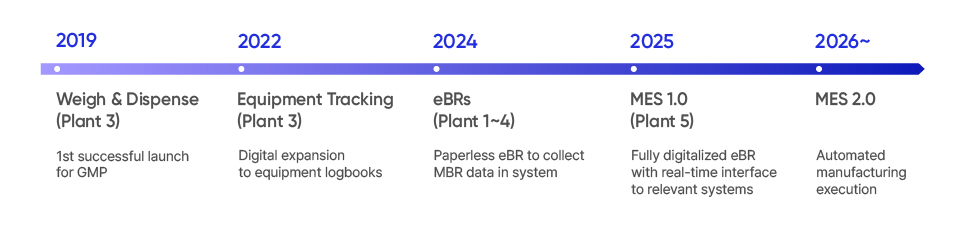 Figure 1. Samsung Biologics’ MES Roadmap
Several key advances distinguish this implementation. First, Samsung Biologics significantly expanded MES interfaces with surrounding systems, including enterprise resource planning, laboratory information management, and process control. This connectivity enables seamless data flow between systems, reducing redundant data entry and resulting in timely, accurate decision-making.
Second, MES 1.0 supports the automated transmission of transaction data directly from equipment and instruments, eliminating the need for operators to manually document values such as batch weights, equipment parameters, or material consumption. This reduces the risk of documentation errors while supporting real-time monitoring and traceability.
Third, Samsung Biologics established a more structured, systematic approach to eBR configuration. By standardizing templates and introducing real-time system verification capabilities, the MES now supports more consistent and compliant batch execution, facilitating smoother batch reviews and faster product release.
Last but not least, MES 1.0 involves integrating an MES not just with production systems but also with warehouse and logistics automation platforms. Automated mobile robots, automated guided vehicles, and smart storage systems all present opportunities to eliminate material handling bottlenecks and enhance traceability across the entire supply chain. An MES operates as the digital conductor that unites these elements, ensuring that materials, equipment, and people are coordinated seamlessly in real time.
However, as the MES expands across more processes and facilities, new challenges emerge. The CDMO model requires to accommodate a wide variety of products, processes, and client specifications, often simultaneously. To meet this demand, the MES must be flexible enough to support customization yet intuitive enough for use by manufacturing operators and manufacturing science and technology (MSAT) teams without constant IT intervention. Usability, adaptability, and speed of configuration are just as critical to success as technical functionality.
Strengthening Data Integrity by Design
In biopharmaceutical manufacturing, data integrity is not just a regulatory checkbox; it is a core element of patient safety. Every input, action, and result in the production process must be documented in a way that is complete, reliable, and tamper-proof.
Human error is one of the most frequent causes of deviations in biopharmaceutical manufacturing. These errors range from incorrect transcription of equipment readings and inconsistencies in unit measurements, to calculation errors and incomplete or illegible entries. Beyond the immediate risk to data accuracy, paper-based processes lack the safeguards required to ensure traceability and contemporaneity, key components of ALCOA++ compliance.
With the adoption of an MES, Samsung Biologics established a proactive model in which the system itself is designed to prevent errors at the point of entry. The MES automatically captures execution data from integrated equipment, minimizing the possibility of errors during transcription or input. Operator tasks that previously required manual logging have been replaced with structured, dropdown-based inputs and barcode-scanning interfaces for materials, enabling speed and precision. This system-driven approach not only reduces the likelihood of human error but also lowers training burdens and operational risks, especially when onboarding operators or launching new facilities and products. By embedding guided workflows and intuitive interfaces, the MES helps standardize tasks that once relied heavily on memory or informal workarounds, making the path to first-GMP production faster and more reliable.
All batch records are now managed through standardized eBR templates that conform to digital data structures, rather than free-form documents. This uniformity strengthens version control, facilitates cross-checking, and supports clear audit trails across departments. It also ensures that records are always attributable, legible, contemporaneous, original, and accurate, providing the level of confidence expected by regulatory agencies worldwide.
As a result of moving into a more data-rich environment, the volume of information that needs to be reviewed has grown. Initially, this led to longer review cycles as quality teams adapted to the increased granularity and volume of system-generated data. However, this was a temporary adjustment. Over time, the MES enabled more targeted reviews, faster investigations into deviations, and increased confidence in batch release.
Validation in the Real World: Samsung Biologics’ Pioneering Use of Performance Verification Testing
In the implementation of any GMP-compliant digital systems, computer system validation is not merely a regulatory formality; it is a fundamental requirement for ensuring patient safety. An MES must demonstrate that it performs consistently, accurately, and reliably under real-world conditions. However, conventional validation practices, while essential, may not be sufficient on their own to meet the complexity and expectations of the operational environment.
To address this, Samsung Biologics introduced a new layer of rigor: performance verification testing (PVT). While user acceptance testing (UAT) has long been the standard for confirming that the software functionality meets the defined requirements, UAT is typically performed in a controlled, simulated setting: a validation environment. This means that UAT primarily verifies core functionality and basic system interfaces in isolation.
In contrast, PVT was specifically developed to extend validation beyond simulation into the realities of the production floor. As illustrated in Figure 2, PVT ensures that validation covers additional critical layers that UAT alone cannot fully address. These include the live system interfaces in the actual product environment, the network infrastructure that connects equipment and systems in real time, and the people and processes that interact with the system daily. Moving outward from the core functionality and validation environment to encompass these operational dimensions, PVT provides a more complete, robust test of the system’s true fitness for purpose.
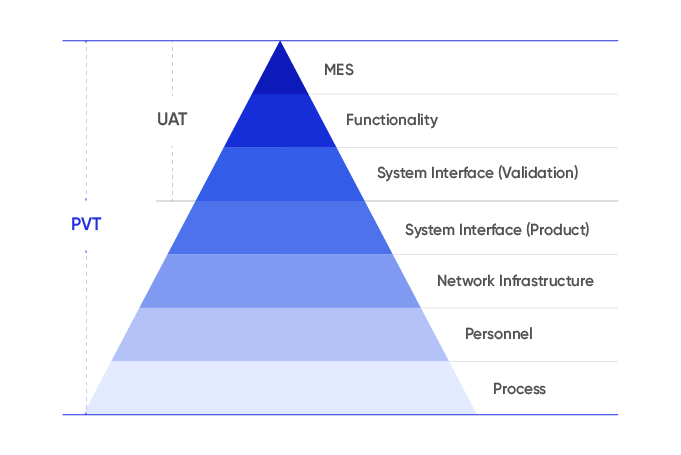 Figure 2. PVT builds on the foundation provided by bridging the gap between simulation testing and the manufacturing equipment, IT infrastructure, and operator interfaces.
By conducting validation testing directly within live manufacturing environments, PVT is used to simulate actual production workflows, including full integration with manufacturing equipment, IT infrastructure, and operator interfaces. This approach exposes the system to all the variables that characterize real-world operations: network behavior, data traffic volume, equipment handshakes, and environmental stressors that cannot be replicated in a test lab.
Just as importantly, PVT is designed to involve cross-functional participation from key operational departments, including quality assurance (QA), MSAT, and manufacturing. Each team brings a critical perspective, highlighting practical usability issues, unexpected process frictions, or gaps in system design that may not be obvious to software developers or IT testers. By embedding real users into the validation process, the MES aligns not only with technical specifications but also with operational realities.
The need for this approach became clear through past experience. When a SaaS-based system was implemented in a previous plant, vendor validation artifacts were used to streamline the validation process. However, once deployed, the performance was impacted by infrastructure-specific variables, such as local network configurations and hardware limitations, factors that had not been accounted for in off-site testing. These lessons drove the creation of PVT as a core validation component for future systems.
In Plant 5, PVT proved invaluable. The process surfaced a range of abnormal data flows and edge-case behaviors that had not been anticipated during the design. In many cases, the system was modified to handle these scenarios gracefully, ensuring robustness before launch. In other cases, PVT identified usability enhancements and even surfaced quality-impacting issues that were resolved before GMP manufacturing began. In all instances, PVT allowed for proactive improvements rather than reactive remediations after deployment.
PVT has now become an integral part of how Samsung Biologics validates the MES. It extends beyond system testing to serve as a validation of fitness for purpose, a test of alignment with intended use, and a final layer of assurance that the digital infrastructure supporting our operations will perform to the highest standards when it matters most.
Results and Realizations: What the MES Has Delivered So Far
The implementation of an MES at Samsung Biologics has fundamentally transformed manufacturing processes while strengthening the operational, regulatory, and organizational capabilities. By automating data entry, enforcing system-driven workflows, and standardizing templates, the MES has significantly reduced manual and human-error-driven deviations, especially during engineering runs (ERs) and the startup phases of new plants or product campaigns where process familiarity is still developing. These improvements have enabled smoother, more predictable ERs at Plant 5, with minimal deviations or delays, validating the strategic importance of our digital execution strategy and setting a strong foundation for future scalability.
From a quality and compliance perspective, the results have been equally encouraging. The MES has significantly strengthened our ability to meet — and in many cases exceed — evolving expectations from global regulatory authorities regarding data compliance. The system’s structured, traceable, and tamper-evident records provide auditors with a high level of confidence in the integrity and consistency of our manufacturing data.
This was validated during a recent audit of Plant 5 by a major pharmaceutical client. The audit yielded no critical observations, and the Samsung Biologics’ MES implementation was favorably noted for its technical design and contribution to data integrity. In a regulatory environment where ALCOA++ compliance is increasingly under scrutiny, such outcomes are both affirming and strategically important.
Beyond compliance and operations, developing and validating the MES in house has allowed Samsung Biologics to build a robust internal knowledge base that enhances system sustainability and continuous improvement. This experience has enabled us to refine our validation practices, better anticipate system integration needs, and respond more swiftly to operational changes.
Looking Ahead: MES 2.0 and the Future of Autonomous CDMO Operations
With the successful implementation of MES 1.0 at Plant 5, Samsung Biologics has firmly established its position as a connected plant within the broader journey toward smart, mature manufacturing. Plant 5 marks a key milestone on our digital plant maturity roadmap (Figure 3), moving from foundational digital record-keeping and partial automation to fully integrated, data-driven process control.
Building on this base, Samsung Biologics is now preparing for the next major leap in digital execution: MES 2.0. MES 2.0 will expand beyond the connected plant stage to support the advanced levels of orchestration and autonomy represented by stages 4 and 5 of our roadmap. This means not only enhancing existing digital capabilities but also pushing the boundaries of what is possible in fully integrated, intelligent manufacturing execution.
 Figure 3. Digital plant maturity levels1
One of the key goals of MES 2.0 is to move beyond structured workflows and digital record-keeping into true operational automation. This next-generation system is expected to include:
Advanced scheduling logic that can dynamically allocate resources and orchestrate processes based on real-time data
Expanded equipment control that enables the MES to initiate and manage equipment functions with minimal operator input
And, where feasible, AI-enabled analytics for predictive quality management, process optimization, and proactive deviation detection, areas currently under active exploration
As the MES grows more powerful and interconnected, its usability and adaptability become even more important. That means designing interfaces that are intuitive for operators, reducing reliance on IT teams for minor changes, and enabling rapid configuration without compromising compliance. It also means building systems that can scale horizontally across product types and client specifications, as well as vertically as more layers of the manufacturing stack are automated.
MES 2.0 will not be an ultimate destination but rather a new phase in our evolution toward fully digitally orchestrated and ultimately autonomous CDMO operations. It reflects our continued commitment to building systems that are not only smarter but also safer, more agile, and better aligned with the future of biopharmaceutical manufacturing.
Lessons Learned and Advice for the Industry
The journey to a fully functional, compliant, and scalable MES is complex, but also deeply rewarding. At Samsung Biologics, our experience has taught us that technical implementation alone is not enough. The success of an MES depends just as much on organizational alignment, process ownership, and cultural readiness as it does on software functionality.
Notably, an MES is not just an IT project. While system developers play a critical role in building and configuring the platform, it is the process owners closest to the day-to-day operations who must take the lead in defining requirements, reviewing functionality, and validating system performance. Without their input, the risk of misalignment between digital workflows and real-world practices increases substantially. Involving the QA, MSAT, and manufacturing teams from the earliest design phases ensures that the system reflects operational realities and supports seamless adoption.
Importantly, systemization is not the same as digital transformation. Replacing paper records with electronic ones is only the beginning. True transformation requires rethinking how we work: streamlining redundant steps, clarifying responsibilities, and embedding compliance into every layer of execution. In some cases, the biggest improvements come not from automating existing tasks but from reimagining the process altogether.
An MES is not a one-time deployment; it is a living system. Continuous feedback loops, user training, system refinements, and new feature implementations are all essential to long-term success. Stakeholders must remain engaged, and improvement cycles must be built into the MES governance model to ensure the system evolves alongside changing operational needs and regulatory expectations.
For organizations just beginning their MES journeys, our advice is simple: treat the MES as both a technical and cultural evolution. Ensure deep collaboration between IT and operations, validate early and often, and don’t underestimate the value of real-world testing. Most importantly, recognize that digitalization is not about replacing people—it’s about empowering them with systems that enable better, safer, and more reliable manufacturing.
At Samsung Biologics, the MES is a strategic pillar that streamlines biomanufacturing, ensures compliance, and delivers quality and patient safety. While the efficiencies gained through automation and integration are significant, the true value of an MES lies in its ability to embed quality directly into the fabric of our operations. At the end of the day, every improvement in the manufacturing process is ultimately an investment in the patients we serve.
Reference
1. “Digital Plant Maturity Model.” BioPhorum Operations Group. 2019.