Lipid nanoparticles (LNPs) are reshaping modern medicine, offering a delivery solution that combines protection, precision, and scalability. From nucleic acids and gene-editing systems to small molecules and peptides, advances in LNP engineering are transforming how therapies are developed and translated into the clinic.
Lipid Nanoparticles: An Expansive Platform for Therapeutic Innovation
Liposomes and lipid nanoparticles (LNPs) represent a major advance over early excipient technologies, such as dextran polymers, which provided only limited protection for drug substances against degradation in harsh environments. Unlike these basic carriers, LNPs function as sophisticated delivery vehicles capable of both protecting fragile actives and directing them precisely to target tissues.
The power of this technology came into sharp focus during the COVID-19 pandemic, when the first mRNA vaccines — encapsulated in LNPs — demonstrated unprecedented efficacy and scalability. However, the potential of LNPs in drug delivery extends far beyond mRNA. LNPs are proving effective for nucleic acids of many types, hydrophobic small molecule APIs, peptides, proteins, and even gene-editing systems. This breadth underscores their growing role as a cross-modality platform.
LNPs improve bioavailability, extend circulation half-lives, and optimize pharmacokinetics across diverse therapeutic classes and indications, including skin conditions, infectious diseases, genetic disorders, various cancers, neurodegenerative diseases, cardiovascular diseases, and others. Compared with metallic nanoparticles, they are more readily cleared from the body and exhibit lower toxicity. Advances in formulation now enable not only protection from degradation but also targeted delivery to specific tissues and controlled or sustained release, expanding their utility into areas once considered inaccessible. Indeed, experts increasingly view LNPs as a way to “drug the undruggable,” opening therapeutic options for a much larger share of the human genome than conventional approaches.1,2
Applications are already wide-ranging. In cosmetics and dermatology, LNPs enhance the stability and penetration of active ingredients used to treat infectious and inflammatory skin diseases.3 Their small particle size promotes intimate interaction with the stratum corneum, while their lipid composition contributes to skin hydration and elasticity. These attributes also support cosmeceutical formulations such as anti-aging serums, brightening agents, moisturizers, and sunscreens. Similar benefits are being explored in systemic therapies for cancer, cardiovascular conditions, neurodegenerative disorders, and genetic diseases, where LNP-mediated delivery can significantly enhance efficacy and reduce toxicity.
Engineering Precision: How Formulation Redefines LNP Delivery
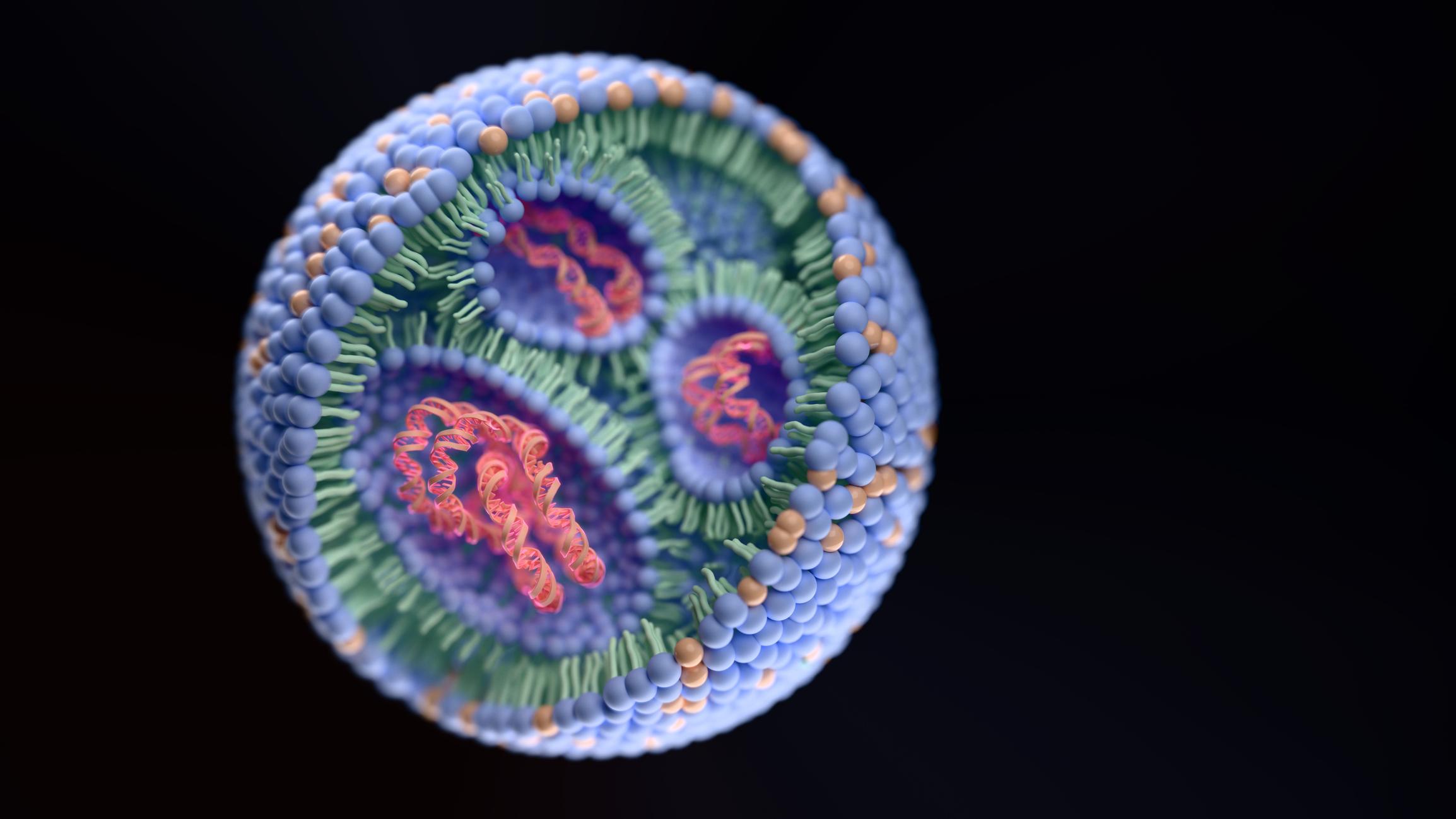
Lipid nanoparticles are built from several lipid components blended in precise ratios, and these design choices strongly influence where the particles accumulate in the body. When administered subcutaneously, most LNPs preferentially localize in the liver, reflecting both its high blood flow and its efficient uptake mechanisms. Overcoming this “default tropism” has become a central challenge, and two main strategies have emerged: engineering ionizable lipids and conjugating ligands to the LNP surface.
Ionizable lipids are neutral at the time of nanoparticle formation but shift charge in the cytoplasm after they have entered a cell. The architecture of these lipids determines biodistribution, and proprietary ionizable lipids have become one of the most contested areas of intellectual property in the field. Most are cationic, though researchers are now exploring alternatives that may offer unique advantages.
Ligand conjugation provides another powerful route for redirecting LNPs. Antibody fragments, full monoclonal antibodies, peptides, and aptamers can be tethered to the particle surface either during assembly or post-encapsulation.1 These ligands enable active targeting by binding to specific receptors on cells, including tumor-associated receptors in the tumor microenvironment. In some cases, the targeting moiety is designed to respond to local conditions, such as the elevated pH in tumors, so that drug release is triggered only at the disease site. Such an approach can enhance targeting and/or support sustained or controlled release of the drug substance.
Beyond targeting, lipid choice also influences the physical stability of the nanoparticles. BioCina has sponsored collaborative research with a university in Adelaide focused on anionic ionizable lipids. Early findings suggest that these formulations maintain efficacy while exhibiting far greater thermal stability. Unlike conventional cationic systems that require storage at –80 °C, certain anionic LNPs can be stored at 2–8 °C, or even room temperature, without loss of activity. This advance could transform global distribution, lower costs, and simplify logistics for vaccines and other LNP-based medicines.
Together, these approaches illustrate how LNP formulation has evolved from a standardized “recipe” to a highly tunable platform, where lipid chemistry and surface engineering dictate organ targeting, therapeutic performance, and real-world usability.
Delivering a Broad Spectrum of Nucleic Acid Therapeutics
Although the COVID-19 mRNA vaccines highlighted the potential of LNPs, they were not the first nucleic acid medicines to rely on this technology. Earlier examples included small interfering RNA (siRNA) and antisense oligonucleotide (ASO) drugs, several of which advanced into the clinic and, in some cases, reached the market.
By replacing viral vectors, LNPs sidestep many of the safety and immunogenicity concerns that have constrained gene therapy development.4 Encapsulation shields nucleic acids from enzymatic degradation, while promoting cellular uptake and endosomal escape. The result is high transfection efficiency with relatively low immune activation — an essential balance for clinical viability.
The therapeutic scope is remarkably broad. In oncology, mRNA–LNPs are being explored not only for cancer vaccines and cytokine-encoding therapies but also for gene silencing and gene-editing approaches, such as CRISPR-Cas9. For hematologic malignancies like leukemia, lymphoma, and multiple myeloma, in vivo LNP-based delivery is being developed to genetically reprogram immune cells, potentially eliminating the need for complex, patient-specific ex vivo manufacturing. This shift could dramatically simplify access to chimeric antigen receptor (CAR)-T cell and related therapies.
Beyond cancer, numerous mRNA–LNP vaccine candidates are in development for infectious diseases, including influenza, Zika, Ebola, HIV/AIDS, malaria, dengue, and Lyme disease, where traditional vaccine technologies have struggled.4 The approval of Onpattro (patisiran), an siRNA–LNP therapeutic for hereditary transthyretin amyloidosis (hATTR), provided the first regulatory validation of this modality. Since then, LNP-based gene-editing drugs have entered clinical testing for hATTR, hereditary angioedema (HAE), and inherited blood disorders, such as thalassemia and sickle cell disease.
Researchers are also extending the reach of LNPs to neurological and chronic diseases. Advances in formulation are making it possible to cross the blood–brain barrier, opening avenues for treating central nervous system conditions. Similarly, LNP-delivered nucleic acids are being investigated for hepatic steatosis, fibrotic disorders, and other chronic illnesses.4 Achieving these outcomes often depends on fine-tuning lipid composition, incorporating novel ionizable lipids, or adding targeting ligands. Together, these strategies highlight how LNPs are expanding what is therapeutically possible, transforming diseases once considered “undruggable” into realistic treatment targets.
Expanding LNP Benefits to Small Molecules and Beyond
The same attributes that make LNPs powerful carriers for advanced modalities also apply to conventional small molecule drugs. Many small molecules suffer from poor solubility and limited bioavailability, issues that can be mitigated by encapsulation within LNPs. This capability is particularly compelling for chemotherapeutics, where systemic delivery often produces severe off-target effects. By directing cytotoxic agents more precisely to tumors, LNPs hold the promise of enhancing efficacy while reducing collateral damage.
The potential extends further. LNPs are under investigation for delivering antibiotics and respiratory therapeutics, offering new strategies against drug-resistant infections and chronic lung diseases. In fact, BioCina and others in the field are already developing LNP formulations that combine small molecules with peptides, further demonstrating the versatility of the LNP platform.
Mechanistically, LNP encapsulation improves bioavailability of hydrophobic active ingredients, shields them from hydrolysis and oxidation, prolongs circulation half-life, and supports favorable biodistribution. LNPs can be engineered for controlled release, enhanced intracellular uptake, and organ-specific targeting.5 Experimental designs are rapidly diversifying: examples include photo-responsive LNPs that release anticancer payloads upon light activation, and quaternized bioreducible LNPs designed for antifungal therapy.
As regulatory frameworks adapt to these hybrid applications — where small molecules intersect with nucleic acids, peptides, or proteins — the opportunities for innovation will only grow. The expansion of LNPs into small molecule delivery underscores their evolution from a niche tool into a universal platform for modern drug development.
BioCina’s Integrated Capabilities, Expert Team, and Advantageous Location
Realizing this potential requires not only innovative formulations but also a partner with the breadth of capabilities to handle different payloads reliably, an area where BioCina has built particular strength. BioCina combines deep expertise in development and manufacturing across multiple modalities, including antibody fragments, mRNA, minicircle DNA, plasmid DNA, and lipid nanoparticle encapsulation, to help drug developers advance novel LNP-based candidates spanning a broad array of therapeutic areas. Its flexible factory model enables efficient production of LNPs carrying diverse payloads, from small molecules and peptides to nucleic acids, using a variety of manufacturing processes.
This breadth is supported by a team with long-standing experience in both traditional biologics and newer nucleic acid technologies, extending from microbial fermentation through to advanced LNP formulation. Many of BioCina’s staff have spent over a decade at the site, creating an unusually stable foundation of institutional knowledge. That continuity underpins BioCina’s reputation for strong regulatory performance, consistent, industry-leading on-time and in-full delivery, and the ability to de-risk complex projects.
Clients also benefit from BioCina’s end-to-end solutions and collaborative approach. Rather than piecing together capabilities across multiple vendors, sponsors can access integrated support from development through to GMP production, with transparent communication and a focus on partnership.
Geography adds another layer of advantage. Australia offers exceptionally generous R&D tax incentives, rapid entry into early-phase clinical trials, and access to a highly diverse patient population. These features allow programs to move from concept to clinic more quickly and cost-effectively, while still benefiting from BioCina’s global regulatory expertise. Together, these strengths position BioCina as a trusted partner for companies pursuing the next generation of LNP-based therapeutics.
References
1. Cheng, Z, et al. “Applications of liposomes and lipid nanoparticles in cancer therapy: current advances and prospects.” Exp. Hematol. Oncol. 14: 11 (2025).
2. Zhou, Yujie, et al. “Advances in Lipid Nanoparticle-Based Disease Treatment.” ChemMedChem. 20: e202400938 (2025).
3. Anil Pareek et al., Advancing lipid nanoparticles: A pioneering technology in cosmetic and dermatological treatments. Colloid and Interface Science Communications, Volume 64, January 2025, 100814. https://doi.org/10.1016/j.colcom.2024.100814
4. Sijia Xu, Zhenzhen Hu, Fenglin Song, Ying Xu, and Xuexiang Han, Lipid nanoparticles: Composition, formulation, and application. Molecular Therapy Metehods & Clinical Development, Volume 33, Issue 2101463, June 12, 2025. DOI: 10.1016/j.omtm.2025.101463
5. Yamin Li, Zhongfeng Ye, Hanyi Yang, and Qiaobing Xu, Tailoring combinatorial lipid nanoparticles for intracellular delivery of nucleic acids, proteins, and drugs. Acta Pharm Sin B. 2022 Apr 27;12(6):2624–2639. doi: 10.1016/j.apsb.2022.04.013.