Patient-derived organoids (PDOs) are emerging as practical translational tools for oncology drug development, offering human-relevant models for evaluating drug response, resistance, and tumor heterogeneity. Samsung Organoids’ GxP-aligned screening services build on this potential, integrating patient-derived tumor models with high-throughput, high-content screening (HCS), multi-omics analysis, and clinical data. By connecting functional responses with molecular and clinical contexts, the platform helps researchers identify biomarker hypotheses and study mechanisms of sensitivity and resistance to support more informed candidate- and patient-selection strategies. Integrated into Samsung Biologics’ broader development and manufacturing capabilities, the platform offers a more connected path from translational oncology insights to clinical development.
Closing the Translational Gap in Oncology
Oncology drug development is time-consuming and costly, and it is difficult to move successfully from development to manufacturing. Development timelines can range from 10 to 15 years, and success rates from first-in-human trials to approval remain below 10%.1 Much of this attrition results from the limited predictive value of conventional preclinical models. Two-dimensional (2D) cell cultures are quick, low-cost, and useful for early screening. However, they cannot fully capture tumor architecture, patient heterogeneity, or clinically relevant drug sensitivity. Animal models add biological complexity, but they are slower, more expensive, and often only partially reflect human disease biology or treatment response.
As a result of these limitations, experimental systems that provide human-relevant translational data earlier in development are needed. The use of organoids has emerged as one of the most promising approaches. Once viewed largely as academic models, they are increasingly being adopted as practical translational tools for modeling tumor biology, evaluating drug response, and bridging the gap between conventional cell-based assays and clinical outcomes.
This shift is occurring alongside broader regulatory momentum around new approach methodologies (NAMs). Recent policy developments have removed mandatory animal testing, expanded recognition of nonclinical alternatives, and encouraged the use of NAMs in clearly defined contexts. Organoids do not replace all preclinical models. However, well-characterized, quality-controlled, and clinically annotated organoid platforms are becoming relevant in the move toward more predictive, human-centered drug development, including translational oncology strategies.
Organoids as Translational Models for Oncology Research
Organoids are three-dimensional (3D) in vitro tissue models derived from adult stem cells, human embryonic stem cells, induced pluripotent stem cells, or patient-derived tissues, including matched normal tissue where available. In oncology, PDOs are especially valuable because they are grown from a patient’s tumor tissue, preserving key features of the cancer, including tumor architecture, lineage characteristics, genetic alterations, and inter- and intra-patient heterogeneity.
These characteristics make organoids useful translational models for drug development. Compared with conventional 2D cell lines, PDOs offer a more biologically relevant representation of tumor structure and patient-specific molecular features. Compared with animal models, they provide human-relevant data more quickly and can be adapted into assay-ready screening workflows. As such, 3D PDOs serve as a practical bridge between 2D systems and animal models by combining stronger patient relevance with screening utility.
For oncology programs, that role can be valuable in discovery, translational research, and preclinical development. In early discovery, PDOs support target validation, lead prioritization, and the evaluation of combination strategies in biologically relevant tumor models. In translational research, functional drug-response data can be combined with genomic, transcriptomic, and clinical data sets to identify predictive biomarkers, characterize mechanisms of sensitivity or resistance, and guide patient-stratification strategies.
Also, PDOs can generate human-relevant data earlier in the development process. Organoid screening is a faster alternative to animal models for certain translational questions — approximately five weeks for organoid efficacy testing compared with more than four months for patient-derived xenograft (PDX) models. This time-saving is most valuable when the data are actionable rather than merely descriptive. By providing reproducible screening results, multi-parametric readouts, and molecular and clinical context information, PDOs help companies decide which candidates, combinations, biomarkers, or patient subgroups merit further investment.
Despite their advantages, organoids need to be used carefully. They should not replace all preclinical models, and their value depends on being used within a clearly defined context. Immune and stromal components often require co-culture systems, and PDOs alone cannot fully recreate the tumor microenvironment (TME). Therefore, scalability, assay reproducibility, molecular characterization, and clinical annotation are central to the translational utility of PDOs. For drug developers, the goal is not simply to generate organoid models but to build organoid-based workflows that produce high-quality data at scale.
Scaling Organoid Screening Without Losing Phenotypic Detail
To make PDOs useful for oncology drug development, screening must move beyond small, bespoke experiments. High-throughput screening (HTS) enables researchers to systematically evaluate multiple compounds, concentrations, combinations, and organoid models. HCS adds another layer by capturing image-based phenotypic information, showing whether a treatment reduces viability and how organoids change in size, structure, morphology, growth pattern, and cellular response.
This distinction matters because conventional viability assays often reduce a response to a single endpoint, such as growth inhibition or cell death. HCS provides a richer view of treatment effects by measuring spatial and morphological changes, apoptosis-related patterns, and immune cell interactions in co-culture settings. When paired with HTS, these views help researchers compare drug-response patterns across diverse PDO models and identify phenotypes that may not be apparent from viability data alone.
Modeling Immuno-Oncology Responses in 3D
Solid tumors are difficult to treat, in part because the TME can suppress immune activity, support tumor growth, and shape therapeutic responses. As immuno-oncology strategies expand, drug developers increasingly need preclinical models that assess direct tumor cell killing and immune-mediated mechanisms, including antibody-dependent cellular cytotoxicity, T cell–mediated tumor killing, immune activation, cytokine-driven responses, and resistance to immunotherapy.
Organoid co-culture systems address this need by studying tumor organoids alongside immune components. Depending on the study design, these systems can incorporate allogeneic or autologous peripheral blood mononuclear cells, isolated natural killer (NK) cells, T cells, and other immune cell populations. This approach allows researchers to assess physiologically relevant cell–cell interactions in a tumor-like 3D context, including immune cell infiltration, T cell–engager activity, NK cell–mediated killing, and the effects of immune-engaging agents or combination strategies.
For drug developers, these co-culture assays provide functional evidence that complements viability and molecular data. By connecting mechanistic immune readouts with patient-derived tumor biology, organoid co-culture systems help teams compare candidates, prioritize combinations, and better understand why a therapy works in one tumor context but not another.
Using Multi-Omics to Explain Sensitivity and Resistance
Functional drug response data can show whether a tumor organoid is sensitive or resistant to a therapy, but they cannot fully explain why. Molecular characterization adds the mechanistic context. By integrating genomic and transcriptomic analyses with functional screening, researchers can connect observed drug responses to mutations, pathways, and expression patterns that may drive sensitivity or resistance.
Whole exome sequencing (WES) can help confirm genomic concordance between tumors and the organoids derived from them, while RNA-seq characterizes transcriptional responses to treatment. This multi-omics layer is especially important for biomarker discovery. By comparing sensitive and resistant organoid models, researchers can identify mutations, gene-expression signatures, pathways, or cellular states associated with a response. Those patterns can support biomarker hypotheses, clarify resistance mechanisms, and provide a stronger biological rationale for prioritizing candidates, combinations, or patient subgroups in subsequent development.
Connecting Lab Responses to Patient Outcomes
Organoid screening becomes more informative when functional results are connected to the clinical context. A PDO may show sensitivity or resistance to a therapy in the laboratory, but the translational value of that result depends on information about the patient and tumor, including the diagnosis, tumor classification, molecular profile, treatment history, prior response, recurrence or progression, and clinical outcome. Adding that clinical layer helps researchers evaluate whether organoid responses reflect real-world patient treatment patterns.
For pharmaceutical companies, linking clinical records with functional screening and molecular profiling can inform development decisions. Researchers can compare the organoid drug response with a patient’s prior therapies, observed response, recurrence history, progression, and subsequent treatment outcomes. When these data are analyzed together, they can identify responsive patient populations, strengthen biomarker-driven strategies, inform rational combination approaches, and guide clinical trial design. The result is a clinically grounded approach to patient stratification and translational oncology drug development.
From Screening Platform to Predictive Engine
As organoid data sets expand, their value can extend beyond individual screening studies. Standardized PDO platforms generate multiple linked data layers, including functional drug response profiles, high-content imaging readouts, genomic and transcriptomic data, immune co-culture results, and longitudinal clinical information. When these data are collected consistently across tumor types, therapies, and patient subgroups, organoids begin to function not only as experimental models but also as engines for predictive oncology insight.
This shift is vital because prediction in oncology rarely depends on a single data type. A viability result may show sensitivity, but molecular data can suggest why that sensitivity occurs, imaging data can reveal phenotypic response patterns, and clinical data can indicate whether similar patterns align with patient outcomes. Over time, larger and better-annotated organoid data sets may help researchers forecast the level of response or resistance, identify clinically relevant subgroups, generate biomarker hypotheses, and uncover new therapeutic targets.
The practical goal is to create a feedback loop between model generation, drug screening, molecular characterization, and clinical interpretation. Each study adds to the data set, and each data set can improve the next round of model selection, assay design, candidate prioritization, and patient-stratification strategy. In this way, organoid platforms can help move oncology discovery from isolated preclinical experiments toward more integrated, evidence-driven translational decision-making.
Clinically Validated Samsung Organoids with Integrated Clinical and Genomic Data
Samsung Organoids is a GxP-aligned PDO screening service that generates clinically relevant oncology data from patient-derived tumor models. Developed in collaboration with Samsung Medical Center (SMC) in Seoul, South Korea, the platform uses PDOs generated from source tumor tissue and links them to anonymized clinical records and multi-omics data. This integrated design is central to the value the platform offers: functional screening can determine whether a tumor model is sensitive or resistant to a therapy, while genomic, transcriptomic, and clinical data explain that response and how it relates to patient outcomes.
The platform’s clinical data layer further strengthens its translational utility. Samsung Organoids organizes 36 distinct clinical data types into seven categories: patient information, diagnosis, treatment history, immuno-oncology diagnostic data, treatment results, molecular pathology, and test information. By connecting these data with functional drug response profiles and molecular characterization, researchers can compare sensitive and resistant organoids, identify response-associated mutations or expression signatures, and generate hypotheses for biomarker and resistance mechanisms.
To evaluate the genomic fidelity of Samsung Biologics’ colorectal cancer (CRC) organoid models, WES-based comparative genomic analyses were performed on 31 paired CRC tumor tissues and their corresponding organoids. An integrated analysis of somatic variant profiles demonstrated that 94% of the genetic alterations in the original tumor tissues were preserved in the matched organoids (Figure 1). These findings indicate that the CRC organoid models retain the key genomic features and mutational architecture of the parental tumors, supporting their robustness as biologically relevant in vitro models for translational cancer research.
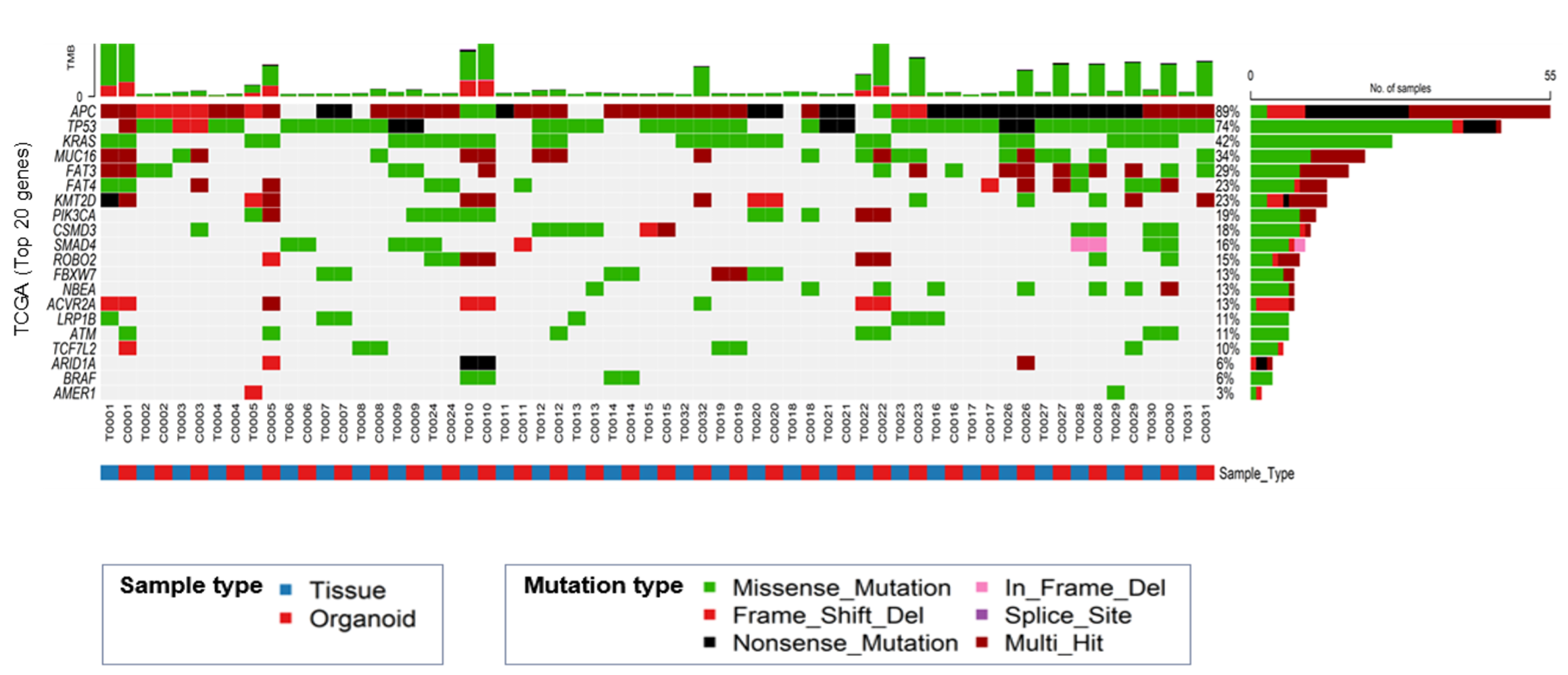 Figure 1. CRC Samsung Organoids successfully recapitulate the key alterations observed in matched patient tumor tissue.
In a CRC case study, the platform included more than 30 PDOs generated from fresh tumor tissues obtained from patients at SMC, with linked anonymized clinical records. WES was used to confirm that the PDOs recapitulated the mutational profiles of the original tumors. The PDOs were then treated with chemotherapeutic agents, and drug responses were evaluated using HTS and HCS to assess correlation with clinical records. RNA-seq analysis was also used to identify differentially expressed genes associated with drug sensitivity and resistance.
Furthermore, the organoid platform’s predictive capacity for clinical drug response was evaluated using seven CRC organoid models with matched patient treatment outcomes. The corresponding patients exhibited clinically defined responses, including partial response and stable disease, following administration of specified therapeutic agents. Treatment of the matched organoids with the same agents yielded drug-sensitivity profiles consistent with the observed patient responses (Figure 2). Collectively, these findings demonstrate that Samsung CRC organoids closely match the molecular and pharmacological characteristics of patient tumors, supporting their potential utility as clinically predictive preclinical models for therapeutic response assessment and precision oncology applications.
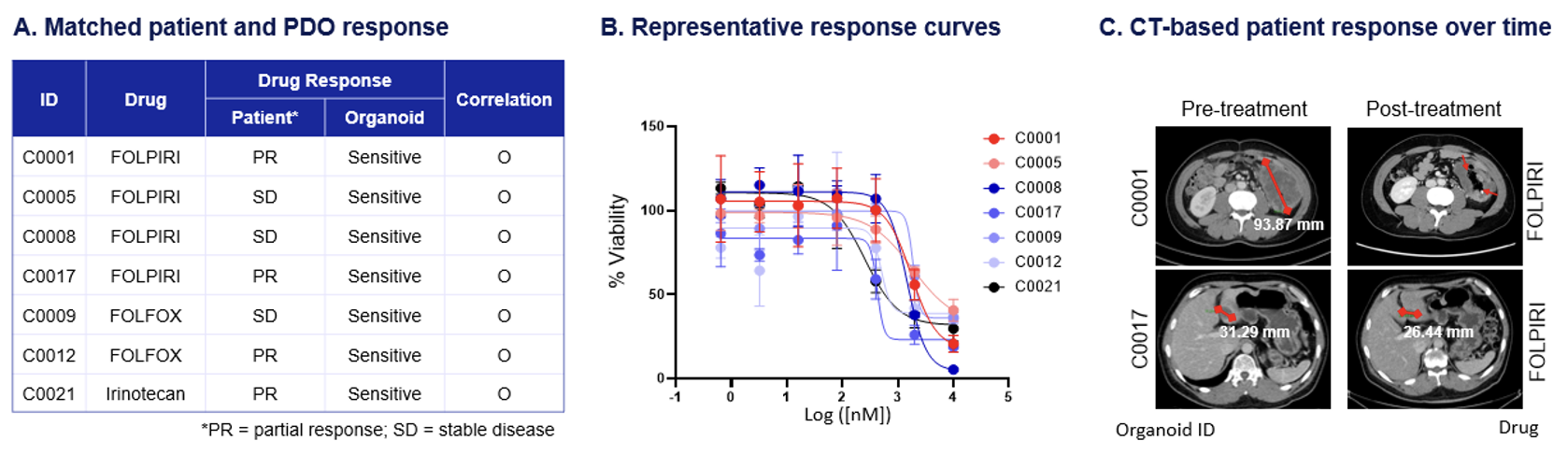 Figure 2. Representative comparison between clinical outcomes and organoid responses
Accelerated Drug Development Using Integrated Organoid-Based Services
Cancer patient–derived organoid banking is supported by comprehensive quality control data sets, including growth rate assessment, DNA/RNA sequencing, histological validation, pathological review, and mycoplasma testing. These integrated quality control measures ensure the biological quality, molecular integrity, and reproducibility of the organoid platform for translational research and therapeutic evaluation. Speed and workflow integration are also important differentiators. Samsung Biologics offers an end-to-end screening workflow that delivers clinically relevant data in approximately five weeks from cell thawing to data analysis and reporting (Figure 3). Assay formats can include organoid monoculture, immune cell co-culture, cell viability analysis, high-content imaging, live/dead staining, flow cytometry, cytokine detection, and cytotoxicity assessment.
 Figure 3. Samsung Biologics’ organoid generation and screening workflow
Samsung Biologics offers clinically relevant, pre-characterized PDO panels for lung cancer and CRC to support more efficient biomarker-driven study designs. The CRC panel includes molecular features such as KRAS, PIK3CA, and TP53 alterations, microsatellite instability-high status, and target-related markers, including TROP2 and HER2 expression. The lung cancer panel includes features such as KRAS and EGFR alterations as well as MET pathway alterations, with target-related markers, such as TROP2 and HER3 expression. Samsung Biologics is also expanding its biobank to include pancreatic, gastric, hepatocellular, urothelial, breast, cholangiocarcinoma, and non-Hodgkin lymphoma organoids, with future applications extending to additional drug modalities, including antibodies and antibody–drug conjugates.
By integrating an organoid-based efficacy evaluation with a developability assessment, potential risks can be identified early in drug development. This combined approach enables the simultaneous evaluation of biological activity and key developability attributes, allowing researchers to prioritize candidates with therapeutic potential and favorable development profiles. As a result, non-viable candidates can be eliminated early, reducing downstream risks, improving resource allocation, and accelerating the progression of promising candidates toward preclinical and clinical development.
In addition, process development and GMP manufacturing of Phase I clinical materials can be conducted within a single site, providing a seamless transition from candidate selection to early clinical development. This integrated workflow minimizes technology-transfer requirements, shortens development timelines, and enhances operational efficiency, enabling faster advancement of promising candidates to first-in-human studies.
Using AI to Extract More Value from Organoid Data
Organoid platforms generate complex, multi-layered data sets, including high-content imaging, dose-response profiles, genomic and transcriptomic data, immune co-culture readouts, and longitudinal clinical information. As organoid screening becomes more standardized, artificial intelligence (AI) and machine learning (ML) tools may help researchers integrate these data layers and identify response patterns that are difficult to detect using conventional analysis.
One promising application is image-based analysis. ML models can be trained to evaluate phenotypic features, including organoid size, morphology, growth pattern, structural disruption, apoptosis-related changes, and immune cell infiltration. When analyzed alongside the molecular and clinical contexts, these features may reveal patterns associated with sensitivity, resistance, or distinct tumor subtypes.
However, data quality remains a foundational requirement. Predictive models are only as useful as the biological, molecular, imaging, and clinical data sets from which they are built. While AI is not intended to replace biological validation, it can make organoid platforms more informative by transforming complex experimental and clinical data into interpretable patterns that inform oncology drug development decisions.
Building a Better Bridge from Discovery to the Clinic
Improving oncology drug development will require more than faster screening. It will require experimental systems that better reflect human disease biology and connect functional responses with their molecular and clinical contexts. PDO platforms address this need by bringing together tumor-relevant models, drug-response data, multi-omics analysis, and patient-level clinical information in a single translational framework.
For oncology drug developers, the value of organoid screening increasingly lies in the quality, context, and usability of the data it generates. By combining predictive biology, multi-layered translational insight, and clinical manufacturing capabilities, Samsung Biologics serves as a strategic partner for companies seeking to improve the efficiency and clinical relevance of oncology drug development.
Reference
1. Tong, Le et al. “Patient-derived organoids in precision cancer medicine.” Med. 5: 1351–1377 (2024).