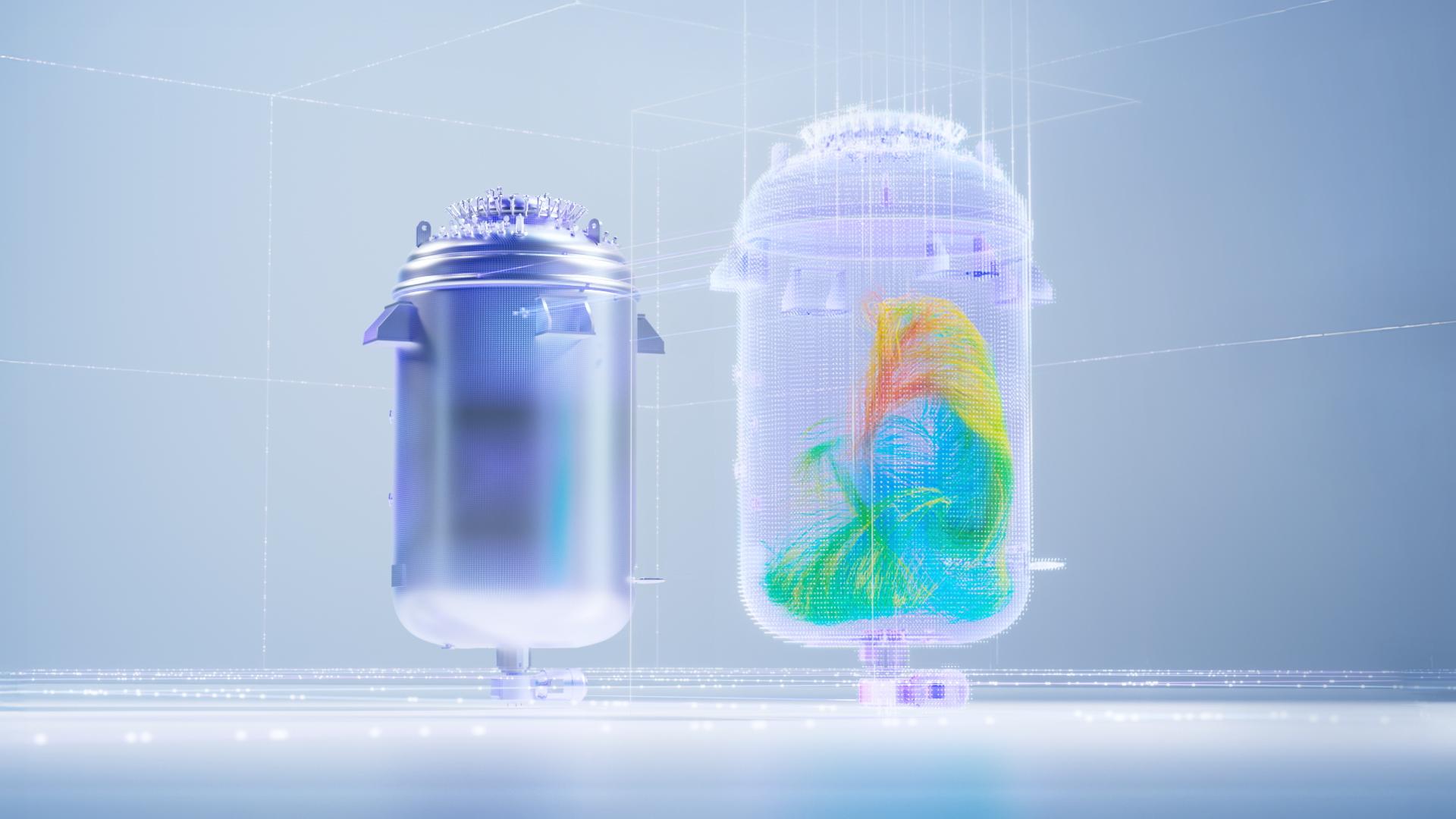
Automated visual inspection (AVI) enables the consistent and high-throughput detection of critical defects. As injectable drug products become increasingly complex, AVI offers a scalable solution to the limitations of manual inspection. Key qualification practices, such as defect kit development, probability of detection studies, and system tuning, ensure compliance and performance. Inspection precision is enhanced by advances in AI and digital tools, which Samsung Biologics is leveraging as it continues to expand its capabilities with new lines for antibody-drug conjugates and pre-filled syringes.
Introduction
Visual inspection remains one of the most critical quality assurance steps in the manufacturing of parenteral drug products (DPs), where even minor defects can compromise patient safety. For sterile injectable formulations, the presence of visible particulate matter, container closure defects, or cosmetic anomalies presents a potential risk not only to end users but also to the manufacturer’s regulatory standing and reputation. Visual inspection of 100% of finished DPs is non-negotiable in compliant biomanufacturing, required by regulatory authorities and compendia such as the U.S. Food and Drug Administration, European Medicines Agency, Japanese Pharmacopoeia, and European Pharmacopoeia.
However, as product portfolios expand and batch sizes grow, traditional manual inspection methods are struggling to meet the demands of speed, consistency, and precision. The pharmaceutical industry has responded with growing adoption of automated visual inspection (AVI) systems, which utilize high-resolution imaging, robotics, and sophisticated defect detection algorithms to enhance reliability while reducing human variability. Yet, the transition from manual to automated inspection can be complicated. Regulatory expectations require that AVI systems perform at least as well as trained human inspectors across a range of product configurations and defect types.
At the forefront of this evolution is Samsung Biologics, which has invested heavily in automation and digitalization as part of its end-to-end biologics manufacturing services. With a focus on high throughput, flexible production, and stringent quality control, the company views AVI not as an ancillary process but as a core pillar of its DP operations. Through proven technologies, data-driven qualification strategies, and forward-looking infrastructure, including capabilities for antibody-drug conjugates (ADCs) and pre-filled syringe (PFS) fill/finish, Samsung Biologics is setting the standard for inspection excellence in large-scale biologics production.
Visual Inspection: From Manual to Machine
Manual visual inspection (MVI) has long served as the default method for detecting critical and cosmetic defects in injectable DPs. Trained operators inspect each unit, often using magnification and controlled lighting conditions, to identify issues such as particulates, cracks, misaligned stoppers, or fill volume discrepancies. While this process is foundational to quality assurance, it is inherently limited by human variability and subject to factors such as fatigue, loss of focus, differences in technique, and other psychological and environmental factors, which can lead to inconsistencies, especially when dealing with subtle or intermittent visual cues. Compounding this challenge is the probabilistic nature of visual inspection: even experienced inspectors may fail to detect small or transient defects with repeatable accuracy, particularly when inspecting high volumes over extended periods.
To address these limitations, the biopharmaceutical industry has increasingly turned to AVI systems, which enable the continuous, high-speed examination of DP units using precision imaging equipment, lighting control, and rule-based or AI-driven algorithms. AVI systems allow for the more consistent and objective detection of particulate and non-particulate defects while significantly reducing the risk of missed defects or false rejections that can be associated with manual inspection. Importantly, AVI also supports data capture and traceability, aligning with evolving expectations for digital quality records and real-time process monitoring.
Recognizing the complexity of both manual and automated inspection processes, several organizations in the industry have stepped in to provide greater clarity and guidance. The Parenteral Drug Association, BioPhorum, and the European Compliance Academy have each developed frameworks and best practices for visual inspection, including guidance on inspector training, defect categorization, and the qualification of AVI systems. These collaborative efforts aim to harmonize standards across companies and regions, support regulatory compliance, and ultimately improve the safety and quality of parenteral DPs worldwide.
The Science Behind AVI Qualification
AVI systems are subject to a more rigorous and nuanced qualification process than other pharmaceutical manufacturing equipment. Unlike unit operations that can be validated against fixed process parameters, AVI systems must demonstrate that they can detect defects with equal or better sensitivity and specificity than trained human inspectors. Because visual inspection is inherently probabilistic, particularly for small, translucent, or irregularly shaped defects, the qualification process must account for the variability of both defect characteristics and inspection conditions. The nature of the task makes AVI qualification uniquely complex, requiring careful calibration and statistical validation across a broad range of scenarios.
Two approaches are typically used to qualify AVI systems: comparative studies and target-based qualification. In a comparative study, the system’s performance is directly benchmarked against manual inspection across a representative sample set, with metrics such as probability of detection (PoD), false reject rates, and repeatability compared between machine and human operators. This method is widely accepted and often preferred for its alignment with regulatory expectations, particularly when assessing the detection of particulate matter, which can vary in morphology, density, and behavior in solution. Alternatively, some manufacturers establish fixed detection targets, such as 100% detection of critical defects or 90% detection of major defects, and use these as benchmarks for system performance. While this target-based approach can streamline qualification for non-particulate defects, it is generally considered less reliable for particles, whose detectability can vary dramatically based on size, type, and motion characteristics.
Regardless of the chosen approach, AVI qualification typically follows a structured, stepwise process designed to ensure compliance and robust system performance (Figure 1). It begins with the creation of a comprehensive defect kit containing known defective and acceptable units, with defects spanning relevant types and severities. These kits are then used in baseline PoD studies to compare the performance of human inspectors with that of the AVI system under controlled conditions. Based on the results, detection thresholds and inspection cycles are fine-tuned to optimize sensitivity while minimizing false rejections. The final step is a full-system validation against predefined benchmarks using test sets to confirm repeatability and reliability.
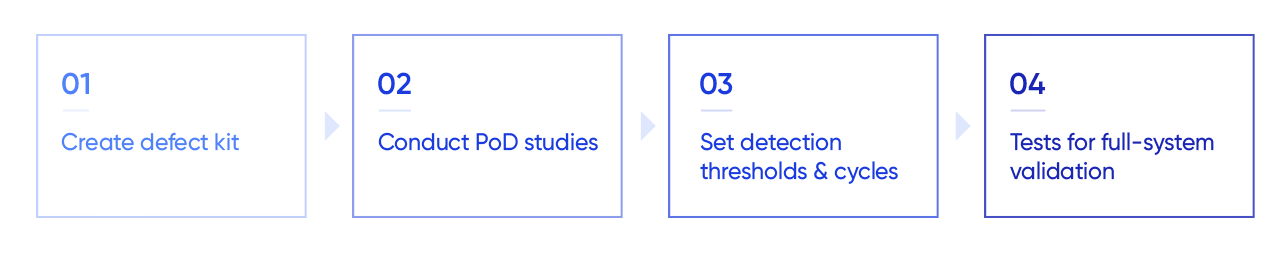 Figure 1. Steps for AVI qualification.
This methodical approach ensures compliance with regulatory standards and provides confidence that the AVI system will perform consistently across different product configurations, fill volumes, and defect profiles, delivering the level of inspection quality required for today’s complex, high-throughput manufacturing environments.
Challenges in Particulate Detection
Particulate matter remains one of the biggest challenges facing AVI systems. Unlike cosmetic flaws or fill anomalies, which tend to present with relatively consistent visual characteristics, particles can vary dramatically in size, shape, opacity, and motion. The morphology of a particle — whether it is a fiber, speck, shard of glass, or metallic fragment — affects not only how it appears under inspection lighting but also how it behaves in solution, which influences its detectability by both human inspectors and automated systems.
For example, fibers from proteinaceous aggregation or residual materials, such as cleaning wipes, are typically long and thin with high aspect ratios. These tend to remain suspended in the middle of the liquid column and move fluidly with the solution, making them intermittently visible. Loose glass particles, often the result of vial breakage events, are denser and more likely to rest at the bottom of the container unless agitated. Specks originating from elastomeric components, such as stoppers or seals, may appear gray, dark, or translucent and can move unpredictably. Metallic particles are typically heavy and settle quickly, often remaining stationary unless highly disturbed. Importantly, the material identity of a particle cannot be determined solely through visual inspection, further complicating classification and detection.
Adding to this complexity, container geometry, fill volume, and product viscosity also influence particle behaviors. Wider containers allow for more lateral movement, while taller vials can obscure particles that settle or rise. Highly viscous formulations dampen motion, making dynamic inspection methods less effective. Even the spin speed used in inspection cycles can dramatically alter the visibility of certain particle types, particularly those that are most difficult for humans and machines to detect. For small particles, ranging from 25 to 150 microns, motion often becomes a key detection cue, as particles in motion draw visual attention in ways that static particles may not.
Due to these interrelated variables, a single, standardized AVI qualification kit or method cannot account for the diversity of real-world product and defect conditions. Instead, AVI systems must be qualified on a case-by-case basis, using customized defect kits and parameter sets tailored to each product configuration. This approach ensures that the inspection process remains sensitive to the full range of potential particulate risks, delivering consistent performance across an increasingly diverse and demanding biopharmaceutical landscape.
The Knapp Method and Its Evolution
The Knapp method emerged in the 1970s as an early framework for quantifying the effectiveness of visual inspection, particularly in an era when concerns over particle contamination and sterile integrity were driving heightened scrutiny. The method divides defect samples into three zones based on the PoD by human inspectors: the reject zone (70–100% detection), the gray zone (31–69%), and the accept zone (0–30%). The principle is simple: an inspection system should reliably detect defects in the reject zone (true positives) while minimizing false rejections in the accept and gray zones. By comparing these PoD ranges for humans and automated systems, the Knapp method provides a comparative performance benchmark for AVI qualification.
Over time, the method gained widespread adoption, offering a degree of structure in a field where subjectivity was often the norm. However, as both inspection technology and manufacturing standards evolved, the limitations of this method became increasingly apparent, particularly due to the arbitrary nature of the 70% threshold used to define the reject zone. This boundary may not correlate with clinically or operationally significant defects. Additionally, using PoD thresholds alone does not account for the morphological and behavioral variability of particles, nor does it ensure sensitivity across the full range of particle sizes likely to be encountered in modern production environments. Another limitation is that the method may penalize highly sensitive AVI systems for detecting sub-visible or borderline defects, particularly in the gray zone, where human detection would typically fail.
Despite its limitations, the underlying principle of comparative PoD remains valuable, particularly when enhanced by modern detection curve analysis and more sophisticated defect characterization. Today, most manufacturers rely on modified versions of the Knapp method, plotting PoD curves — graphical representations of detection probability as a function of particle size or contrast — to better understand system performance. Figure 2 illustrates a typical detection curve, showing how PoD increases with particle size. The steepness of the curve depends on numerous factors, including defect morphology, inspection lighting, and detection technology.
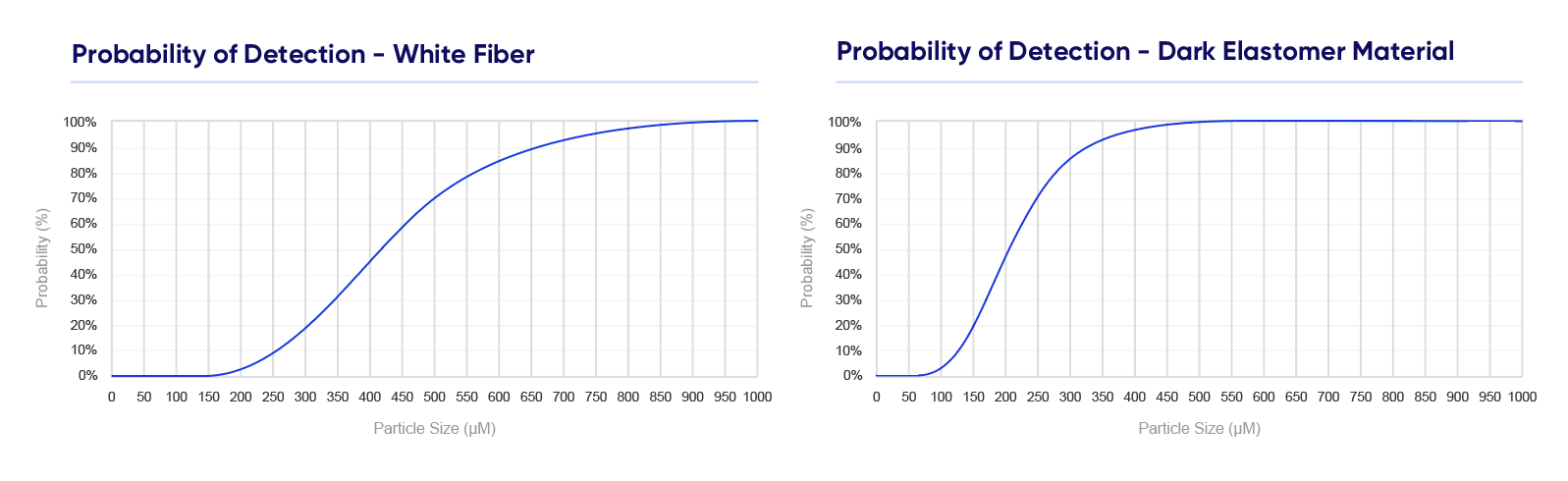 Figure 2. Typical detection curve depicting the correlation between PoD and particle size. The left curve corresponds to the detection of contaminants such as white fibers, which are more difficult to detect, while the right curve reflects particles with greater contrast, such as dark elastomer material.
These curves are especially useful in identifying the crossover point at which AVI systems begin to outperform human inspectors and for determining whether the system’s sensitivity extends far enough to capture clinically relevant small-particle defects. As shown in Figure 3, AVI systems generally produce steeper PoD curves than human inspectors, reflecting their greater ability to produce repeatable results. This steepness indicates more consistent detection performance across a narrower transition zone — but it also highlights the need to ensure adequate sensitivity at the lower end of the detection spectrum, where the risk of missed subvisible particles remains highest.
Best practices in AVI qualification now emphasize the need for defect kits and study protocols that span the full range of potential defect sizes and characteristics, rather than relying solely on threshold-based PoD values. This comprehensive approach helps ensure sensitivity across the entire size continuum, including smaller, lower-contrast particles that may pose a higher risk despite being more difficult to detect. Figure 3 visualizes this principle through the lens of the traditional Knapp method, delineating the reject, gray, and accept zones along the PoD curve based on defined detection probabilities. By integrating detection curve analysis with comparative performance data, manufacturers can more reliably qualify AVI systems that meet the increasingly complex demands of modern biopharmaceutical production environments.
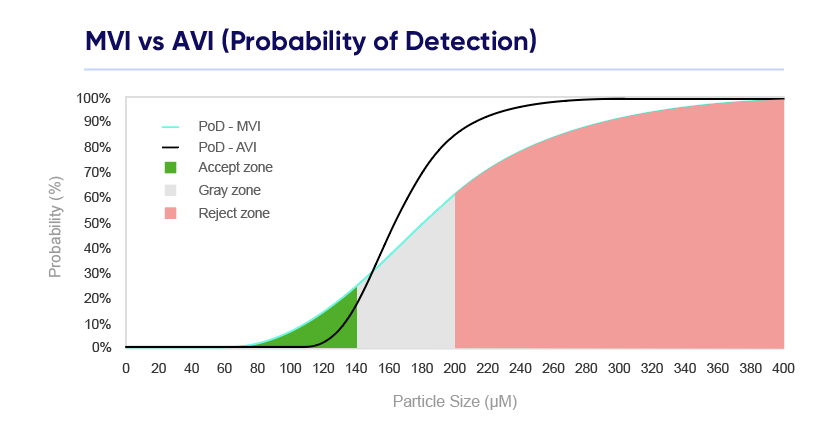 Figure 3. The Knapp method visualizes the reject, gray, and accept zones along the PoD curve based on defined detection probabilities.
AVI Technologies and Their Impact on Qualification Strategies
AVI systems vary not only in how they are qualified but also in the technologies they use to detect defects. The specific detection mechanism, whether based on camera imaging, motion-based sensing, or line-by-line scanning, has a direct impact on the types of defects that are most readily detected and under what conditions. Understanding these differences is essential when designing qualification kits, setting detection parameters, and interpreting comparative study outcomes.
One of the most commonly used technologies in AVI systems is the complementary metal-oxide-semiconductor (CMOS) or the charge-coupled device (CCD) area scan camera. These cameras capture full-frame two-dimensional images of the container at specific rotational angles, typically generating between 16 and 40 images per unit. Area scan cameras are particularly well-suited for identifying static or cosmetic defects, such as cracks, scratches, or discoloration. However, their performance for detecting small, mobile particles heavily depends on resolution. If the effective object resolution is too low — for instance, if a 50-micron particle appears as fewer than four or five pixels across — it may not be distinguishable from visual noise. Therefore, pixel density, image clarity, and inspection cycle duration are critical, especially for products with small or low-contrast particulate risks.
Static division (SD) systems take a different approach, using fluid dynamics and light scattering to detect motion. In SD systems, the container is spun and then abruptly stopped, causing the solution inside to continue moving while the container remains still. As particles move within the solution, they cast shadows onto a diode array sensor, which detects these shadows as signal fluctuations. Because this method relies on motion contrast rather than image processing, it excels at detecting small particles (sometimes as small as 5 microns) that might otherwise go unnoticed. However, SD systems are less effective at detecting stationary defects or particles that have adhered to the container wall, thereby limiting their utility for certain defect types.
Line scan systems represent a hybrid approach, capturing a single row of pixels at a time while the object is rotated or moved past the sensor. These systems stitch together high-resolution images that can be used to identify both stationary and mobile defects. Line scan cameras offer greater resolution and faster frame rates than area scan systems, making them highly versatile. Like SD systems, they can be configured to take advantage of fluid motion to highlight the presence of particulates. However, because they rely on sequential data capture, they require precise synchronization between container movement and image acquisition, which increases system complexity.
The differences among these technologies have significant implications for AVI qualification. Systems that rely on area scan cameras, for example, may require defect kits with larger or higher-contrast particles to ensure reliable detection, while SD or line scan systems may be qualified using smaller or more mobile particles. Qualification strategies must therefore be tailored not only to the product and container configuration but also to the inspection technology itself. Attempting to reuse the same defect kit across multiple systems with different detection principles can lead to skewed results, such as elevated false reject rates or missed critical defects.
Ultimately, successful AVI qualification depends on matching the inspection technology to the specific needs of the product: balancing sensitivity, throughput, and robustness to ensure safe and consistent quality control across diverse DP portfolios.
Integrating AI into AVI
As AI continues to transform pharmaceutical manufacturing, its integration into AVI systems offers new opportunities to enhance sensitivity, reduce false positives, and streamline parameter development. However, AI in AVI does not imply self-learning or autonomous decision-making by the system once deployed. Rather, it refers to the use of deep learning models trained on labeled image data to classify visual features with greater nuance than traditional rule-based algorithms.
The process of implementing AI in AVI begins with capturing a robust image data set of both acceptable and defective units. These images are labeled offline, with specific regions of interest identified and categorized by defect type. A deep learning model is then trained on these labeled data sets, typically in an offline environment. The model learns to associate complex visual patterns with specific defect classifications, such as distinguishing between a scratch and a crack or a bubble and a particle. Once trained, it is tested using a separate set of validation images to confirm its performance, and only then integrated into the AVI system for live inspections after this verification; within the larger AVI system, it operates as a functional tool.
This approach raises important compliance considerations, particularly in relation to data integrity and validation. Questions often arise about whether the images used in training constitute GMP data and whether the offline environment used to develop the model requires validation. Industry consensus holds that these training images, while they may have been derived from GMP processes, are not themselves GMP records unless they are retained as part of the final qualified inspection method. Similarly, the offline development environment does not require independent validation, as final performance verification is conducted through system-level qualification once the model is deployed. What requires validation is the final AI-based model, as it functions within the live inspection system, along with the complete inspection recipe and equipment parameters, such as lighting, spin speed, and inspection duration.
Deep learning significantly enhances defect classification by capturing subtle visual features that might be difficult to define using rule-based logic. These subtleties include distinguishing between types of surface imperfections, accounting for variable lighting or product backgrounds, and reducing false rejects by learning from limit samples that previously triggered false detections. By enabling greater specificity in defect identification, AI increases the sensitivity of inspection systems without increasing the false detection rate, thereby improving yield and confidence in inspection outcomes.
The Future of AVI Qualification
As the pharmaceutical industry continues to prioritize standardization, scalability, and speed, the current approach to AVI qualification — largely product-specific and manually intensive — is increasingly viewed as a barrier to efficiency. To meet the needs of complex, multi-product manufacturing environments, the future of AVI qualification lies in establishing repeatable, product-independent standards. Rather than conducting laborious comparative studies for each new container or formulation, manufacturers are moving toward setting defined detection performance targets that can be applied universally across similar configurations.
This shift involves quantifying AVI capabilities in terms of minimum detection thresholds for specific defect types. For instance, a qualification standard might require a 90% detection rate for 50-micron glass particles or a 100% detection rate for certain critical cosmetic defects under validated conditions. These benchmarks minimize delays in introducing new products into a validated inspection line. By creating a robust baseline of detection capabilities across defect types and sizes, companies can significantly reduce lead times and the resource burden associated with AVI qualification while ensuring a consistently high level of quality assurance.
The integration of AI further strengthens this model by improving classification accuracy and allowing for greater adaptability across a range of product attributes. Additionally, the rise of digital twins — virtual models of physical systems — offers a new frontier for inspection tuning and predictive maintenance. By simulating AVI performance in a digital environment, manufacturers can model how changes in fill volume, viscosity, container type, or lighting conditions might affect detection rates before implementing them in the real world. This predictive capability not only supports faster validation but also helps prevent issues before they occur, reducing downtime and increasing operational efficiency.
Samsung Biologics’ Vision for the Future of DP Inspection
Samsung Biologics is proactively shaping the future of DP inspection by combining world-class infrastructure with cutting-edge technologies and a commitment to continuous innovation. As part of its long-term strategy to support an expanding portfolio of complex biologics, the company is enhancing its DP capabilities with new services purpose-built for scalability, flexibility, and inspection excellence.
Two major additions to Samsung Biologics’ DP offerings are currently underway. First, a new PFS fill/finish line, designed with isolator-based aseptic processing and 100% in-process control, is expected to be GMP-ready by Q4 2027. This system will feature a fully automated inspection line capable of handling up to 400 units per minute and will incorporate AI-powered defect classification and real-time feedback loops for process optimization. Second, a dedicated ADC DP line is being developed with specialized containment systems and isolator-level controls to safely handle potent compounds. This line is scheduled to be GMP-ready by Q2 2027. This facility will support the end-to-end process from fill/finish to lyophilization, integrating tailored visual inspection designed to meet the unique challenges of ADC formulations.
Beyond hardware investments, Samsung Biologics is embedding digital technologies throughout its inspection ecosystem. AI-based AVI systems are being deployed to improve detection sensitivity, standardize performance across product types, and reduce the variability that is traditionally associated with manual processes. Digital twins and simulation tools are being implemented to optimize inspection parameters, reduce false rejects, and anticipate maintenance needs, thereby improving quality and uptime.
Crucially, these enhancements are designed to support the full product life cycle, from early-stage clinical materials to high-volume commercial production. Samsung Biologics’ ability to offer flexible batch sizes, accommodate varied container types, and maintain a high standard of visual inspection across all modalities reflects its commitment to being a one-stop partner for biologics manufacturing. With end-to-end integration, predictive digital tools, and forward-looking capacity expansions, the company is keeping pace with evolving regulatory and product requirements while setting new benchmarks for comprehensive, future-ready DP inspection.
By aligning advanced inspection technologies with standardized qualification frameworks and digital system integration, Samsung Biologics is improving the precision and efficiency of defect detection, redefining what is possible in large-scale, compliant DP manufacturing. The result is a more agile, resilient, and patient-focused approach to quality assurance — one that sets a new industry standard for inspection excellence.