Antibody–drug conjugate (ADC) formats are becoming more diverse, while development timelines continue to shorten, placing greater demand on analytical development teams. Investigational new drug (IND) readiness relies on identifying critical quality attributes (CQAs) early in the development process. To bridge this gap, Samsung Biologics uses a platform-based analytical strategy that balances standardization with adaptability, enabling predictable timelines, reducing development risks, and facilitating a smooth transition to patients.
Growing Complexity Is Reshaping Analytical Requirements
The dual mechanism of action of ADCs, which combine selective target binding with potent cytotoxic activity, has driven the rapid expansion of the clinical ADC pipeline. A growing number of candidates enter early-phase trials each year, and molecular diversity is increasing as ADC designs evolve to incorporate new conjugation strategies, payload classes, and linker chemistries. As a result, analytical expectations for ADCs now far exceed those associated with conventional biologics.
ADCs combine large biologics with a highly potent small-molecule payload, requiring a broad and integrated analytical toolkit. In addition to confirming identity, purity, size, charge, stability, solubility, and efficacy, ADC processes must accurately assess attributes unique to these hybrid molecules, including the drug-to-antibody ratio (DAR), free drug or linker–payload-related species, and potency (measured using mechanism-relevant assays). Analytical methods with high performance across multiple characteristics are needed to measure these attributes. The methods must be sensitive and should resolve molecular heterogeneity while remaining robust and reproducible.
DAR is a vital metric for assessing product quality and performance because changes can affect efficacy, stability, hydrophobicity, and safety. Precise, consistent measurement of the DAR is essential throughout development.
New conjugation technologies, expanded payload diversity, and increasingly complex manufacturing workflows underscore the need for analytical control. The methods must not only characterize the final ADC but also detect subtle shifts in product profiles that can emerge during process development, scale-up, and storage.
At the same time, regulatory requirements continue to become more stringent. Regulatory agencies expect early, data-driven evidence of CQAs, and IND submission timelines continue to shorten, creating a narrow margin for error. Analytical strategies that are insufficiently developed or poorly aligned with molecular complexity can result in late-stage rework, complicate stability studies, or delay IND filing. Specialized expertise and early analytical insight are therefore no longer optional but foundational to modern ADC development.
These challenges are amplified by advances in conjugation chemistry and the emergence of new bioconjugate modalities. Site-specific conjugation approaches to preserve native antibody structure often rely on enzymes or other small-molecule reagents that need careful monitoring and must be removed during processing. Analytical methods must confirm the fidelity of conjugation and the removal of process-related impurities. In addition, analytical requirements for next-generation modalities, such as antibody–oligonucleotide conjugates (AOCs) and antibody–peptide conjugates, differ substantially from those used for traditional cysteine- or lysine-linked ADCs.
To meet tighter timelines, many developers turn to platform-based analytical methods. However, for ADCs, platform-based approaches are only effective when they balance standardization with adaptability. ADC candidates vary significantly in physicochemical properties, conjugation chemistry, and impurity profiles; therefore, it is not possible to adequately characterize all molecules using a single, fixed method set. Platform-based methods must be readily modifiable, supported by early feasibility testing, and validated to ensure accuracy, precision, and regulatory compliance. This flexibility ensures that analytical methods enable process and formulation development rather than becoming bottlenecks that increase the likelihood of rework and missed milestones.
How Platform-Based Analytics Decrease Risk for ADC Development
ADC developers are under pressure to move quickly from discovery to production because speed often determines the competitive advantage and downstream value. Contract development and manufacturing organizations play a critical role in advancing complex molecules efficiently while maintaining analytical rigor to ensure regulatory compliance and patient safety.
ADC development spans the process, formulation, and analytical stages, meaning any delays or uncertainty can slow the overall progress. The analytical stage is particularly prone to bottlenecks, especially if methods must be built or reworked late in development. However, strategic use of platform-based analytics ensures early reliable data generation, ensuring that process and formulation activities can run in parallel.
Samsung Biologics’ platform-based analytical capabilities for ADCs are a core strength. The analytical framework balances standardization with flexibility to support speed, consistency, and reproducibility without sacrificing molecule-specific insights. Rather than treating each program as bespoke, the company has built a unified, cross-modality analytical framework that integrates antibody and ADC analysis within a single development strategy. This approach ensures that the native antibody and the conjugated product are evaluated effectively. The analytical model reflects the full life cycle of the ADC molecule, with platform feasibility demonstrated for multiple ADC formats, conjugation chemistries, and linker–payload combinations (Figure 1).
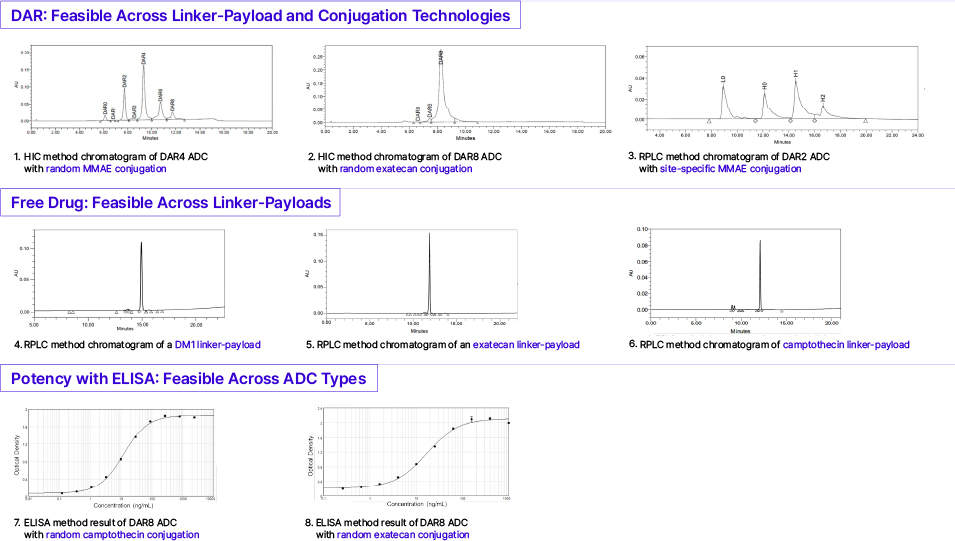 Figure 1. Broad feasibility of Samsung Biologics’ platform-based analytical method across ADCs and linker–payload chemistries
Samsung Biologics developed and stress-tested its platform-based methods across a wide range of ADC formats, including various conjugation technologies, payload classes, linker chemistries, and process-related impurities, such as residual solvents and free linker–payload species (Figure 1). This broad applicability increases the likelihood that fit-for-purpose methods are identified early, reducing timeline risks. When the process needs to be adapted, extensive prior experience applying these methods across different molecular profiles reinforces rapid optimization and validation. Methods are routinely tailored to capture attributes specific to each ADC, whether arising from random conjugation to native cysteine residues or site-specific approaches involving glycan-based modifications.
This platform-based strategy relies on a feasibility assessment conducted as soon as the initial development material becomes available. This allows the team to identify which assays to implement and which require refinement. Doing this early in the process reduces late-stage changes and minimizes risks of disruptions later in development. In addition, Samsung Biologics implements checkpoints to continuously evaluate the feasibility of the platform-based method for a given ADC molecule.
From Feasibility to IND: an Analytics Workflow Built for Speed and Control
Samsung Biologics’ unified, platform-enabled approach minimizes handoff inefficiencies and supports a smooth transition from early development into clinical manufacturing. Rather than treating analytical activities as sequential or reactive, the workflow generates early insights, guides prioritization, and maintains momentum. The analytical development process integrates four steps: feasibility testing, method optimization, preliminary method qualification, and documentation (Figure 2).
 Figure 2. Samsung Biologics’ ADC analytical development timeline
As soon as the initial ADC development material becomes available, platform methods rapidly assess suitability and generate early data needed to plan IND-critical analytical packages. This phase enables rapid method prototyping while identifying which assays can be applied directly and which require refinement. Teams can then focus optimization efforts where they are most impactful.
Method optimization can then proceed, with conditions refined only as needed, based on the molecular properties and material characteristics of the ADC and any project-specific objectives. Preliminary method qualification is performed in accordance with ICH Q2 (R2), including assessments of specificity, accuracy, precision, linearity, working range, and robustness. Finally, comprehensive documentation, including fully developed standard operating procedures and method development reports, ensures readiness for downstream transfer and regulatory approval.
This integrated and agile approach helps clients progress quickly to GMP testing, including for release and stability of toxicology and clinical batches. Advancement timelines are predictable: Analytical method development takes approximately three months, and preliminary method qualification requires only an additional 1.5 months. Beyond core method development, Samsung Biologics provides analytical support for in-process monitoring and control as well as non-routine testing, offering the flexibility required for fast-paced, high-stakes ADC programs.
The Analytical Pillars Upholding ADC Quality
A successful ADC program depends on an analytical development strategy that can fully characterize and control the distinctive features of these highly complex molecules. Because ADCs use a chemical linker to integrate an antibody with a small-molecule cytotoxic payload, analysis requires a hybrid approach that includes biologics- and chemistry-based techniques. Each component — the monoclonal antibody (mAb), payload, and linker — must be evaluated independently and in combination to ensure product integrity, safety, and therapeutic performance.
Beyond the analytical methods used for antibodies and small molecules, comprehensive ADC analysis requires additional assays to address their unique attributes. Four attributes are key: the DAR, free drug and linker–payload-related species, control of residual solvents and other process-related impurities, and potency. Samsung Biologics has expertise in all four areas and in-house analytical capabilities that are purpose-built for ADC development.
The DAR is the average number of payload molecules conjugated to each mAb. It directly influences multiple CQAs and must be measured accurately and consistently. Clients typically define target DAR values based on payload toxicity (more potent cytotoxins require lower DARs) and anticipated patient dose. Higher DARs can enhance efficacy, but there can be trade-offs. For example, in ADCs that rely on native cysteine conjugation, increasing the DAR requires breaking additional disulfide bonds, which can compromise molecular stability. At the same time, because linker–payload moieties are often hydrophobic, greater conjugation increases overall hydrophobicity, decreasing stability and solubility.
Given the diversity of ADC formats in development, no single analytical technique can accurately calculate DAR across all molecules. Samsung Biologics employs multiple orthogonal approaches, including hydrophobic interaction chromatography (HIC) and reverse-phase (RP) high-performance liquid chromatography (HPLC). When these methods are not suitable, a more general UV-visible DAR method that leverages distinct absorbance maxima associated with antibodies and conjugated linker payloads can be applied. Advanced liquid chromatography–mass spectrometry (LC-MS) methods, including native and RP configurations, are available when greater resolution is required.
The first step in DAR assessment is feasibility testing using HIC-HPLC and RP-HPLC. These approaches provide complementary insights into conjugation heterogeneity and hydrophobicity-driven species separation (Figure 3). During this initial assessment, method suitability is evaluated based on payload hydrophobicity, conjugation chemistry, expected DAR range, and the resolution of individual DAR species.
When HIC-HPLC or RP-HPLC does not provide sufficient separation, sensitivity, or robustness—alternative approaches, including UV-visible spectroscopy-based DAR determination or advanced LC-MS methods—are evaluated. Feasibility test results are reviewed to balance analytical performance, method robustness, and regulatory suitability before a recommendation is made regarding the primary DAR method to use. Although it is uncommon to need to use UV-visible or LC-MS methods, Samsung Biologics has platform methodologies in place for worst-case scenarios. This structured decision process enables early method selection, focused optimization, and faster progression without unnecessary iterations.
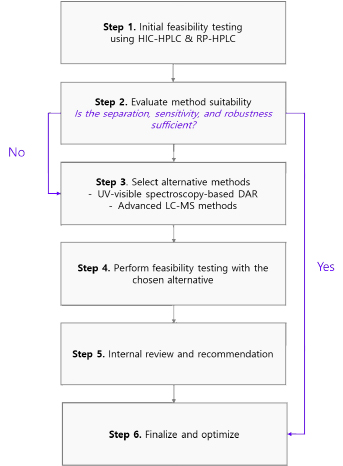 Figure 3. Decision tree for DAR method evaluation
Monitoring free drug and linker–payload-related impurities is key for ADC safety and consistency. Free cytotoxic species may be introduced in manufacturing or generated over time through linker or payload dissociation. Since these molecules can damage healthy tissue, even low levels of impurities must be carefully controlled. ADC drugs have been found to have unexpected toxicity in patients, so it is vital to identify the presence of free drug species to determine the source of toxicity.
It is challenging to standardize detection techniques for free linker–payload moieties, given the variation in payload chemistry and structure between ADCs. However, Samsung Biologics has developed adaptable analytical methods that can be efficiently tailored to various payload classes. As with DAR determination, feasibility testing is conducted early to assess suitability and identify parameters that require optimization, reducing the risk of late-stage analytical issues.
In conventional biologics, antibodies are produced entirely in aqueous systems, but ADC conjugation reactions often rely on organic solvents that must be removed before the drug substance is released. Therefore, residual solvents are a distinct class of process-related impurities that must be closely monitored.
Samsung Biologics uses gas chromatography (GC) to detect commonly used organic solvents, including dimethyl sulfoxide, N,N-dimethylacetamide, and isopropyl alcohol. Limits for each solvent are based on permitted daily exposure thresholds. Accurate assessments ensure that the resulting ADCs comply with regulations and support consistent impurity control as programs scale.
Samsung Biologics’ platform-based ADC methods were developed and tested across a diverse range of commercial ADCs, conjugation chemistries, and linker–payload combinations, so even assays that are inherently less platform-friendly are broadly applicable. In addition, having this wide array of ADC analytical capabilities in a single organization coordinates decision-making, accelerates troubleshooting, and supports the continuous control of CQAs throughout the development life cycle.
Samsung Biologics’ client-centric approach and rigorous technical framework ensure that the analytical strategy aligns with each program’s therapeutic goals, conjugation modality, and regulatory pathway. For example, enzyme-mediated conjugation strategies may require enzyme-linked immunosorbent assay (ELISA)-based methods to detect residual enzyme activity, whereas AOCs may be better characterized by anion exchange chromatography to determine oligonucleotide-to-antibody ratios. The flexibility to switch approaches ensures analytical rigor without increasing complexity.
Addressing the Cell-Based Assay Bottleneck in ADC Development
Potency is commonly assessed for ADCs using enzyme-based assays, such as ELISA, or cell-based assays. ELISA is widely used and can easily be incorporated into a platform-based approach. Cell-based assays capture the effects of target binding, internalization, and cytotoxic payload activity, providing more biologically relevant insights. For many ADC programs, cell-based assays are essential to understanding mechanism-relevant potency.
Despite the value they add, cell-based assays are extremely time- and resource-intensive to develop, requiring extended cell culture preparation, typically at least two weeks, followed by multi-day test execution. In addition, cell-based assays are inherently prone to variability due to extensive manual handling, live cell plating, and sensitivity to experimental conditions. This variability further increases the time required to develop these assays, as identifying and controlling sources of variability during development is complex and often requires multiple rounds of optimization.
To address these challenges, Samsung Biologics has focused on standardizing and accelerating cell-based assay development. By systematically identifying parameters that can be standardized across assays, Samsung Biologics has established an optimized workflow that shortens development timelines while improving reproducibility and transfer reliability.
Key parameters for 96-well plate detection applicable across assay cell lines and ADC materials have been optimized and standardized using multiple cell lines and commercial ADCs (Figure 4). In contrast, parameters that are inherently dependent on the assay’s specific biology, such as cell seeding density and ADC concentration range, are addressed during method optimization. This separation of fixed and variable parameters allows for standardization without sacrificing assay relevance or sensitivity.
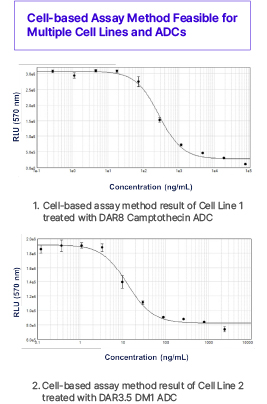 Figure 4. Samsung Biologics’ cell-based assay method across multiple cell lines and ADCs
As a result, Samsung Biologics can develop and optimize cell-based potency assays in approximately 3.5 months. Importantly, inclusion of cell-based assays does not extend the overall ADC analytical development timeline. The use of standardized platform methods across the development and quality control laboratories reduces the risk of issues during analytical method transfer, further supporting smoother progression to GMP testing and clinical manufacturing.
Accelerating Development of IND-Ready Analytical Packages
Effective impurity control is key to the development of safe and successful ADCs. The structural complexity and hybrid composition of ADCs result in multiple sources of product- and process-related impurities that must be consistently monitored and controlled, from early development through commercialization. Addressing risks related to impurities requires analytical strategies that integrate biologics- and chemistry-based techniques and generate data that are technically robust and ready for regulatory submission.
By establishing platform methods, such as HIC, LC-MS, RP-HPLC, and GC, Samsung Biologics has created a comprehensive impurity control framework for ADCs. This integrated approach supports precise DAR determination, the reliable quantification of free drug and linker–payload species, and the predictable assessment of residual solvents. Together, these capabilities reduce uncertainty related to CQAs while supporting scalable development aligned with evolving regulatory expectations.
Samsung Biologics’ analytical strategy delivers IND-ready analytical packages by applying core methods, including assays that are readily platformed and those that require greater customization, across a broad range of ADC molecules for DAR, free drug, and potency testing. Early feasibility testing is central in this process to identify which methods can be applied directly and which require optimization. This early insight reduces iterations, focuses the development effort, and streamlines method transfer.
Cell-based potency assays are traditionally the most time-consuming component of ADC analytics. Samsung Biologics has shortened the development phase of cell-based assays to fit within the standard ADC development timeline. This shortened timeline, combined with standardized approaches for other critical assays, enables Samsung Biologics to prioritize timeliness without compromising performance, quality, or transferability. The result is an analytical package that supports timely IND submission while maintaining the rigor required for downstream clinical and manufacturing progression.
A Platform Built for Today’s ADCs and Tomorrow’s Modalities
As ADC pipelines become more diverse and development timelines continue to shorten, analytical development must deliver depth at speed. Platform-enabled analytics can generate high-quality data, proactively manage risk, and maintain momentum through IND submission and beyond.
Samsung Biologics provides phase-appropriate, scalable analytical services designed to support this balance. By combining platform methods with structured feasibility assessments and targeted customization, analytical development aligns with program needs. This approach improves readiness, enhances predictability, and enables faster progression to manufacturing without compromising analytical rigor.
This platform approach reflects deep expertise in developing and implementing analytical methods across a wide range of ADC formats, including diverse antibodies, linkers, payloads, and conjugation chemistries. Just as importantly, Samsung Biologics continues to evaluate emerging bioconjugate modalities and evolving regulatory expectations, expanding its analytical capabilities to address new sources of complexity as they arise. Through this ongoing investment, the platform evolves alongside the science, helping clients advance novel ADC therapies efficiently and confidently.